I once walked forty kilometers across northern Spain without speaking. Not from a vow of silence — the words simply fell away, the way leaves drop in late October. Not violently. Just inevitably. What remained was not emptiness. What remained was a kind of listening. The Camino taught me what no guidebook could: the longest journey is not the distance between two points on a map, but the distance between who you were when you left and who you become when you arrive. Sometimes the terrain between those two selves is more rugged than any mountain pass. sacred-journey-guide/”>How to Plan a. Travel Search Meaning.
“The real voyage of discovery consists not in seeking new landscapes, but in having new eyes.” — Marcel Proust
Historical Context
Pilgrimage is not a trend. It predates tourism by several thousand years. In ancient India, pilgrims walked to the confluence of sacred rivers. In Japan, the Shikoku circuit has drawn walkers to eighty-eight temples since the ninth century. Medieval Christians crossed Europe on foot toward Santiago de Compostela, and before them, Celts and Romans traced older paths beneath the same stars. The geography shifts. The impulse does not. Humans have always understood that placing one foot in front of the other, over days and weeks, does something to the mind that no amount of sitting still can replicate.
What unites these traditions is not doctrine. It is rhythm. The slow, repetitive motion of walking synchronizes breath with stride, and the nervous system begins to settle. Monks knew this. Sufi mystics knew this. Walking meditation in the Zen tradition is not a metaphor — it is a technology of attention. Strip away comfort, distraction, and the familiar architecture of your daily life, and what is left is remarkably simple: sensation, breath, and the quiet voice you have been outrunning for years.
The Experience
The first two days are brutal. Not physically — though your shoulders ache and your feet blister — but psychologically. Without podcasts, without conversation, without the constant hum of notifications, the mind revolts. It throws up regrets, unfinished arguments, grocery lists, old wounds. You will want to quit. You will question why you paid money to be uncomfortable. That resistance is not a sign you are doing it wrong. It is the doorway.
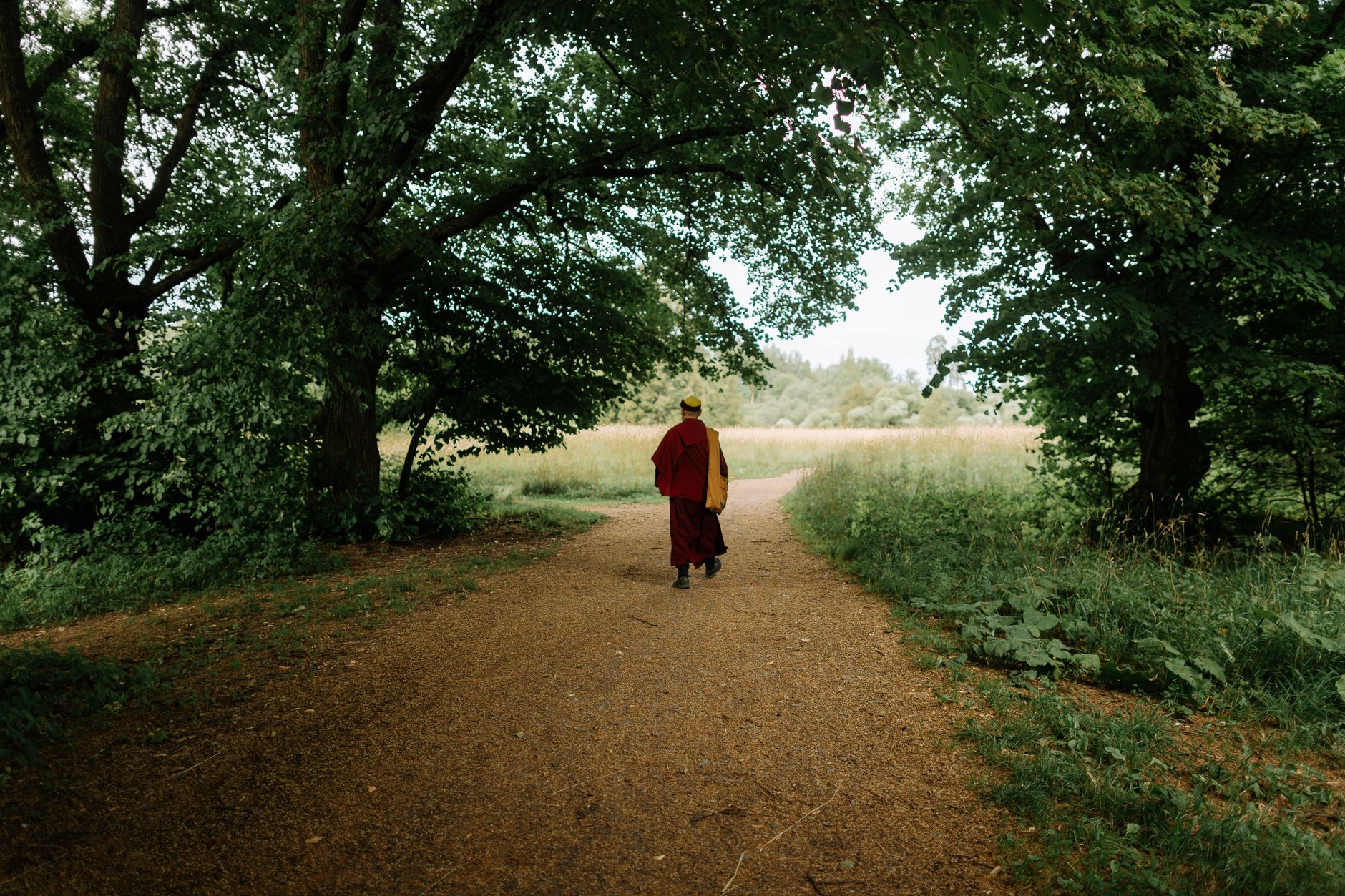
By the fourth or fifth day, something shifts. The chatter thins. You notice what you would normally walk past: morning light catching dew on a spiderweb, the smell of woodsmoke from a village chimney, the weight of your own body settling into the earth with each step. Meals taste extraordinary. Sleep comes easily. Strangers become companions after a single shared glance at a steep hill. The inward journey was never separate from the outward one — they were always the same road, walked with the same feet.
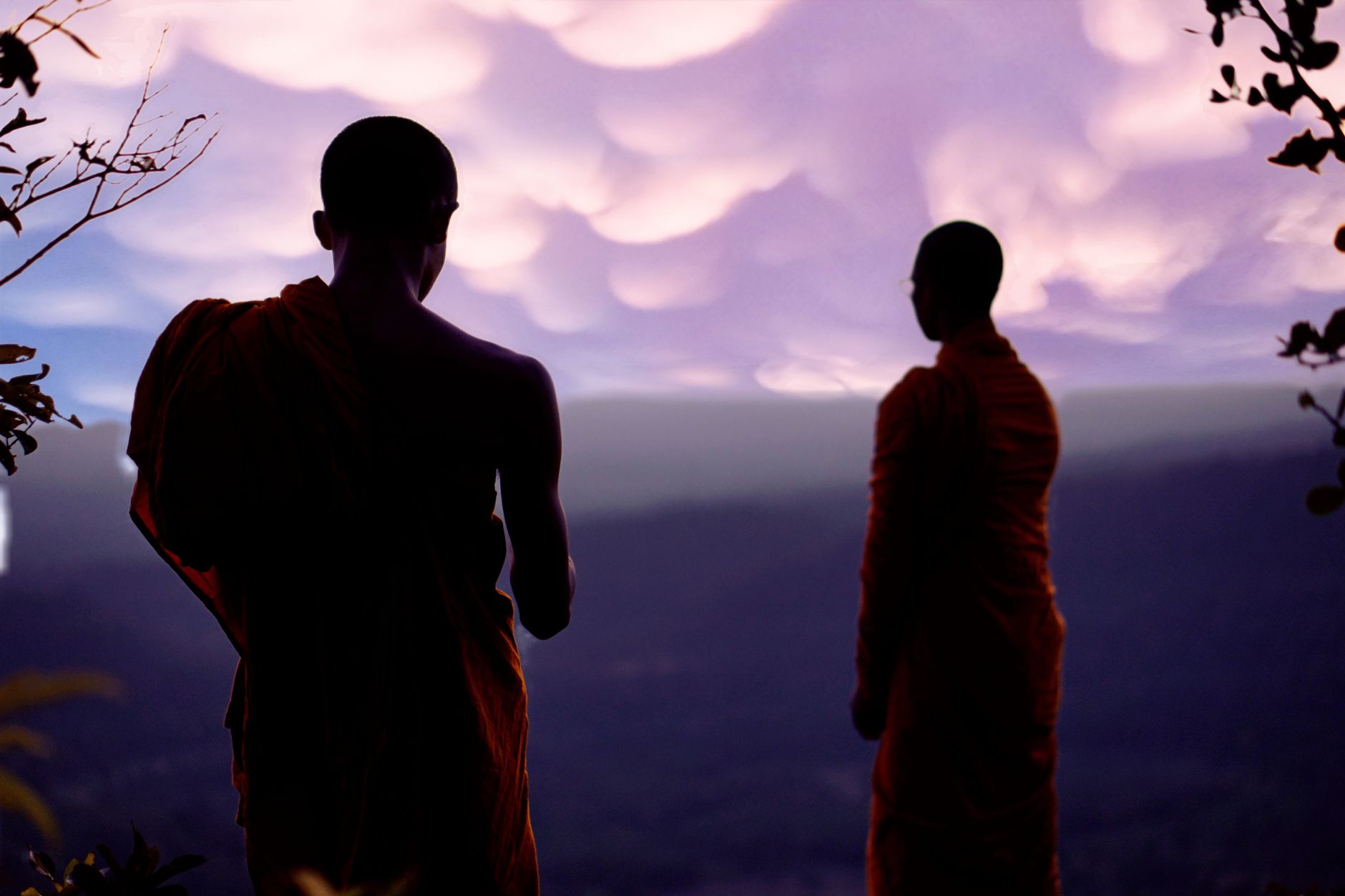
There are moments of profound silence that feel almost unbearable in their beauty. You sit on a stone wall at dusk, watching the sky turn from amber to violet, and you realize you are not thinking about anything. Not planning. Not remembering. Just present. That state is what the mystics call samadhi, what hikers call “trail mind,” and what you might call, simply, peace. It arrives uninvited and leaves the same way. But it leaves a trace.
Who It’s For
This kind of travel serves the person who is tired of performing. If you have grown weary of curating your life for an audience — real or imagined — a walking pilgrimage offers something radical: anonymity. Nobody on the trail cares about your job title, your Instagram following, or the car you drive. They care whether you have enough water and whether you snore in the hostel. That leveling is liberating.
It is also for the traveler who suspects the answer they seek cannot be found in a book, a therapist’s office, or a bottle of wine. Movement changes the chemistry of grief. It softens anxiety. It does not erase pain, but it metabolizes it. If you are carrying something heavy — a loss, a decision, a version of yourself you are ready to release — the trail will not take it from you. It will simply make it lighter to carry.
And it is for those willing to be beginners again. Who can accept blistered feet and wrong turns and the humility of asking a farmer for directions in broken Spanish. The inward journey demands that you relinquish expertise. You cannot optimize your way to transformation.
Who It’s NOT For
Let me be honest with you. This is not for the traveler who needs a guarantee. If you require a curated itinerary, a comfortable bed, and a clear return on your investment, a pilgrimage will frustrate you. There is no concierge on the Camino. There is no loyalty program for enlightenment. Some days you will walk in cold rain for six hours and feel nothing but wet and miserable. That is part of it, not a flaw in the design.
It is also not for the person seeking an escape. The trail does not let you escape yourself — it does the opposite. It corners you with your own company. If you are running from something, walking will not outrun it; walking will introduce you to it, face to face, at kilometer twenty-two when your legs are burning and there is nowhere to hide. The inward journey is not avoidance. It is confrontation, softened by grace.
And it is not for those who cannot tolerate ambiguity. The path will not tell you what it means. It will not resolve your questions. It will only hold space for you to sit with them, day after day, until the questions themselves begin to change shape.
A Profound Insight
Here is the counter-intuitive truth I carried home: the destination is a distraction. We fixate on reaching Santiago, summiting the peak, arriving at the temple. But the transformation happens in the walking, not the arriving. The moment you reach the cathedral, the journey is already over. The gift was never the endpoint — it was the thousand small moments of attention the endpoint tricked you into experiencing.
This inverts everything our culture teaches about travel. We chase checkmarks. We photograph landmarks. We return home exhausted and vaguely disappointed, wondering why the trip did not change us. The pilgrim knows better: you do not travel to see new things. You travel to see with new eyes. Those eyes are forged not at the destination, but in the long, unglamorous middle — the blisters, the silence, the stranger who shares her bread, the evening light on an empty road. The middle is where you live. The middle is where you become.
- Walk slowly. Speed is the enemy of attention. If you can cover the distance in five hours, take seven.
- Leave the headphones at home. Silence is not empty — it is full of what you have been avoiding, and that is precisely the point.
- Pack light. Every unnecessary item becomes a burden by day three. This applies to your backpack and your expectations.
- Eat with strangers. The communal table is where the inward journey becomes shared, and shared journeys heal faster.
- Keep a simple journal. Not for posterity — for noticing. Three sentences a night will do.
You do not need to cross a country on foot to practice this. You can walk a labyrinth in your city. You can take the long way home. You can sit in silence for twenty minutes and let the chatter settle. The inward journey is not a place you go. It is a way of going. It begins the moment you decide that the person you are becoming matters more than the person you have been performing.
So here is my question for you: what would you hear if you stopped talking long enough to listen? Not to the world — to yourself. The trail is waiting. It always has been. And it does not require a plane ticket, a backpack, or a month of vacation. It requires only this: the willingness to walk, slowly, toward the quiet place inside you that has been calling all along.
