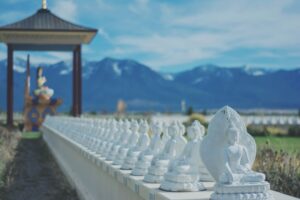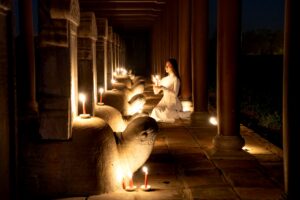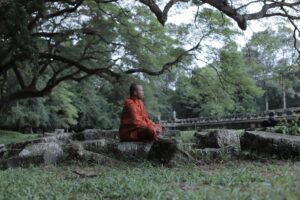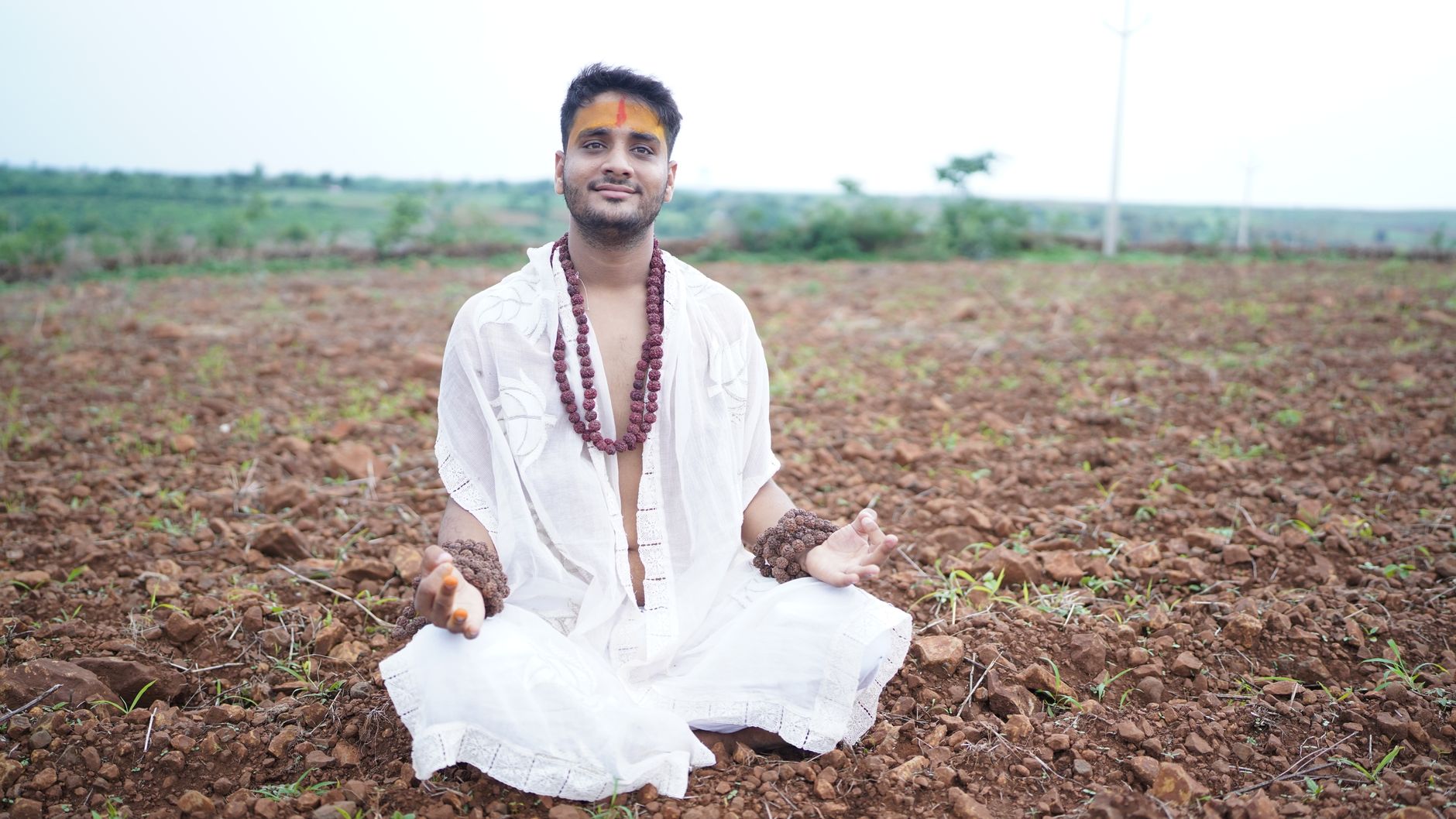
The sand holds the day’s heat long after the sun has dropped behind the ridge. Press your palm flat against it at dusk and you feel a warmth that seems to come from somewhere deeper than the surface. I learned this on my first night in the Thar, lying on my back, watching a sky so crowded with stars it looked less like emptiness and more like a conversation I had walked into mid-sentence. Deserts do this. They strip away the noise until what remains is your own breathing, and then, gently, they ask you to listen to something older than yourself.
“The desert is not empty. It is simply speaking in a language we have forgotten how to hear.”
Historical Context
Every great spiritual tradition that grew from arid ground carries the same fingerprint. The desert fathers of Egypt withdrew into the Nitrian waste in the third century, not to escape the world but to see it more clearly. Moses received his calling in the wilderness of Sinai. The Prophet Muhammad sought solitude in the cave of Hira above Mecca, where the silence pressed against him until revelation broke through. In India, the Thar has sheltered wandering sadhus for millennia, and in the American Southwest, the Hopi and Navajo have understood the high desert as a living relative rather than a resource.
What unites these traditions is not doctrine but geography. Scarcity of water creates a certain honesty. When survival depends on attention — to the direction of wind, to the tracks of animals, to the coolness of a shaded hollow — the mind quiets and the senses sharpen. The desert has always been a teacher of presence, and it has been teaching the same lesson for thousands of years: that emptiness is not absence, but a kind of invitation.
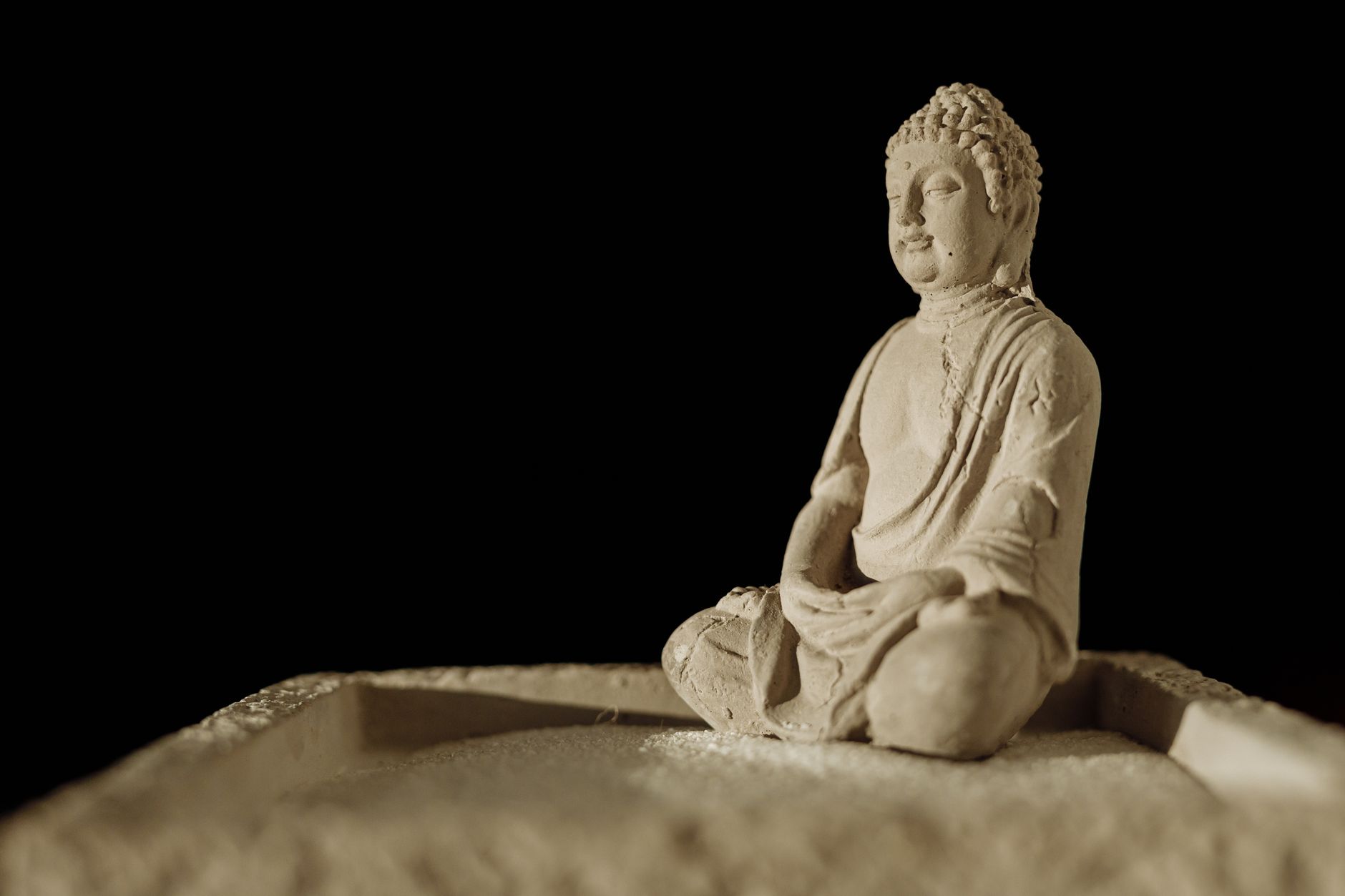
Pilgrims have walked these landscapes for reasons that shift with each generation. Some came seeking God. Some came fleeing the distractions of cities. Some came because they had lost something and suspected it might be found where nothing else could hide. The traditions differ, but the posture is the same: a person, small against a vast horizon, learning to pay attention. That posture does not age. It waits in the sand for whoever is ready to take it up.
The Experience
You wake before dawn because the cold has crept into your sleeping bag, and you step outside to find the sky the color of a bruise fading to peach. The air is so dry it feels like breathing paper. Your lips crack. Your skin forgets what moisture was. And then the sun rises, and within minutes the cold is a memory, and the sand begins to glow with a light that seems to come from inside it.
Walking in the desert is not like walking anywhere else. The ground gives slightly underfoot, so each step asks for a little more intention. There is no path, only the direction you choose, and the horizon that refuses to get closer. You learn quickly that haste is useless here. The heat punishes it. The landscape rewards slowness, and after a few hours, your body begins to understand what your mind has resisted: that you are not in control, and that this is a relief.
Sound behaves strangely. A bird’s call carries for what feels like miles. Your own footsteps become a rhythm you can meditate on. At night, the temperature drops with startling speed, and the stars arrive not gradually but all at once, as if someone had thrown a switch. The silence is not the absence of sound but a presence — thick, alive, holding you.
I have sat in meditation halls in Rishikesh and in monasteries in Kathmandu, and none of them quieted my mind the way a single hour in the desert did. There was nothing to push against. No walls, no schedule, no expectation. Just the sand, the sky, and the slow realization that I had been carrying a weight I could finally set down. The halls had taught me the technique. The desert taught me why the technique matters.

Who It’s For
This journey is for the traveller who has grown tired of being entertained. If you have visited temples and cathedrals and found yourself moved more by the architecture than the silence, the desert may offer something different. It is for the person willing to be uncomfortable in exchange for clarity — who suspects that the answers they are seeking will not arrive through more information but through less of it.
It suits the meditator who wants to test their practice without the scaffolding of a retreat center. It suits the writer, the artist, the person at a threshold in their life who needs a landscape that reflects the vastness of their own uncertainty and does not rush to fill it. It suits anyone who has ever felt that the natural world was trying to tell them something and wanted to listen more closely.
The desert asks for a specific kind of openness. You do not need to be spiritual. You do not need to be fit, though a reasonable level of mobility helps. You need only to be willing to slow down, to be bored, to sit with yourself in a place that offers no distraction and no consolation except the truth of your own company. Bring curiosity, and the land will meet you more than halfway.
- Travel with a local guide who knows the terrain and its stories — the desert is not a place to navigate alone.
- Bring more water than you think you need, and then bring a little more.
- Plan your walking for dawn and dusk; the middle of the day belongs to rest and shade.
- Leave your headphones behind. The silence is the practice.
- Carry a journal, but do not feel obliged to fill it. Sometimes the desert asks you to simply witness.
Who It’s NOT For
I want to be honest here, because the desert does not flatter and neither should I. This is not for the traveller who needs comfort, structure, and a reliable shower at the end of the day. The desert is indifferent to your preferences. It will not adjust itself to your schedule. If you find that silence makes you anxious rather than calm, or that you need the reassurance of a plan that will not change, you may spend your days counting the hours until you leave.
It is also not for the person seeking spectacle. There are no monuments here, no grand vistas that photograph well from a car window. The desert reveals itself slowly, and to the impatient eye it can look like nothing at all. And it is not for anyone who cannot accept a landscape that is genuinely dangerous if treated carelessly. Respect is not optional. The heat, the distance, the absence of water — these are not metaphors. They are facts, and they demand your attention.
A Profound Insight
The desert teaches a counter-intuitive truth: that scarcity is a form of generosity. We are trained to believe that more is better — more options, more stimulation, more information. But the desert offers almost nothing, and in that almost-nothing, everything essential becomes visible. With no distractions, you notice the quality of your own mind. With no water to waste, you learn gratitude for a single sip. With no path, you learn to trust your own direction.
This is the insight worth carrying home. Not that you should live in deprivation, but that you can choose simplicity even in abundance. You can turn off the noise. You can let a day be quiet. You can sit with an unanswered question without rushing to resolve it. The desert does not give you answers; it gives you the space in which answers might eventually arrive. And that space, once you have felt it, is something you can return to anywhere — on a crowded train, in a small apartment, in the middle of an ordinary afternoon.
What would change if you treated emptiness not as something to be filled, but as something to be trusted?
Conclusion
The desert will not make you spiritual. It will not solve your problems or hand you a revelation wrapped in cloth. What it will do is remove everything that stands between you and the simple fact of your own existence. You will be hot, and then cold. You will be thirsty, and then grateful. You will be bored, and then, if you stay long enough, something will shift — quietly, without ceremony — and you will find yourself paying attention in a way you had forgotten was possible.
Go slowly. Go with respect. Go with a guide who knows the land and a willingness to be changed by it. And when you return to the world of noise and schedules and screens, carry a little of that silence with you. The desert does not end at its edges. It lives in the space you make for it.