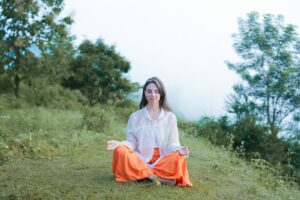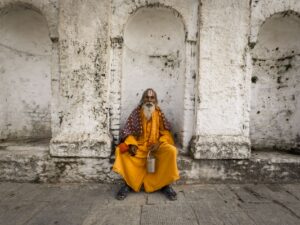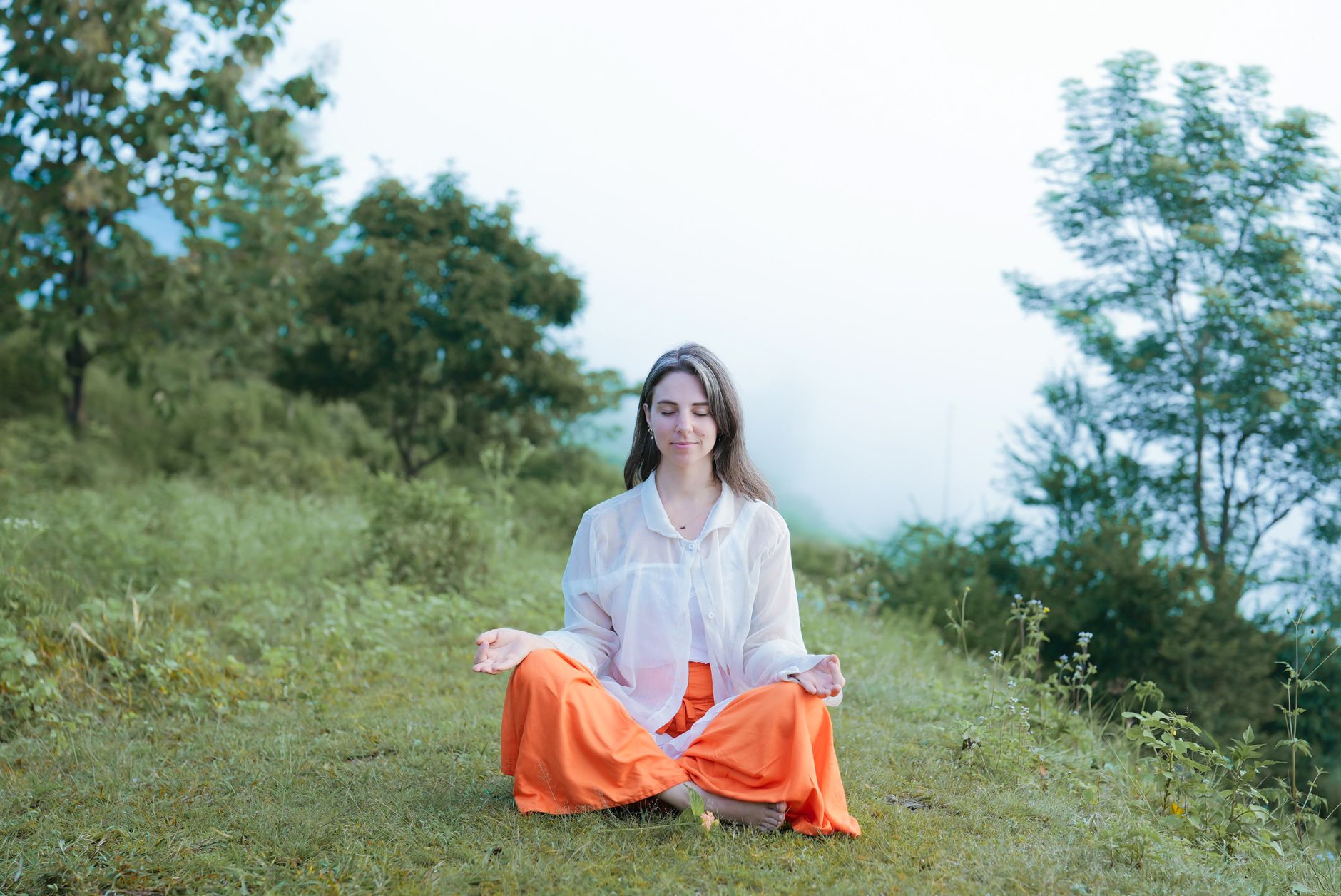
The 6:14 train from Ghatkopar to Churchgate is a river of people, and I am a leaf in it. Somewhere near Dadar, a woman presses a marigold into my palm for no reason I can name. Diesel, jasmine, someone’s onion paratha. I close my eyes, find the hum beneath the noise — the fan, the rails, my own breath — and for eleven seconds the city and I are quiet together. Stillness is not the absence of the crowd. It is what remains when you stop fighting the crowd.
Stillness is not a place you travel to. It is a way you travel.
Historical Context
The idea that a city could hold stillness is older than any of us. In the third century BCE, the Indian emperor Ashoka carved edicts into rock and pillar across his empire, and among his instructions was a curious one: that travelers on the roads should find shade, water, and rest at intervals. He built rest houses not out of charity alone but out of a belief that movement itself deserves tending. That instinct — that the road should carry pockets of quiet — runs through nearly every contemplative tradition I know. It is not a modern wellness idea dressed in old cloth. It is a much older human agreement, renewed in every generation that remembers to make it.
Consider the Japanese practice of ma, the deliberate pause between things. It shaped tea rooms and gardens and the way a haiku leaves space at its edges. Consider the Islamic tradition of the mihrab, the niche that marks direction and gathers attention. Consider the Christian cloister, walled against the market yet planted at its heart. Each of these is an argument, made in stone and silence, that the sacred does not flee the busy world. It nests inside it.

I learned this from a teacher in Rishikesh who had spent decades in Himalayan caves and then, at seventy, moved to Delhi. When I asked why, he laughed. “The mountain was easy,” he said. “The market is where the practice lives.” I have carried that sentence across a dozen cities since. The tradition of finding stillness in motion is not a compromise. It is the advanced class.
What follows is not a list of quiet cafés or secret gardens, though those exist and I love them. It is a way of moving through a loud place so that the place stops moving through you.
The Experience
Picture a morning in Istanbul, the Grand Bazaar just opening. The shutters rattle up. A man in a blue apron sweeps yesterday’s dust into a neat pile. Somewhere a kettle begins its slow argument with the flame. The noise will arrive soon — the hawkers, the trolleys, the thousand small transactions — but for now there is this narrow corridor of almost-silence, and if you stand in it without reaching for your phone, it will hold you like a cupped hand.
That is the first thing stillness in a city feels like: not a retreat but an arrival. Your shoulders drop an inch. Your jaw unclenches. You notice that you have been clenching at all. The sounds around you do not disappear; they separate. The kettle is over there. The footsteps are behind you. Your breath is here, in the middle, small and steady.
Then comes the second thing, which is harder to describe. The city begins to feel less like an adversary and more like weather. You stop bracing against it. A bus backfires and you flinch — of course you flinch — but the flinch passes through you and leaves no residue. You are walking through the market and the market is walking through you, and neither of you is harmed.
I have felt this on a packed Tokyo platform at rush hour, standing perfectly still while a hundred people flowed around me like water around a stone. I have felt it in a Marrakech souk at dusk, the light going amber, the air thick with mint and diesel. I have felt it in Mexico City traffic, of all places, when the radio went quiet between songs and the whole avenue seemed to exhale. The experience is always the same in its essence. The setting is always different in its texture.
And here is the part that surprises people: it is not restful in the way sleep is restful. It is alert. Stillness in a city is a wakefulness, not a drowsiness. You are more present, not less. The marigold in your palm is more marigold, not less. The woman who gave it to you is more real. That is the gift of the practice — not that the world fades, but that it sharpens.

Who It’s For
This practice serves the traveler who has stopped trying to escape the city and started trying to inhabit it. If you have ever found yourself exhausted by a place you came to love, this is for you. If you have ever stood in a magnificent square and felt only the pressure to photograph it, this is for you. If you have ever wondered whether your sensitivity to noise and crowd and chaos is a weakness — it is not, by the way, it is the raw material of attention — then you are already halfway here.
It serves the walker who does not need a destination. The one who can sit on a low wall for twenty minutes without a book. The one who is willing to be bored for the sake of being present. The one who understands that a city is a living thing and wants to meet it rather than conquer it.
I think especially of the traveler who arrives with a list and leaves with a feeling. You know the type. They have seen the cathedral, the museum, the famous bridge, and they cannot tell you what any of it felt like. This practice is for the moment they set the list down.
Who It’s NOT For
I will be honest with you: this is not for the traveler who needs the city to perform. If you have come for the nightlife, the shopping, the constant stimulation — good. Enjoy it fully. There is no virtue in forcing stillness on a week that wants to dance. The practice will only frustrate you, and you will resent the silence the way a child resents a nap.
It is also not for the traveler in genuine distress. If the noise of a city is triggering anxiety or panic, the answer is not more exposure. Find the quiet room. Find the garden. Find the train home. Stillness in the crowd is an advanced practice, and no one should be pushed into it before they are ready. There is no shame in the cloister. The cloister exists for a reason.
And it is not for the person who wants a technique. This is not a hack. There is no app that will do it for you, no five-minute method that guarantees a result. It is a relationship, and relationships take the time they take.
Here is a counter-intuitive opinion I hold: the busiest cities are often the easiest places to find stillness, because the contrast is so sharp. A quiet village asks nothing of you. A roaring metropolis asks everything, and in asking, it teaches. The hard place is the good teacher.
A Profound Insight
The insight I want you to carry home is this: stillness is not a state you achieve but a relationship you maintain. You do not “find” it once and keep it in your pocket. You return to it, again and again, the way you return to a friend. The city will keep moving. You will keep moving. The practice is the returning.
My teacher in Rishikesh used to say that the breath is the only thing you carry with you into every room. Not your luggage, not your plans, not your expectations. The breath. And the breath is always available, even in the loudest market, even on the most crowded train. It is the one door that never locks. You do not need a mountain. You need the next inhale, and the next, and the willingness to notice them.
There is a deeper layer here, too, one I am still learning. When you stop resisting the city, you begin to see that the city was never the problem. The problem was the story you told about the city — that it was too much, too loud, too fast. The story was the noise. The city was just the city, doing what cities do, which is to gather human life into a dense and beautiful knot. When the story quiets, the knot becomes something you can hold.
Carry this home: the place you are going is not separate from the place you are. The stillness you seek on the mountain is the same stillness available on the platform. It does not care where you are. It only asks that you stop, for eleven seconds, and let it find you.
Conclusion
I still take that 6:14 train when I am in Mumbai. The marigold woman has not appeared again, but I look for her. The carriage is still loud. The fan still hums. And somewhere between Dadar and Churchgate, I close my eyes and find the eleven seconds, and the city and I are quiet together. It is not a perfect practice. It is a returning. That is enough. That has always been enough.
- Begin with the breath, not the setting — the inhale is the one quiet room you always carry with you.
- Arrive early to busy places; the first fifteen minutes before the crowd are a free gift of stillness.
- Let sounds separate rather than disappear — name what you hear, and the noise becomes texture rather than assault.
- Walk without a destination once a day; let the city lead and follow where it goes.
- Carry one small ritual — a marigold, a stone, a phrase — to anchor you when the crowd presses close.