The air inside Batu Caves smells of wet limestone and coconut oil. Wooden steps creak under my sandals as I climb. A macaque watches from a ledge, unimpressed. Below, a Hindu priest lights camphor in a brass tray, and the smoke curls upward into a cathedral of stone that no human hand carved. I have come here, as I have come to caves from Cappadocia to Ajanta, to understand why our species keeps returning to the dark. The answer is never simple. It is never far from the body.
“The cave does not ask you to believe. It only asks you to enter.”
Historical Context
Sacred caves are among the oldest places of human worship we can still touch. In the Hohle Fels cave of southern Germany, archaeologists found a figure carved from mammoth ivory—a woman with exaggerated features—that dates back some forty thousand years. Before temples, before writing, before agriculture, we carried small objects into the dark and placed them with care. Something about the cave’s acoustics, its constant temperature, its absolute darkness, told our ancestors that this was a place where the ordinary rules did not apply.
The tradition is not a single thread. It is a braid. In India, the Ajanta caves held Buddhist monastic communities who painted the life of the Buddha across walls over centuries; the Ellora caves nearby hold Buddhist, Hindu, and Jain sanctuaries side by side, a testament to coexistence that modern travellers find quietly astonishing. In Turkey, the cave churches of Cappadocia were carved by early Christian communities hiding from persecution, their frescoes still vivid in the soft volcanic rock. In Mexico, the Maya regarded cenotes—sinkholes leading to underground water—as doorways to the underworld, and they threw offerings into them with the same devotion that others brought to altars.
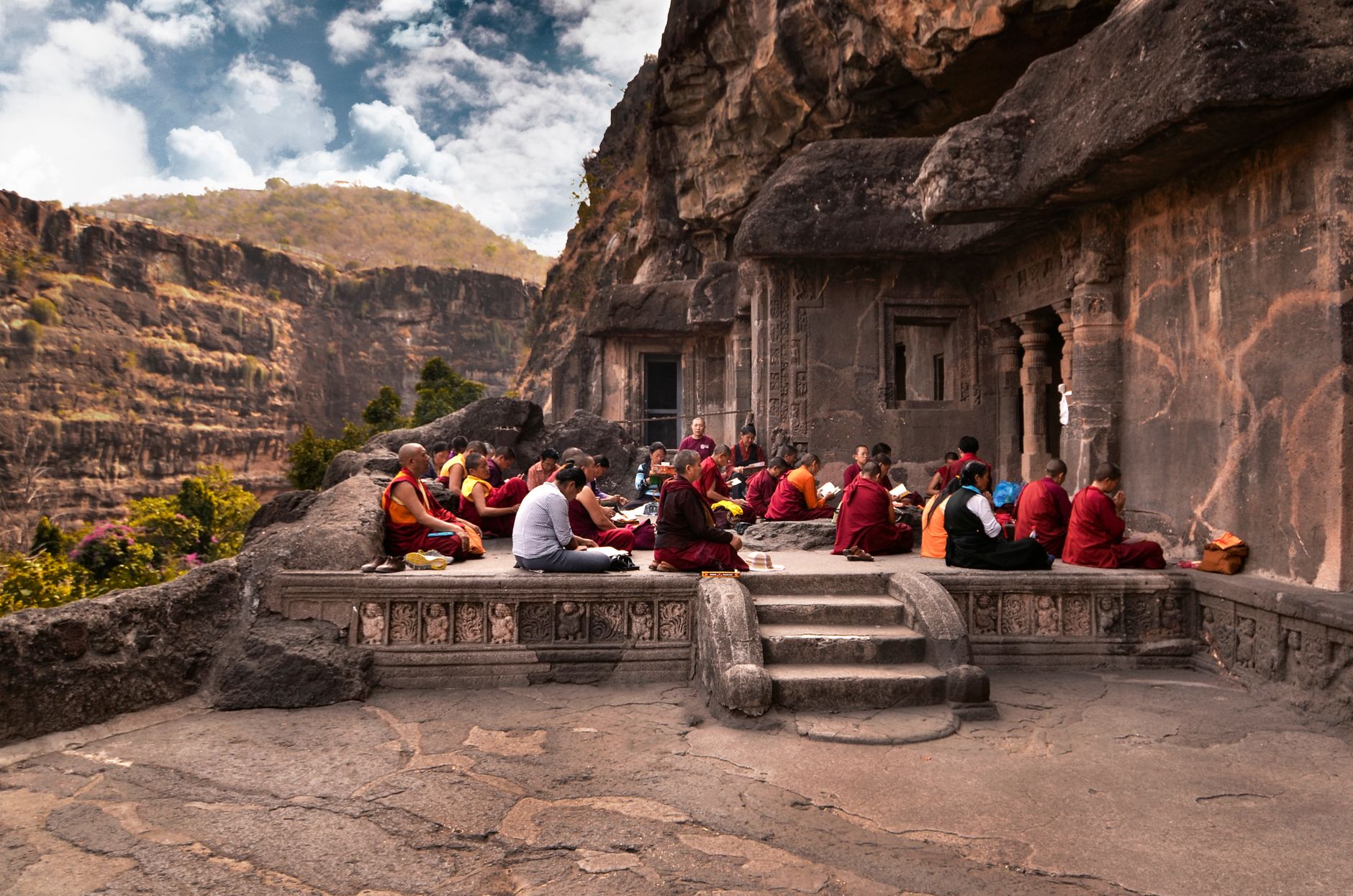
What unites these places is not theology. It is geography. A cave is a threshold, a place where the surface world ends and something else begins. The historian Mircea Eliade wrote of sacred space as a break in the homogeneity of the ordinary—a point where the world opens. Caves are the original such break. They are also, practically speaking, where water collects, where shelter is found, where the dead are laid. The sacred and the necessary have always shared the same address.
Travel to these sites today and you are walking a path worn by pilgrims across dozens of centuries. That is not a small thing. In a world that builds new and demolishes old with equal speed, a cave is a rare witness. It has outlasted empires. It will outlast us.
The Experience
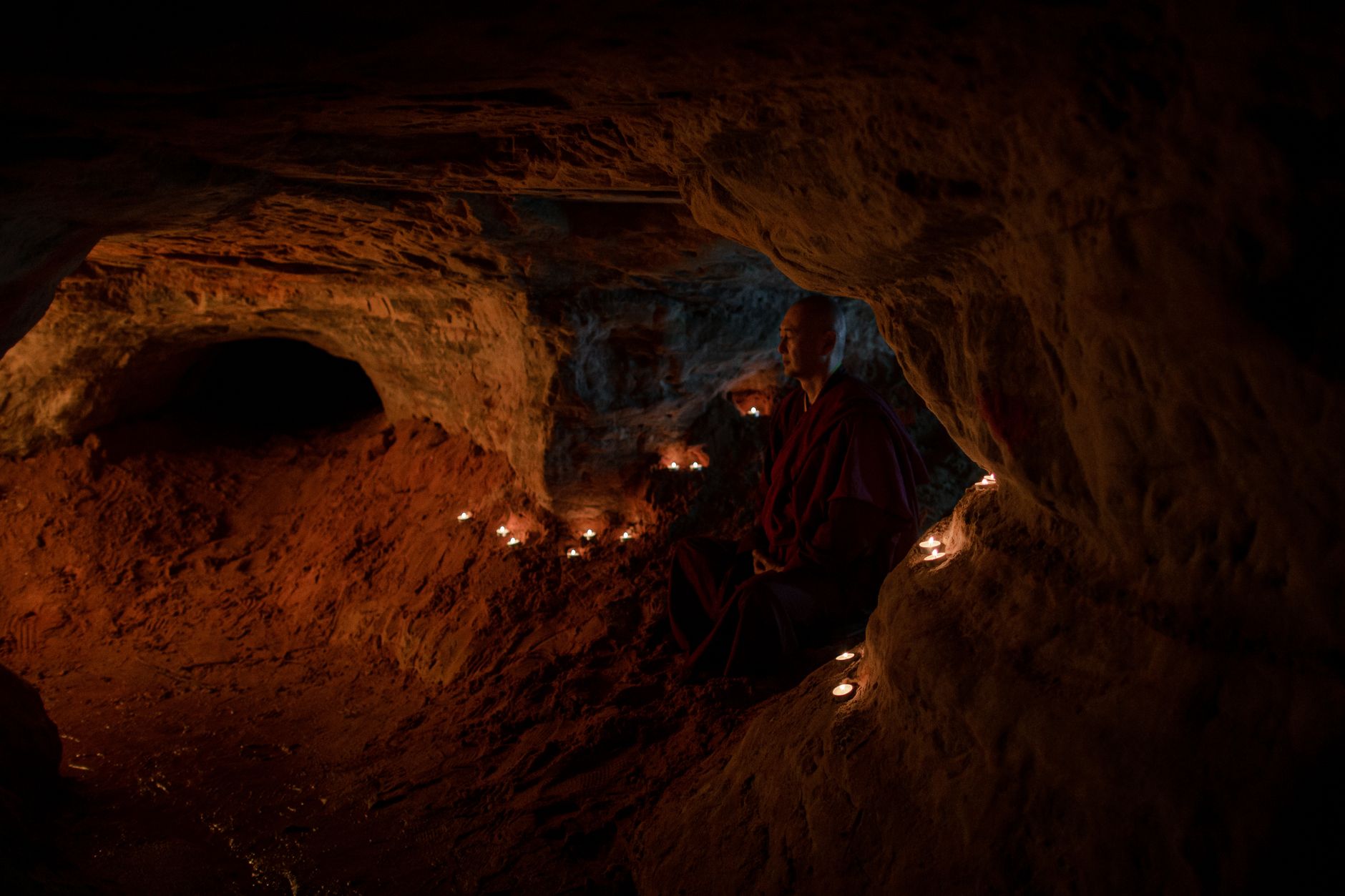
Entering a sacred cave is a full-body event. The temperature drops first—often ten degrees or more—and your skin registers the change before your mind does. The light falls away in stages, not all at once, so you find yourself squinting at the last patch of daylight on the wall as if it were a friend leaving a room. Sound behaves strangely. A whisper carries. A footstep echoes back at you from a direction you did not expect. In some caves, the acoustics are so particular that chanting in one chamber produces a resonance in another, and you understand why ancient builders chose this place and not another.
My own practice as a yoga teacher has taught me to notice the breath, and caves make this unavoidable. The air is cool and mineral. It smells of damp stone, of candle smoke, of the faint sweetness of flowers left by other visitors. Your breathing deepens without instruction. The body, sensing enclosure, either tightens or releases. Most people release, eventually. The cave has been holding pilgrims for a long time, and it knows how to hold you too.
At Batu Caves, the climb is 272 steps, and the reward is a vast chamber where a Hindu shrine glows in the half-light. At Ajanta, you walk from cave to cave along a cliff face, and each doorway reveals a different world. At the cenotes of Yucatán, you descend into water so clear it seems to disappear, and the roots of trees dangle from the ceiling like questions. Each place has its own grammar of the sacred. But the feeling—the sense of being small, held, and witnessed—is remarkably consistent.
Do not rush. This is the one instruction that applies everywhere. Caves reward stillness. Sit down. Let your eyes adjust. Wait until the tour group moves on and the chamber returns to something like silence. That is when the place speaks, and it does not speak in words.

Who It’s For
This kind of travel suits the traveller who is willing to be uncomfortable in exchange for wonder. You do not need to be religious. You do not need to be fit beyond the ability to climb steps and walk on uneven ground. But you do need a certain tolerance for the dark, for enclosed spaces, for the smell of damp stone, and for the presence of other people who may be praying, weeping, or taking selfies. The sacred does not filter its visitors.
It suits the traveller who wants to move slowly. Sacred caves are not efficient destinations. They demand time—to arrive, to descend, to sit, to let the place work on you. If your itinerary is built around seeing as much as possible, these sites will frustrate you. If it is built around seeing one thing well, they will reward you beyond measure.
It suits the traveller who is curious about history as a lived experience rather than a list of dates. Standing in a cave where monks painted the life of the Buddha in the second century BCE, you do not need a plaque to feel the continuity. You need only to notice that the paint is still there, and that someone’s hand made it, and that the hand belonged to a person who breathed the same cool air you are breathing now.
It suits the spiritual seeker who is wary of institutions but hungry for practice. Caves are not churches. There is no doctrine at the door. What they offer is a container—a place where attention becomes natural, where the mind quiets without being told to.
Who It’s NOT For
Honesty matters here. Sacred caves are not for everyone, and pretending otherwise does a disservice to the traveller and the place.
If you experience claustrophobia, do not force it. The body’s fear of enclosure is ancient and wise, and no amount of spiritual aspiration overrides it. Some caves are vast and airy; others are narrow and low. Know which you are entering. Read the descriptions. Ask at the entrance. There is no shame in waiting outside while your companions go in—the cave will not be offended, and you will not have failed some test of openness.
If you need comfort and predictability, this is not the trip for you. Cave floors are uneven. Lighting is often poor. Bathrooms are sometimes absent. The experience can be physically demanding, and it is rarely convenient. Travel to sacred caves is a small pilgrimage, and pilgrimages have always required a measure of discomfort. If discomfort is the thing you are travelling to escape, choose another destination.
If you are looking for spectacle without participation, reconsider. These are living places of worship, not attractions. At Batu Caves, worshippers are praying while tourists photograph them. At many sites, you will be asked to remove your shoes, cover your head, or keep silence. If you cannot honor those requests with genuine respect, stay away. The cave does not need you. The community that tends it does not need you. Your presence is a privilege, not a right.
And if you are seeking certainty—proof of a specific truth—the cave will disappoint you. It offers atmosphere, not argument. It is a place where questions deepen rather than resolve. That is its gift, and its boundary.
A Profound Insight
Here is the idea I carry home from every sacred cave, and it is counter-intuitive: the cave is not a place to hide from the world. It is a place to practice returning to it. We tend to think of retreat as escape—a withdrawal from the noise and demand of ordinary life. But the pilgrims who carved these sanctuaries did not stay in them forever. They descended, they prayed, they painted, and then they climbed back out into the light and the market and the argument and the meal. The cave was a rehearsal space for the world, not a replacement for it.
This matters because so much of modern spiritual seeking mistakes retreat for arrival. We go on the silent meditation course, the yoga retreat, the pilgrimage to the sacred site, and we come home changed—for a week. Then the change fades, and we book another retreat. The cave teaches a different rhythm. You enter, you receive, you leave. The leaving is part of the practice. The point is not to remain in the dark but to carry its quiet into the daylight.
I think of the cenotes of Yucatán, where the Maya threw offerings into the water and then returned to their fields. The water held the prayer. The people returned to the work. That is the whole of it. The sacred is not a destination. It is a resource, and it is meant to be spent.
Ask yourself, honestly: where in your life are you mistaking retreat for arrival? Where are you staying in the cave when the cave has already given you what it has to give? The answer may be uncomfortable, and it may be exactly what you needed to hear.
Conclusion
Sacred caves are among the most honest places on earth. They do not pretend to be comfortable. They do not promise enlightenment. They simply hold—the dark, the damp, the prayers of forty thousand years, the small flame of a camphor lamp in the hand of a priest who has come here every morning for decades. When you enter one, you join a line of people stretching back beyond memory, all of them looking for the same thing: a moment of quiet in the presence of something larger.
Travel to them slowly. Remove your shoes. Sit down. Let your eyes adjust. And when you climb back out into the light, carry the quiet with you. That is the practice. That is the whole of it.
- Choose caves that match your physical comfort—read descriptions and ask at the entrance before committing.
- Visit early in the morning or late in the afternoon, when tour groups thin and the atmosphere returns.
- Honor local customs: remove shoes, cover your head, keep silence where requested, and never photograph worshippers without consent.
- Sit for at least fifteen minutes in stillness. The cave rewards patience more than any guidebook can.
- Treat the cave as a rehearsal for ordinary life—receive what it offers, then return to the world and spend it.