The dust on the road to Bodh Gaya settles into the creases of your palms and stays there for days. I noticed this on my third morning walking the pilgrim circuit, when I looked down and saw the fine ochre powder mapped across my lifeline like a small geography of everywhere I had been. Travel does this. It marks us in places we don’t think to check. We board a train or a plane expecting to arrive somewhere new, and instead we arrive as someone slightly new — if we’re paying attention. That attention is the whole practice. Without it, we are just moving our bodies through space, collecting stamps and photographs and the quiet exhaustion of itineraries.
Pilgrimage is not the art of covering distance. It is the art of letting distance uncover you.
Historical Context
The idea that travel could be a spiritual discipline is not a modern wellness invention. It is older than most of our religions. In India, the tradition of tirtha-yatra — journeying to sacred crossings, places where the divine is said to touch the earth — predates the Buddha by centuries. The word tirtha means a ford, a place where a river can be crossed. The pilgrim moves toward the crossing, and the crossing moves something within them. That double movement is the heart of it.
Consider the medieval Christian pilgrim walking the Camino de Santiago, sleeping in monasteries, receiving hospitality not as a transaction but as a gift. Consider the Japanese junrei, the circuit of eighty-eight temples on Shikoku, walked in white robes and straw hats, a practice tied to the monk Kūkai and sustained for over a thousand years. Consider the hajj, the Islamic pilgrimage that gathers millions into a single circling motion around the Kaaba. Different lands, different prayers, same underlying architecture: leave home, surrender comfort, arrive somewhere that asks you to be more present than you usually are.

What these traditions share is a suspicion of travel as mere consumption. The pilgrim is not a tourist with better intentions. The pilgrim travels to be changed, and accepts that change may be uncomfortable. The old maps marked pilgrimage routes with the same care as trade routes, because the inner journey was understood to be as real as the outer one. We have largely forgotten this. We have optimized travel into something efficient and pleasant, and in doing so we may have quietly removed the very friction that made it transformative.
The Experience
Here is what it actually feels like. You wake before the sun because the trail demands it, and your body — still half-asleep, still unpersuaded — moves anyway. The air is cold enough to sharpen everything. Somewhere ahead of you a bell rings, or a rooster, or nothing at all but the sound of your own boots on stone. Breakfast is simple: bread, tea, a piece of fruit. You eat it slowly because there is nowhere to rush to. Time loosens its grip.
By mid-morning the mind begins to quiet. Not because you have mastered it, but because it has run out of things to worry about. The concerns you carried from home — the email, the argument, the bill — grow distant, not resolved but somehow smaller against the scale of what you’re walking through. The body becomes a companion rather than an obstacle. You notice your breath. You notice the way the light falls across a wall that has stood for six hundred years and will stand long after you are gone. There is grief in that, and also relief.
By evening, you are tired in a way that feels earned. You sit with strangers who have become, over the course of a day, something closer to companions. Conversation is easy because everyone is too tired to perform. Someone passes bread. Someone tells a story about a wrong turn. You laugh, and it comes from somewhere deeper than your usual laugh. This is the texture of the practice: small, unglamorous, cumulative. The sacred does not announce itself. It accumulates, like dust on a palm.
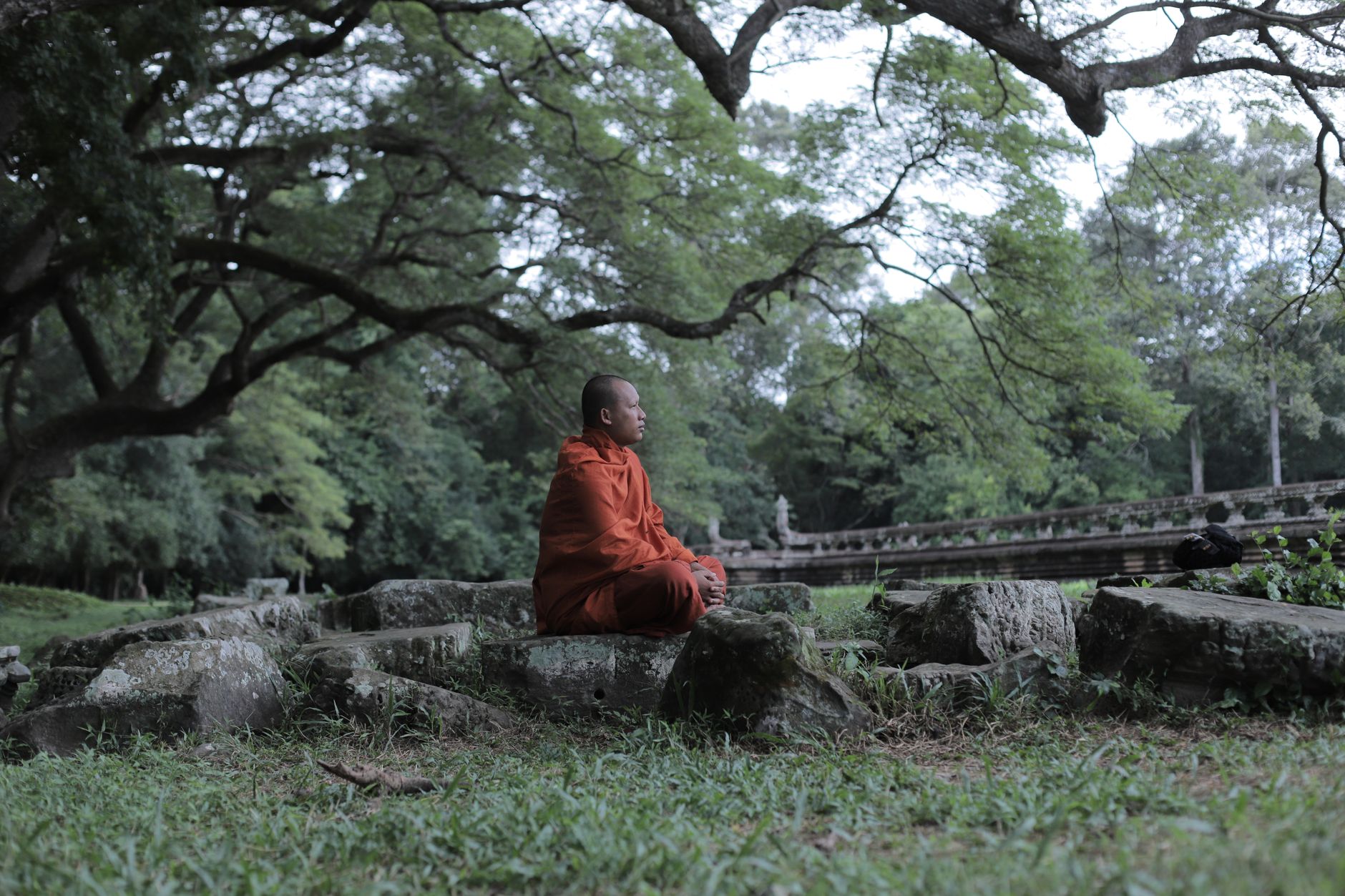
Who It’s For
This practice serves the traveller who is tired of being a spectator. The one who has taken beautiful trips and returned home feeling oddly empty, as though the photographs captured something the experience itself did not deliver. The one who suspects that the restlessness they feel is not a problem to be solved by more travel, but an invitation to travel differently.
It suits people at thresholds: after a loss, before a change, in the disorienting middle of a life that no longer fits its old shape. It suits those willing to be a beginner, to not know the language, to be humbled by a trail that is harder than expected. It suits anyone who can hold a simple question in their heart for days at a time without needing the answer to arrive on schedule. If you can walk slowly and pay attention, this path will meet you.
Who It’s NOT For
Let me be honest with you. This is not for the traveller who needs the trip to be comfortable, predictable, and fully optimized. If your joy depends on good Wi-Fi, a firm mattress, and a reliable schedule, a pilgrimage will feel less like a spiritual practice and more like a series of inconveniences you paid to endure. That is not a moral failing. It is simply a mismatch of intentions.
Nor is it for anyone using travel as an escape from something they refuse to face. The road does not let you outrun yourself. It tends, in fact, to bring you face to face with whatever you were hoping to leave behind. If you are not ready for that meeting, stay home. Tend to your garden. The sacred is not confined to distant places, and a pilgrimage undertaken as avoidance will only deepen the avoidance. There is no shame in knowing your season. Some years are for walking. Some are for sitting still.
A Profound Insight
Here is the counter-intuitive idea I would carry home: the most important part of a pilgrimage is the return. We tend to think the transformation happens on the trail — the mountain, the temple, the long walk at dawn. But the trail is only the preparation. The real practice begins when you come back to your ordinary life and discover that it has not changed, but you have. The dishes still need washing. The commute is still the commute. And yet you meet it all differently, because something in you has been reordered.
The pilgrim’s task is to bring the mountain home. To let the quiet of the trail become the quiet of the kitchen. To let the generosity of strangers become the generosity you offer the person in front of you in line. This is where most of us lose the thread. We return, we unpack, we resume, and within a week the dust is washed from our palms and the insight has thinned to a pleasant memory. The practice is to keep the dust. To remember that the crossing you sought was never only out there.
Ask yourself honestly: what would it mean to treat your ordinary Tuesday as a pilgrimage? The same attention. The same slowness. The same willingness to be changed by what you encounter, even when what you encounter is a traffic jam or a difficult conversation. That question, held with sincerity, is worth more than a thousand photographs.
If you take up this practice, here are the threads I would keep close:
- Travel with a question, not an itinerary. Let the question guide the days and trust that the answer may arrive as a feeling rather than a sentence.
- Walk more slowly than feels efficient. The pace is the point; hurry is the enemy of attention.
- Eat simply, sleep early, and let the body’s rhythms lead. The body is a wiser guide than the mind on these journeys.
- Speak to strangers. Hospitality offered and received is the quiet engine of every pilgrimage tradition.
- Plan the return as carefully as the departure. Set aside time to integrate what the road has shown you before ordinary life swallows it whole.
- Keep one small ritual from the trail — a morning pause, a walking prayer, a moment of silence at dusk — as an anchor for the weeks that follow.
Travel, at its most honest, is a practice of becoming unarmored. We leave behind the routines that protect us and step into the world with our soft edges exposed. The road does not care about our credentials or our plans. It asks only that we show up, pay attention, and let ourselves be moved. That is the whole teaching, and it is enough. The dust will find your palms. Let it stay there a while.