**The Pilgrimage Within: A Mindful Guide to Yoga Tourism**
We board planes to escape, yet often we carry our cages with us, neatly folded in our carry-on luggage. We seek new horizons, but the same mental chatter—the relentless to-do lists, the anxieties of a digital life—follows us like a persistent shadow across the tarmac. The modern tourist is a collector of sights, a hunter of photographs, a consumer of places. But there is another way to travel, one that is less about the destination and more about the descent—a descent into the quiet, expansive terrain of the self. This is the essence of yoga tourism, a pilgrimage not of miles, but of moments.
It begins with a shift in intention. This is not a vacation; it is a retreat. The distinction is crucial. A vacation is a pause from life, a temporary reprieve. A retreat is a deepening into life, a conscious engagement with its most profound questions. The true yoga tourist does not ask, “What will I see?” but rather, “What will I allow myself to feel?” The itinerary is not a checklist of temples and beaches, but a series of invitations to be present.
This is the heart of slow travel. We are conditioned to believe that faster is better, that more is superior. But in the yogic tradition, slowness is a technology. It is the deliberate pace of the breath, the deliberate pause between postures. When we apply this principle to travel, we stop rushing from one sacred site to the next. We choose a single location and allow it to reveal itself to us over days, not hours. We sit with the sunset until it is fully gone, not just until we have captured it on our phones. We learn the rhythm of the local market, the names of the fruit sellers, the particular angle of the morning light on the temple walls. In this slowness, the destination ceases to be a backdrop and becomes a living, breathing presence, a teacher in its own right.
The asana practice—the physical postures of yoga—becomes a metaphor for this journey. On the mat, we are asked to meet our edge, the place where resistance arises. We learn to breathe into the discomfort, to soften rather than to force. Travel offers the same invitation. The unfamiliar food, the language barrier, the disorienting maze of ancient streets—these are our postures. They are opportunities to practice equanimity. When we are lost, we do not panic; we practice being lost. We observe the feeling of uncertainty without letting it define us. We realize that we are not lost, but simply meandering. This is the inner transformation—the slow, subtle alchemy that occurs when we trade our plans for presence.
Cultural immersion, in this context, is not an activity to be checked off a list; it is an act of devotion. It is the practice of *Seva*, or selfless service, applied to our interactions. We are not merely observers of a culture; we are guests in its home. We approach the local people not as curiosities, but as fellow travelers on the human journey. We learn a few words of their language, not for convenience, but as a gesture of respect. We eat what they eat, not because it is exotic, but because it is their nourishment. We listen to their stories, not to collect anecdotes, but to expand our own hearts.
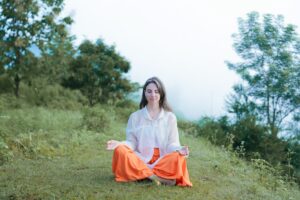
Imagine waking before dawn in a village nestled in the foothills of the Himalayas. The air is crisp and carries the scent of woodsmoke and damp earth. You walk, not run, to a small, open-air shala overlooking a mist-covered valley. The only sound is the rustle of prayer flags and the distant call of a bird. Your teacher, a man with eyes that hold a profound stillness, guides you through a gentle sequence. There is no music, no mirrors, no competition. There is only the sound of your breath and the sensation of life moving through you. This is not a workout; it is a homecoming. Later, you sit with the teacher and his family, drinking chai, sharing silence more than words. You learn that his father built the shala with his own hands, stone by stone. You learn that the village festival is next week, and you are invited. This is not tourism; this is kinship.
The transformation is not always dramatic. It is not a lightning bolt of enlightenment, but rather the slow wearing away of a stone by a steady stream of water. It is the realization that you can sit by yourself for an hour without feeling the need for distraction. It is the discovery that your shoulders have dropped an inch from your ears. It is the quiet confidence that comes from navigating a chaotic city with a steady breath. It is the profound recognition that the peace you were seeking in a distant land was, in fact, always residing within you. The journey simply gave you the space and the stillness to finally listen to it.
As the journey concludes, the temptation is to cling to the experience, to try to bottle the serenity and bring it home. But the gift of mindful travel is not a souvenir to be displayed; it is a skill to be integrated. You return not to your old life, but to a new version of yourself, carrying a deeper sense of calm, a broader perspective, and a heart that has been gently pried open by the beauty of the world.
The final and most important leg of the pilgrimage is the journey home. How do we maintain this inner silence amidst the noise of the airport, the traffic, the inbox? We practice. We remember that the mat is wherever we are. The breath is our constant companion. The slow, mindful gaze we cultivated in a foreign land can be turned upon our own familiar streets. We see our hometown anew, with the same eyes of a traveler—curious, open, and grateful.
Ultimately, yoga tourism is a paradox. It is a journey out into the world to find a way back into ourselves. It is a path of slow movement that leads to profound inner stillness. It is a surrender to the unknown that reveals our most authentic knowing. So, the next time the wanderlust calls, do not ask where you should go. Ask, instead, who you want to become on the way. The map is not a destination; it is a mirror. And the most sacred site you will ever visit is the one that lies, waiting patiently, in the quiet center of your own being.