The train from Varanasi to Bodh Gaya leaves at 4:40 in the morning. For the first hour the only sound is the slow arithmetic of the wheels — a counting that never resolves. I was twenty-six, travelling with a notebook I barely opened, and I remember pressing my ear to the window glass because it seemed to hold the hum differently than the air did. Somewhere past Dehri-on-Sone, a man began to sing. Not loudly. Just enough. I have chased that sound across a dozen countries since, and I have never found it again.
Silence is not the absence of sound. It is the room sound needs in order to mean anything.
Historical Context
Every culture that has built a temple has also built a theory of listening. The Sanskrit word śravaṇa means hearing, but in the Upanishads it means something closer to total receptivity — the ear as the first door of understanding. Long before written scripture, the Vedas were carried in the breath and the ear. A student learned by sitting near a teacher, which is what upaniṣad literally suggests — to sit down near. The whole tradition is an architecture of proximity and sound, built from breath and attention rather than stone.
In the Christian West, the same instinct took stone form. Romanesque churches were built with acoustics that blurred speech and amplified chant; later Gothic builders tuned naves so that a single voice could bloom into something the congregation felt in the sternum. The Orthodox tradition went further, insisting that the icon and the chant were the same act — the eye and ear receiving one message. Meanwhile, in Japan, the Zen garden and the suzu bell developed a parallel discipline: sound used sparingly, so that the silence around it could do its work. The wind chime outside a Kyoto tea house is not decoration. It is a metronome for attention.
What unites these traditions is a shared suspicion of noise as a moral problem, not merely an aesthetic one. The desert fathers fled to Egypt partly to escape the clamour of cities. The Buddha’s first instruction to his monks on the art of dwelling was about restraint in speech. None of this was anti-world. It was a recognition that the inner ear needs protecting, the way a flame needs a cupped hand. The old builders understood something we have mostly forgotten: that a room is not finished when the walls go up. It is finished when someone learns to be quiet inside it.
The Experience
I have sat in the crypt of a Norman church in Caen and heard my own heartbeat arrive before the echo of the door closing. I have walked the Path of Silence at a forest monastery in Chiang Mai, where the rule is not that you may not speak, but that you must notice the impulse to. That distinction changed everything for me. The impulse arrives, hot and insistent, and then — if you let it — it passes. You learn that most of what you want to say is not communication. It is discharge.
Sound in travel is not only the sacred kind. The call to prayer in Fez at dusk is a sound I can still locate in my body — a low, layered wave that rises from four directions at slightly different moments, so that for a few minutes the city seems to breathe in stereo. The clatter of a Lisbon tram on worn rails. The particular hush of a snowbound village in Hokkaidō, where the silence is not empty but muffled, as if the world has been wrapped in wool. Each of these places taught me something about the difference between hearing and listening, and I suspect the difference is where the whole practice lives.
Here is what the practice asks of you: to arrive without headphones. For the first day, at least. To let the unfamiliar soundscape be unfamiliar, rather than smoothing it into a familiar playlist. To sit somewhere public for twenty minutes and do nothing but listen — not to judge, not to narrate, just to receive. This is harder than it sounds. The mind rushes to name things. Let it name them, then let the names go. Twenty minutes can feel like an hour. Then, somewhere in the second half, it stops feeling like anything at all, and that is the beginning.
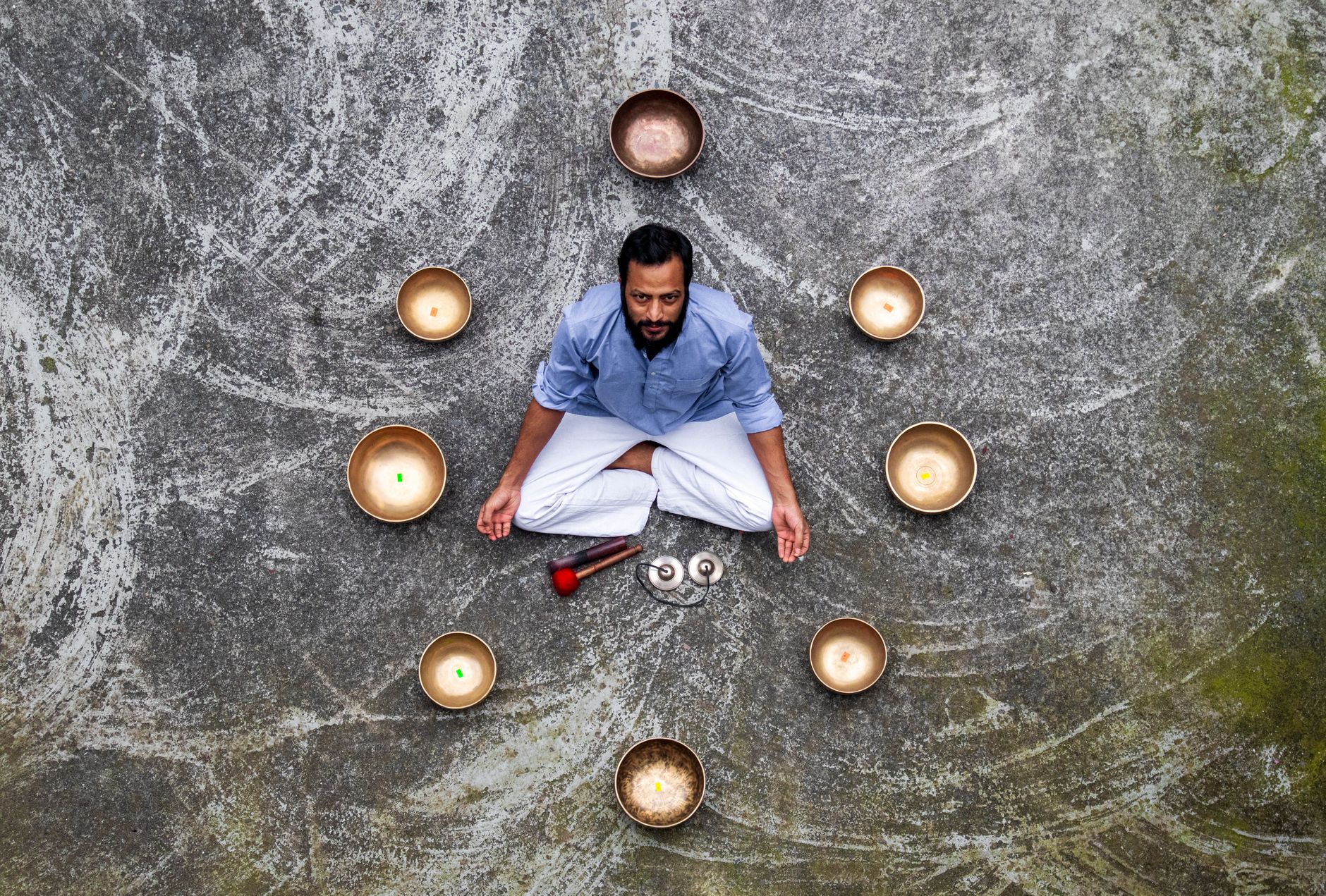
And then the deeper turn: find the silence inside the sound. There is a Tibetan practice of listening to a bell until the tone fades, and then continuing to listen to the fading — the residue. The bell is not the point. The point is the space the bell reveals. You can do this anywhere. A cathedral. A train. A market at dawn. The bell is whatever is ringing.

Who It’s For
This way of travelling serves the person who has grown tired of collecting places and wants instead to be collected by them. If you have ever stood in front of a famous monument and felt nothing but the pressure of the crowd behind you, this is for you. If your camera roll is full and your memory is thin, this is for you. If you are a listener by temperament — someone who notices the hum of a refrigerator, the particular way a friend’s voice changes when they are lying — you already have the instrument. This practice just tunes it.
It suits the slow traveller, the one willing to spend an afternoon in a single square. It suits the pilgrim more than the tourist, though the two can share a passport. It suits anyone in the middle of a life transition, because silence has a way of making the next step audible. And it suits people who thought they were not spiritual, who distrust the word, and who would rather sit in a stone church for an hour than attend a workshop about it. Those are often the ones the practice takes deepest root in — the reluctant, the unsentimental, the ones who came for the architecture and stayed for the quiet.
- Arrive without headphones for the first day, and let the new soundscape be strange.
- Sit in one public place for twenty minutes and practise pure listening — no phone, no narration.
- Seek out one acoustic space per trip: a crypt, a mosque courtyard, a forest, a station at dawn.
- When a bell or call or chant sounds, keep listening after it fades. Follow the residue.
- Notice the impulse to speak, post, or photograph. Let it pass once before you act on it.
Who It’s NOT For
I want to be honest about the boundary. This is not for the traveller who needs constant stimulation to feel alive, and there is no judgement in that — some people travel to be filled, and silence can feel like a withholding. It is not for someone in acute grief or crisis, for whom an empty church or a quiet forest can become a room with no exit. Silence is a strong medicine, and strong medicine needs a steady body. If you are in that season, seek company and sound. The practice will wait for you. It is patient in a way that people rarely are.
It is also not for the person who wants a technique to perform. If you arrive at the bell tower with a checklist, the bell will not find you. The whole thing collapses into another form of noise if you turn it into an achievement. You cannot collect silence the way you collect stamps, and the moment you try, you have already lost it.
A Profound Insight
Here is the counter-intuitive thing I have come to believe: the most important sound in any sacred space is the one you bring with you. We travel to hear the call to prayer, the chant, the bell — and we imagine these sounds are doing the work. They are not. They are invitations. The actual event is the quieting of your own inner commentary, and that quieting can happen in a Lisbon tram as readily as in a Fès courtyard. The place is a scaffold, not the building. Which means the practice is portable, and the trip never really ends. You can listen to a bell in your own kitchen. You can find the residue of a chant in the hum of a refrigerator. The sacred is not a location. It is a quality of attention you agree to bring.
Ask yourself this, before your next departure: what sound are you most afraid of hearing? Sit with that. The answer is usually a door.
Conclusion
The train to Bodh Gaya arrived at noon, and the singing man got off at a station I never learned the name of. I did not follow him. I did not need to. What he left me was not a melody but a method — the knowledge that a single voice, offered without performance, can reorganise a room. That is what I try to carry into every journey now. Not the search for silence as an escape from the world, but silence as the condition in which the world becomes audible again. Pack lightly. Leave the headphones in the bag. And when the bell rings, keep listening after it fades.