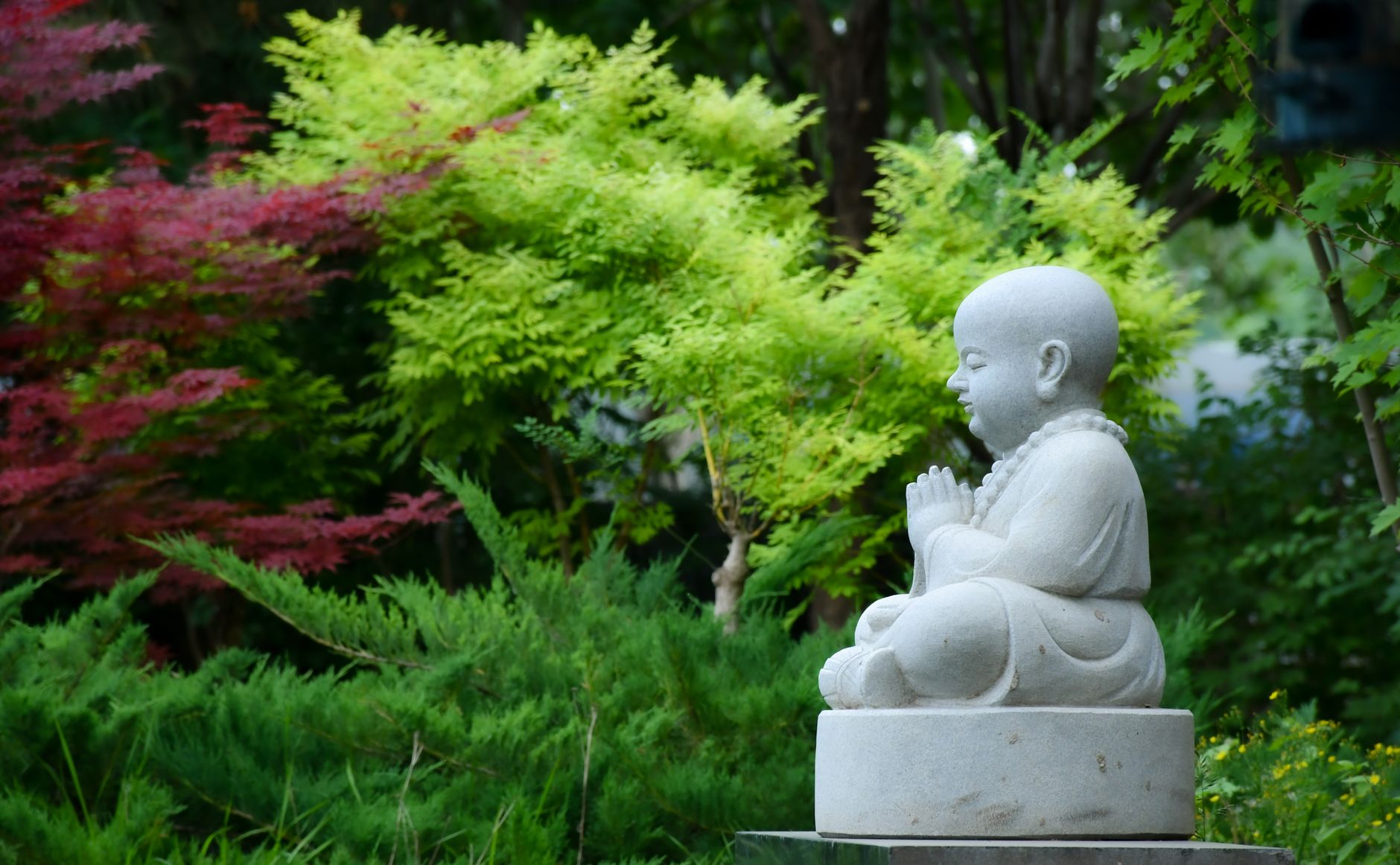
The moss under my bare feet held the morning dew like a secret. An hour before dawn I had slipped through a low wooden gate in Kyoto, and now I stood in a garden tended for six hundred years. No sign. No ticket booth. Just a stone basin, a maple, and the sound of water finding its way through bamboo. Sacred gardens ask something of us that most destinations do not: they ask us to slow down enough to notice. They are not monuments to be photographed and left. They are living invitations.
“The garden is a conversation between the human hand and the wild heart of the world.”
Historical Context
Sacred gardens appear across nearly every spiritual tradition, and their roots run deep. In Japan, the Zen garden emerged from monastery practice in the medieval period, when monks raked gravel not as decoration but as meditation, a physical act of stilling the mind. The moss temple of Saihō-ji, west of Kyoto, has carried that lineage since the eighth century, its layers of green deepening with each passing season.
Travel west and you find parallel traditions. The Persian chahar bagh, the four-part garden, shaped paradise imagery across the Islamic world, its water channels dividing the space into quadrants that mirrored the cosmos. In India, temple gardens and sacred groves — the devrai of the Western Ghats — were protected by communities for generations, not for beauty but for reverence. The Mughal gardens of Kashmir and Lahore took the Persian form and softened it with mountain water and cypress.

What unites these places is intention. None were built to impress a visitor passing through. Each was designed as a threshold, a place where the ordinary world loosens its grip. Medieval Christian cloister gardens served the same quiet purpose, enclosed and inward, a small paradise held within stone walls.
The tradition is older than any single faith. Sacred groves predate temples. Humans have long set aside certain patches of earth as untouchable, and in doing so, they protected them. The garden as sanctuary is one of our oldest ideas.
The Experience
Arriving at a sacred garden is not like arriving at a museum. There is no grand entrance, usually. You might pass a simple gate, a worn path, a sign in a language you do not read. The transition is subtle, and that subtlety is the point.
The first thing you notice is sound. Or rather, the absence of it. Traffic fades. Birdsong sharpens. Water — always water, in almost every sacred garden tradition — becomes a presence rather than background. At Saihō-ji, the moss absorbs footsteps until you feel you are walking on silence itself. In the gardens of the Alhambra, water moves through channels and pools, and the sound shifts with every turn of the path.
Then comes the light. Sacred gardens are designed around it. Morning light in a Zen garden rakes the gravel in a way that reveals every ridge. Afternoon light through a maple canopy turns the ground gold. The designers understood that light is a material as real as stone.
What surprised me most was the sense of time. These gardens do not hurry. A tree that took two hundred years to reach its shape teaches you something about patience that no book can. You sit on a wooden veranda, and the garden does not perform for you. It simply continues being itself. After twenty minutes, something in your chest loosens. After an hour, you stop checking your phone.
Have you ever sat somewhere long enough that the place began to feel like a companion rather than a backdrop? That is the experience sacred gardens offer. They are not passive scenery. They are active participants in your stillness.
The sensory details stay with you. The cool of a stone basin. The scent of wet earth after rain. The particular green of moss that has been watered by hand for centuries. The creak of a wooden walkway underfoot. The taste of tea served in a simple bowl at the garden’s edge.

Who It’s For
This kind of travel serves the wanderer who is willing to arrive without an agenda. If you can spend an hour watching light move across a wall, you will find these gardens generous. They reward the slow. They reward the quiet. They reward the traveler who understands that the best moments of a journey are often the ones with nothing to photograph.
They suit the seeker who wants to practice, not just observe. Many sacred gardens offer meditation sessions, tea ceremonies, or simple spaces for sitting. You do not need to be Buddhist or Muslim or Hindu to enter. You need only be willing to be still.
They also serve the traveler recovering from something — grief, burnout, a season of too much noise. Sacred gardens are gentle places. They do not demand anything from you. They simply hold space, and sometimes that is exactly what a person needs.
Who It’s NOT For
Let me be honest about the boundary. Sacred gardens are not for the traveler who needs stimulation every hour. If your ideal day involves a packed itinerary, multiple museums, and a lively evening scene, these places will feel slow to the point of frustration. They are not entertainment. There is no gift shop at the end that will reward your patience.
They are also not for the traveler who needs clear explanation. Many sacred gardens offer little signage, and the staff may not speak your language. The meaning is in the experience, not in the placard. If you need to understand everything intellectually before you can enjoy it, you may spend the whole visit in your head.
And they are not for those who cannot respect the rules. Some gardens ask for silence. Some ask you to remove your shoes. Some ask you not to photograph certain areas. These are not suggestions. They are the terms of the invitation. If you cannot honor them, choose another destination.
A Profound Insight
Here is the idea I carried home, and it is a counter-intuitive one: sacred gardens are most powerful not when they are beautiful, but when they are imperfect. The moss that has crept over a stone. The maple branch that grew at an awkward angle and was kept anyway. The path that has worn unevenly under centuries of footsteps.
We tend to think of sacred spaces as pristine, untouched, perfect. But the gardens that move us most are the ones that show their age. The imperfection is the teaching. It reminds us that reverence is not about maintaining control. It is about tending, season after season, without demanding a particular outcome.
This is the insight worth carrying home: the sacred is not somewhere else. It is in the ordinary act of attention. The garden is a practice, not a place. You can rake gravel anywhere. You can notice the light on a wall in your own city. You can create a threshold in your own life.
Key takeaways for the mindful traveler:
- Arrive early, before the crowds, and sit for at least twenty minutes before moving.
- Leave your phone in your bag. The garden will not perform for a screen.
- Learn the local etiquette — shoes, silence, photography — before you enter.
- Visit out of season. A garden in rain or late autumn often reveals more than in full bloom.
- Find one small practice — raking, watering, sitting — and do it daily at home.
The gardens I remember most are not the grandest. They are the ones where I sat long enough to stop being a visitor. In Kyoto, a monk watered moss with a wooden bucket while I watched. He did not look up. He did not need to. The garden was already doing its work, and I was lucky enough to be inside it. That is the invitation sacred gardens extend to all of us: come in, slow down, and let the place tend to you for a while.