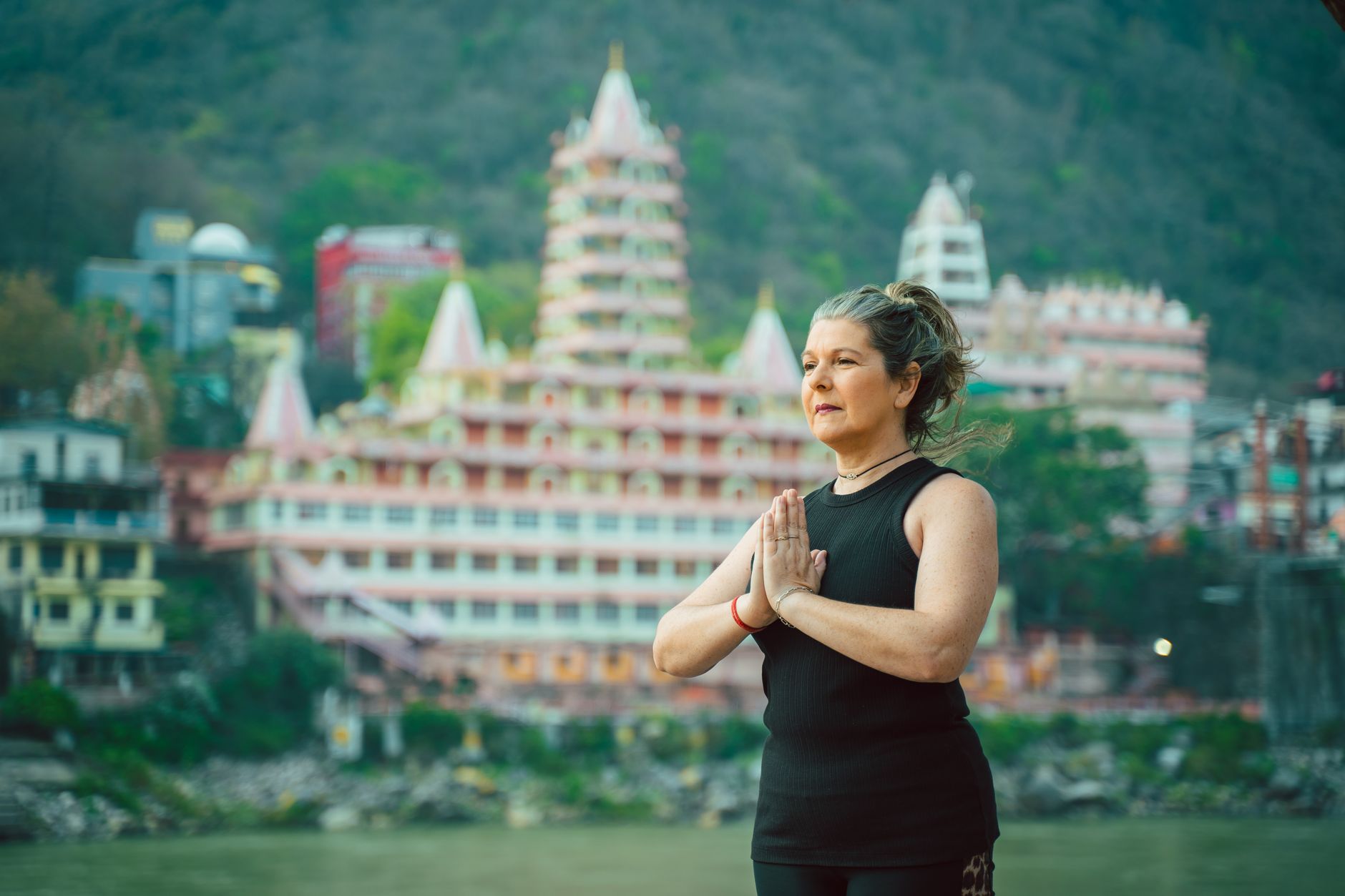
The air in Rishikesh at five in the morning tastes of woodsmoke and river silt. Down by the ghats, bells begin their slow argument with the dark. Eleven years now I have stood in this same spot, and still that first breath of mountain air rearranges something in me. Yoga tourism has grown into a vast industry since those early mornings — retreat centers on every cliff, teacher trainings advertised like festival tickets — and yet the practice itself remains stubbornly simple. You roll out a mat. You breathe. You pay attention. The question is whether the journey you book serves that attention, or quietly steals it.
“The pilgrimage was never about arriving. It was about learning to walk with your eyes open.”
Historical Context
Yoga’s journey from the banks of the Ganges to the cliffs of Crete and the forests of Costa Rica is longer and stranger than most retreat brochures admit. The word itself appears in the Rig Veda, though not in any sense a modern practitioner would recognize. There it meant yoke — the harness that binds ox to cart. The discipline we call yoga took shape over centuries of experimentation. Patanjali’s Yoga Sutras, likely compiled somewhere between 325 and 425 CE, offered a terse map of the mind and its fluctuations. The hatha texts came later, medieval manuals full of breath retention, locks, and the kind of slow, demanding postures that would make a modern vinyasa class look like a sprint.
What traveled west was something else again. Swami Vivekananda arrived in Chicago in 1893 and spoke of a philosophy, not a workout. Then came the physical culture movements of the early twentieth century, the Indian teachers who adapted postures for Western bodies, and by the 1960s, the Beatles on a Himalayan hillside made the whole thing feel like a doorway. Retreat tourism followed naturally. If the practice changes you, people reasoned, then perhaps the place where you practice matters too. That instinct is not wrong. It is simply older than the industry built around it.

Pilgrimage is the ancestor here, not vacation. For centuries, seekers walked to temples and caves and riverbanks not to escape their lives but to see them clearly. The yoga retreat, at its best, inherits that intention. At its worst, it sells the scenery and forgets the walking.
The Experience
Here is what no brochure photographs: the fourth day. On day one you are enthusiastic. Day two your hamstrings protest. By day four, something loosens that has nothing to do with muscle. The teacher says a phrase you have heard a hundred times — notice the space between breaths — and this time you actually notice it. The room goes quiet in a way that feels less like silence and more like listening.
Mornings on retreat begin before the mind has assembled its complaints. Cold water on the face. A cup of something warm. The mat unrolled in half-dark. Your body, still stiff with sleep, moves through the first sun salutation like a sentence being written. By the tenth, the grammar has settled. Breath leads, movement follows. Outside, a dog barks, someone’s sandals slap the path, and none of it pulls you away.
Afternoon brings its own texture. Some retreats fill the hours with workshops and anatomy lectures; others leave you to wander. I have come to treasure the wandering. A walk to the village. A conversation with a stranger that turns, unexpectedly, toward grief. The way a shared meal tastes different when no one is checking a phone. Evenings often close with chanting or a guided rest, and the body that resisted stillness at dawn now sinks into it gratefully.
The senses sharpen in ways that surprise. Incense that would have been background becomes a whole story. The texture of a wooden floor under bare feet. Rice and dal eaten slowly enough to actually taste. And underneath all of it, a rhythm older than any schedule: effort, rest, effort, rest. The retreat holds you in that rhythm until your nervous system remembers it as its own.

Who It’s For
This kind of travel serves the person who suspects their life has become a series of notifications. You do not need to touch your toes. You do not need a handstand or a Sanskrit vocabulary. What you need is a willingness to be a beginner in public, which is harder than it sounds and more useful than almost anything else.
It suits people at thresholds — after a loss, before a leap, in the muddy middle of a question they cannot yet name. The structure of a retreat offers a container for that uncertainty. Someone else cooks. Someone else keeps time. You are free to do the interior work that daily life keeps postponing.
It also suits the long-time practitioner who has grown a little numb to their home studio, who needs the practice shaken awake. A new teacher, a new landscape, a new rhythm of days can return freshness to a familiar form. And it suits anyone curious about the tradition behind the postures — the philosophy, the ethics, the centuries of thought that a drop-in class rarely has room to mention.
Consider what you actually want before you book. A list helps:
- Clarify your intention. Rest, study, or transformation? Each points toward a different kind of retreat, and honest retreat centers will tell you which one they offer.
- Ask about the teacher’s lineage and training. A beautiful setting cannot compensate for shallow guidance. Ask where their teaching comes from and how long they have carried it.
- Check the daily rhythm. Some schedules are full from dawn to dusk. Others leave wide open afternoons. Know which pace your nervous system needs, not which one sounds more impressive.
- Look for integration support. The days after a retreat matter as much as the days within. Good programs offer practices for returning home, not just a farewell hug.
- Travel lightly and honestly. Bring fewer clothes than you think. Bring more curiosity than you think. Leave room in the suitcase for what you did not expect to find.
Who It’s NOT For
Let me be plain about a boundary the industry prefers to blur. Yoga tourism is not a substitute for therapy, medical care, or the hard conversations that healing sometimes requires. If you are in acute crisis, a retreat on a beautiful island will not hold you safely, and a responsible teacher will say so. The practice can support deep work. It cannot replace professional help, and any program that promises otherwise is selling something dangerous.
It is also not for the traveler who wants a resort with a yoga class bolted on. If your ideal morning involves a buffet and a poolside cabana, that is a fine vacation — but it is not this. Retreat life asks something of you. Early hours. Simple food. Silence that can feel uncomfortable before it feels spacious. The container is gentle, but it is a container, and it will press against your habits.
And it is not for anyone seeking cultural costume rather than cultural encounter. Wearing the right clothes and learning the right words does not constitute respect. If you are not willing to learn where this practice comes from, who preserved it, and what it cost them, stay home. The tradition deserves better than a souvenir.
A Profound Insight
The insight that has stayed with me longest is this: the retreat is not the transformation. It is the rehearsal. The real practice happens on the flight home, in the airport queue, in the first Monday back when your inbox has not noticed you were away. What the retreat gives you is a memory of your own steadiness — proof, held in the body, that you can return to breath and attention under unfamiliar conditions.
Here is a counter-intuitive thought. The most powerful moment of a retreat is often the one that disappoints you. The rain that cancels the sunrise hike. The teacher who does not meet your expectations. The meditation where nothing happens at all. Those moments strip away the fantasy of the perfect journey and hand you the actual practice: meeting what is, without flinching. Tourism promises spectacle. Practice offers presence. When the two meet honestly, the trip becomes something you carry rather than something you post.
So ask yourself, before you go: are you traveling toward something, or away from something? The answer will shape everything — the retreat you choose, the teacher you trust, the way you come home. Neither answer is wrong. But knowing which one is yours changes the journey entirely.
The bells in Rishikesh still ring at dawn, and I still stand by the ghats when I can. What I have learned across eleven years of guiding others toward this practice is that the place matters less than the attention you bring to it. A retreat can open a door. It cannot walk you through. That step is yours, taken breath by breath, long after the suitcase is unpacked and the mat is rolled away in the corner of a familiar room. Go gently. Go curious. Come home changed, not decorated.