The train from Kandy to Ella takes seven hours if it runs on time, which it rarely does. I learned this on a Tuesday in March, wedged between a crate of mangoes and a schoolgirl who offered me half her orange without a word. Outside the window, tea terraces folded into mist and unfolded again. Nobody in that carriage seemed to mind the delay. A man slept against the door. A woman shelled peas into a steel bowl. Somewhere ahead, the track was being repaired, and the repair was simply part of the journey. I arrived in Ella after dark with no photographs of the famous bridge and no regrets about that.
Speed is a habit. Slowness is a choice you have to keep making.
Historical Context
Slow travel did not begin as a movement. It began as the default. For most of human history, a person who wished to go somewhere walked, rode, or sailed, and the going took as long as it took. Pilgrims on the Camino de Santiago in the twelfth century measured their journeys not in kilometres but in days of prayer. Merchants on the Silk Road spent years between Samarkand and Chang’an. The notion that travel should be fast, efficient, and consumable is recent — barely a century and a half old, a byproduct of railways, then jets, then the weekend break sold as a package.
The countercurrent has roots worth knowing. In 1986, the Italian journalist Carlo Petrini founded Slow Food after a McDonald’s opened near the Spanish Steps in Rome. His protest was less about hamburgers than about the erosion of a whole way of eating — local, seasonal, unhurried, shared. The philosophy migrated. By the early 2000s, writers and travellers were applying the same logic to movement itself: if fast food flattens flavour, fast travel flattens place. The slow travel idea that emerged borrowed from Petrini directly — stay longer, go deeper, spend locally, let the journey shape itself.

What gets forgotten is that this is old wisdom wearing new clothes. The Buddhist practice of walking meditation, the Japanese tradition of tōkaidō journeys on foot, the Andean custom of moving at the pace of one’s animals — all of these treated transit as transformation rather than interruption. The modern slow travel movement did not invent anything. It remembered something.
The Experience
Here is what nobody tells you about travelling slowly: at first, it is boring. Deeply, almost physically boring. The mind, trained by years of itineraries and notifications, keeps reaching for the next thing. You sit on a stone wall in a hill town and feel the itch to move, to photograph, to do. The itch is the withdrawal. Sit with it.
Then something loosens. On the third morning in the same village, the woman at the bakery recognises you and puts aside the loaf you liked. You learn that the church bell rings at an odd hour because the mechanism is old and the sacristan is older. You notice the light changes on the eastern wall at four o’clock and you begin to plan your afternoon around it. This is not sightseeing. It is a kind of settling, the same settling that happens when you stop trying to fall asleep and simply let sleep arrive.
The senses sharpen in ways that surprise me every time. In a slow week, I can recall the smell of a specific courtyard after rain — wet stone and jasmine and something like rust. I can hear the particular clatter of a specific café’s cups. When I move fast, a whole month blurs into a single impression. When I move slowly, a single week stays vivid for years. The trade is not abstract. It is measurable in memory.
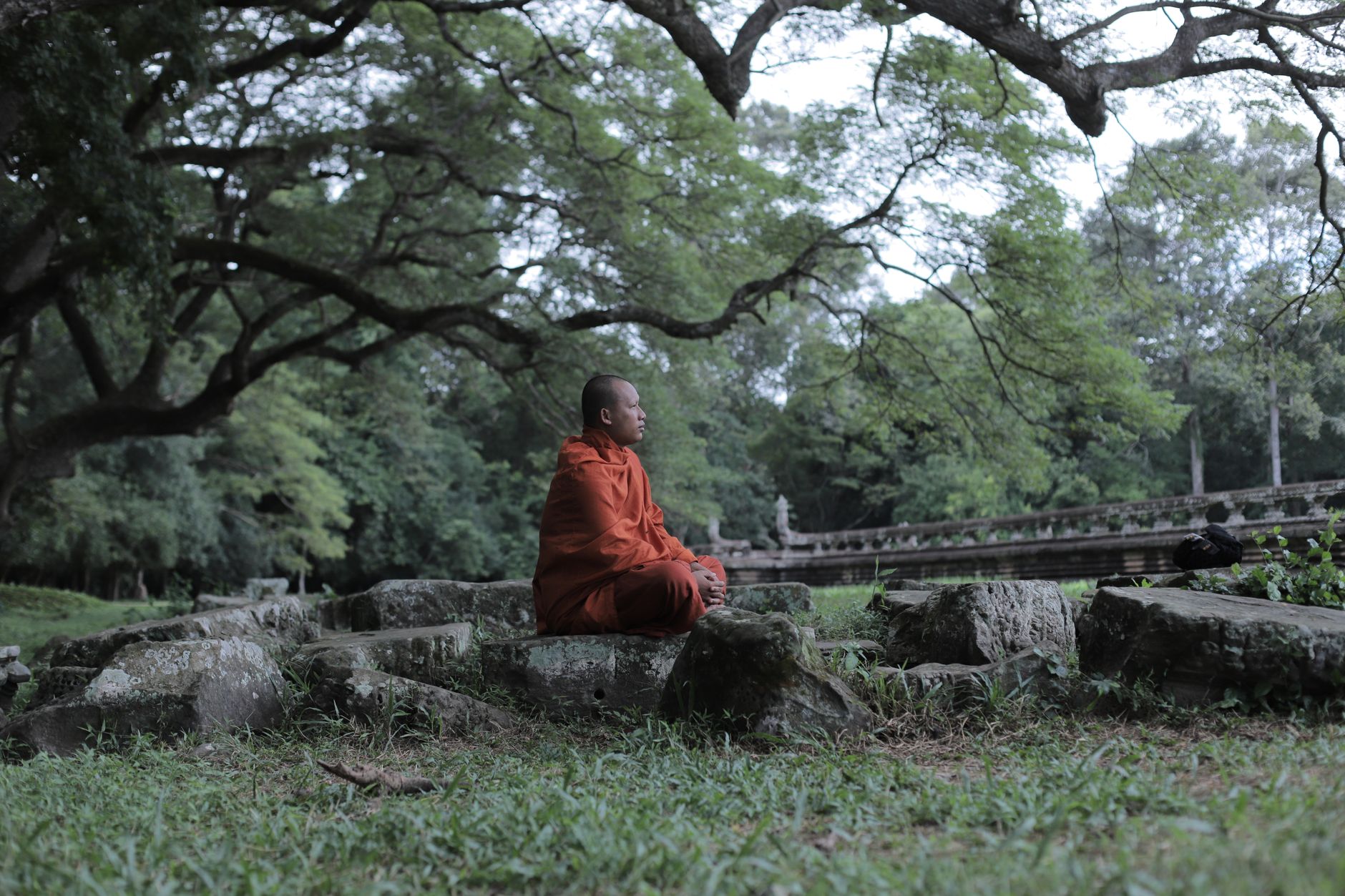
And the body returns to you. Travel at speed treats the body as cargo, hauling it from gate to gate. Travel slowly treats it as the instrument of knowing. You feel the grade of the hill in your calves. You eat when hungry rather than when scheduled. You sleep when dark. There is a reason pilgrims have walked for millennia and tourists have flown for decades, and the reason is not efficiency.
Who It’s For
Slow travel serves the traveller who has grown tired of arriving exhausted. You know the type — the one who returns from a holiday needing a holiday, whose camera roll is full and whose memory is thin. It suits people willing to trade coverage for depth, who would rather know one street well than nine cities badly.
It rewards the curious over the checklist-driven, and the patient over the restless. Writers, artists, and anyone whose work depends on attention tend to flourish in it, because slow travel is essentially a practice of attention. It also suits travellers who are healing from something — grief, burnout, a life that moved too fast for too long. There is a reason so many people arrive at slow travel after a loss. The pace gives the heart room to catch up with the feet.
And it suits those who travel with children, oddly enough. Children are natural slow travellers. They stop to watch ants for twenty minutes. They want the same story every night. They are not trying to see the whole city; they are trying to understand the fountain. If you let them set the pace, they will teach you what you came to learn.
Who It’s NOT For
Honesty requires me to say this plainly: slow travel is not for everyone, and pretending otherwise does a disservice to both the traveller and the place.
If you have nine days of leave a year and a list of places you have dreamed of since childhood, slow travel may feel like a waste of a precious resource. If you are travelling with a specific mission — a family obligation, a conference, a wedding — the philosophy will chafe. If you are in a season of life where rest is not on the table, then a fast trip done well can be a joy, and I will not pretend otherwise. Slow travel is not a moral achievement. It is a tool, and tools suit some hands better than others.
It also fails for anyone who needs constant stimulation to feel alive. Some people genuinely thrive on the buzz of a new city every two days. I have met them. They are not doing it wrong. They are simply built for a different rhythm, and the worst thing you can do is force a slow itinerary on a restless soul and call the resulting misery a lesson in presence.
A Profound Insight
Here is the idea I keep returning to, and it runs against the grain of how most of us think about travel: the destination is not the reward for the journey. The journey is not a tax you pay to arrive. They are the same thing, and the moment you feel the difference dissolve is the moment slow travel has done its work.
We are trained to think in arrivals — the summit, the temple, the photograph. But the pilgrims who walked to Santiago understood something we have misplaced: the walking was the pilgrimage. The cathedral was simply where the walking stopped. When you travel slowly, you begin to notice that the “in-between” times — the waiting room, the delayed bus, the long lunch — are not the filler around the real experience. They are the experience. This is a counter-intuitive claim, and I will defend it: the most memorable hours of my travels were almost never the ones I had planned. They were the unplanned gaps, the ones I would have skipped if I could have.
Carry this home and it changes more than your holidays. It changes how you move through an ordinary Tuesday. The commute becomes a passage. The queue becomes a place to stand. The waiting becomes, if you let it, a small practice.
Key Takeaways
- Stay at least three nights in one place; the third morning is when a place begins to open to you.
- Choose one form of slow transport per trip — a train, a walk, a boat — and let it set the pace for everything else.
- Leave one full day unplanned in every week of travel, and defend it against your own urge to fill it.
- Eat where the locals eat, at the hours the locals eat, and let the meal take as long as it takes.
- Keep a small notebook and record what you noticed, not what you saw; detail is the currency of memory.
So here is the question I would leave with you, the one I ask myself each time I pack a bag: what would change if you stopped trying to see everything and started trying to see one thing completely?
The train from Kandy to Ella still runs, still late, still crowded with mangoes and schoolgirls and men asleep against the doors. I think of that carriage often — not the bridge, not the photographs I never took, but the seven hours themselves, the slow unfolding of tea country, the half orange passed without a word. That is what slow travel gives you in the end. Not a list of places seen, but a handful of hours you actually lived. The world is not going anywhere. Neither, if you are wise, are you.