The train from Rishikesh to Haridwar was nearly empty at 5 a.m. Somewhere near the front carriage, a small brass bell was ringing. I had left my students behind for three days. No ashram schedule, no group chanting, no one asking what time we would eat. Just a window seat, a chipped thermos of chai, and the slow grey light over the Ganges. Solitude, I have come to believe, is not the absence of company. It is a room you finally agree to enter alone.
“The quieter you become, the more you can hear.” — Ram Dass
Historical Context
Pilgrimage traditions across cultures have long treated solitude as a discipline rather than a luxury. In India, the sadhu who leaves the village to wander alone is not running from community. He is completing a stage of life. The forest-dwelling hermit appears in the Upanishads, in Buddhist accounts of the Buddha’s years among the trees, in the desert fathers of early Christianity, in the Japanese practice of yamabushi mountain retreats. Every one of these traditions understood something modern tourism tends to forget: that a journey inward needs a container.
Consider the medieval Christian pilgrimage to Santiago de Compostela. Thousands walked the road together, yet the camino was famously walked alone. Pilgrims made confession before setting out, carried almost nothing, and slept in shared dormitories without exchanging names. The solitude was structural. It was built into the route, into the rules, into the silence of a walk that lasted weeks. The point was never to escape other people. The point was to hear yourself without the noise of your usual role.
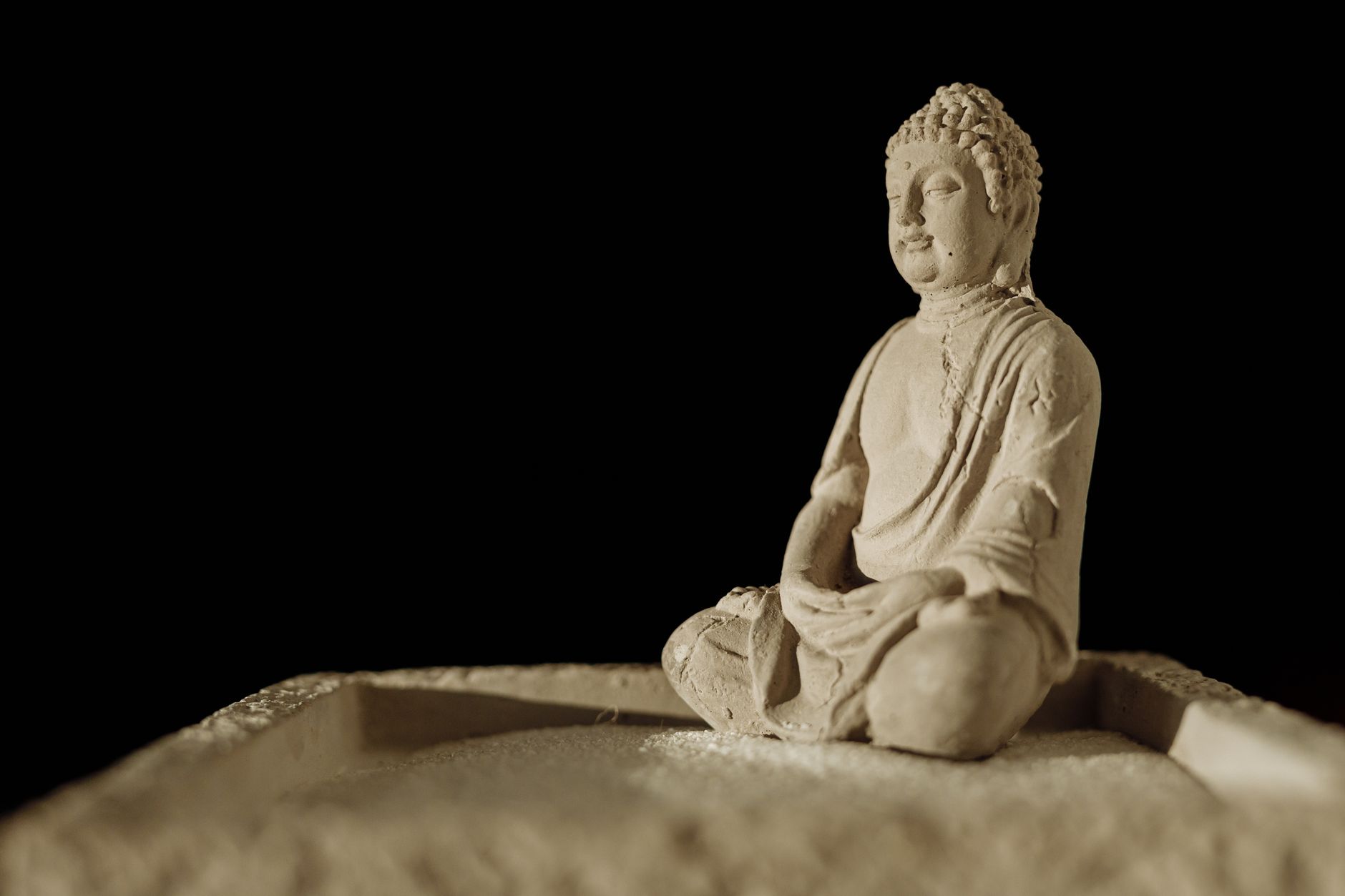
What changed? The grand tour, then the package holiday, then the curated group retreat. Each step made travel more social, more scheduled, more narrated. That is not a complaint. Company has its own gifts. But we lost a vocabulary for the deliberate, unglamorous, sometimes boring act of being alone in a foreign place. The old pilgrims had it. We can borrow it back.
The Experience
Here is what solitude actually feels like, because the brochures never tell you. The first day is uncomfortable. You notice how often your hand reaches for the phone. You notice the silence at dinner, the waiter’s mild confusion at a table for one, the way your own thoughts arrive uninvited and refuse to leave. This is not failure. This is the surface settling.
By the second morning something loosens. You wake without an alarm and lie still, listening to the street below — a bicycle bell, a shutter rolling up, someone sweeping a step. Breakfast takes an hour because you are actually tasting it. You walk without a destination and find a courtyard with a stone basin and a cat that ignores you. You sit. The mind keeps producing commentary, and then, quietly, it stops.
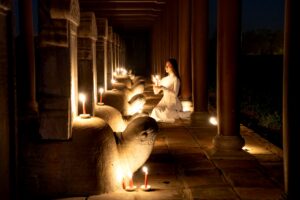
I remember a small temple in the hills above Rishikesh, reached by a path of worn steps. No one else was there. The priest had left a lamp burning and gone home. I sat on the cool stone for what felt like twenty minutes and turned out to be nearly two hours. Nothing happened. A crow landed. The lamp flickered. And in that nothing, a knot I had carried for months simply came undone. Solitude does not solve your problems. It sets them down where you can finally see their shape.
The senses sharpen in a particular way when no one is talking to you. Colors seem denser. A cup of tea becomes an event. You hear your own footsteps and, beneath them, the older rhythm of breath. This is not mysticism. It is attention returning to its natural home.
Who It’s For
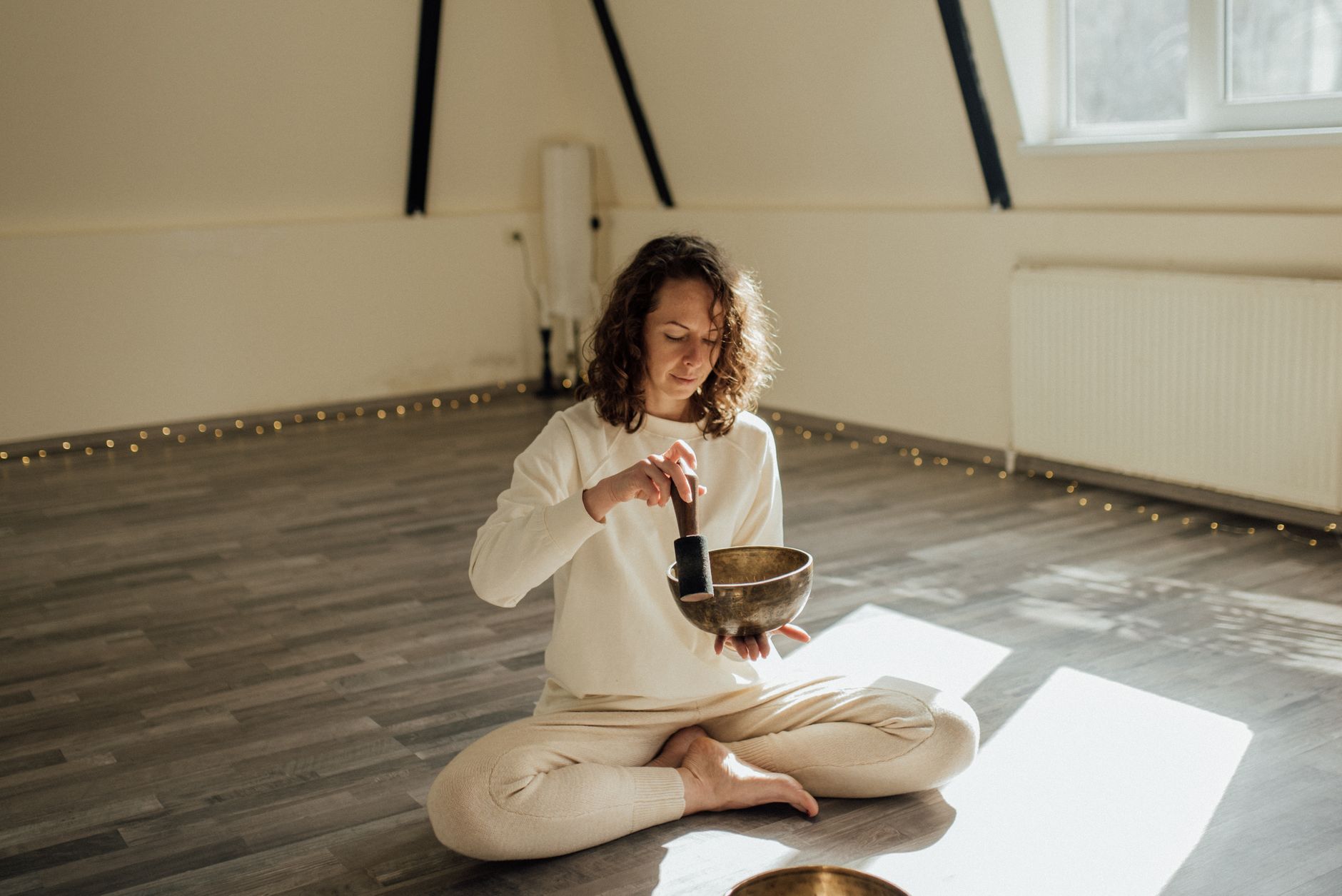
This kind of travel belongs to the person who is tired of performing. Perhaps you are a caregiver, a manager, a parent, a teacher — someone whose days are a relay of other people’s needs. You do not hate company. You have simply forgotten what your own preferences sound like. Solo travel gives them a stage.
It also suits the traveller in transition. The one between jobs, between relationships, between versions of themselves. When the ground is shifting, a group itinerary can feel like a distraction from the real work. A quiet town, a long walk, a plain room with a window — these become a kind of scaffolding for thinking.
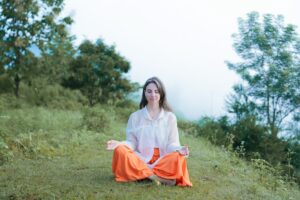
And it serves the seeker who wants a practice, not a performance. If your idea of a good morning is sitting with a mala and a cup of coffee before the town wakes, you will find solitude generous. It asks nothing of you except that you show up.
- Choose a small town over a big city for your first solo journey — fewer choices, gentler rhythm.
- Book a room with a window and a view, not a screen. Let the outside in.
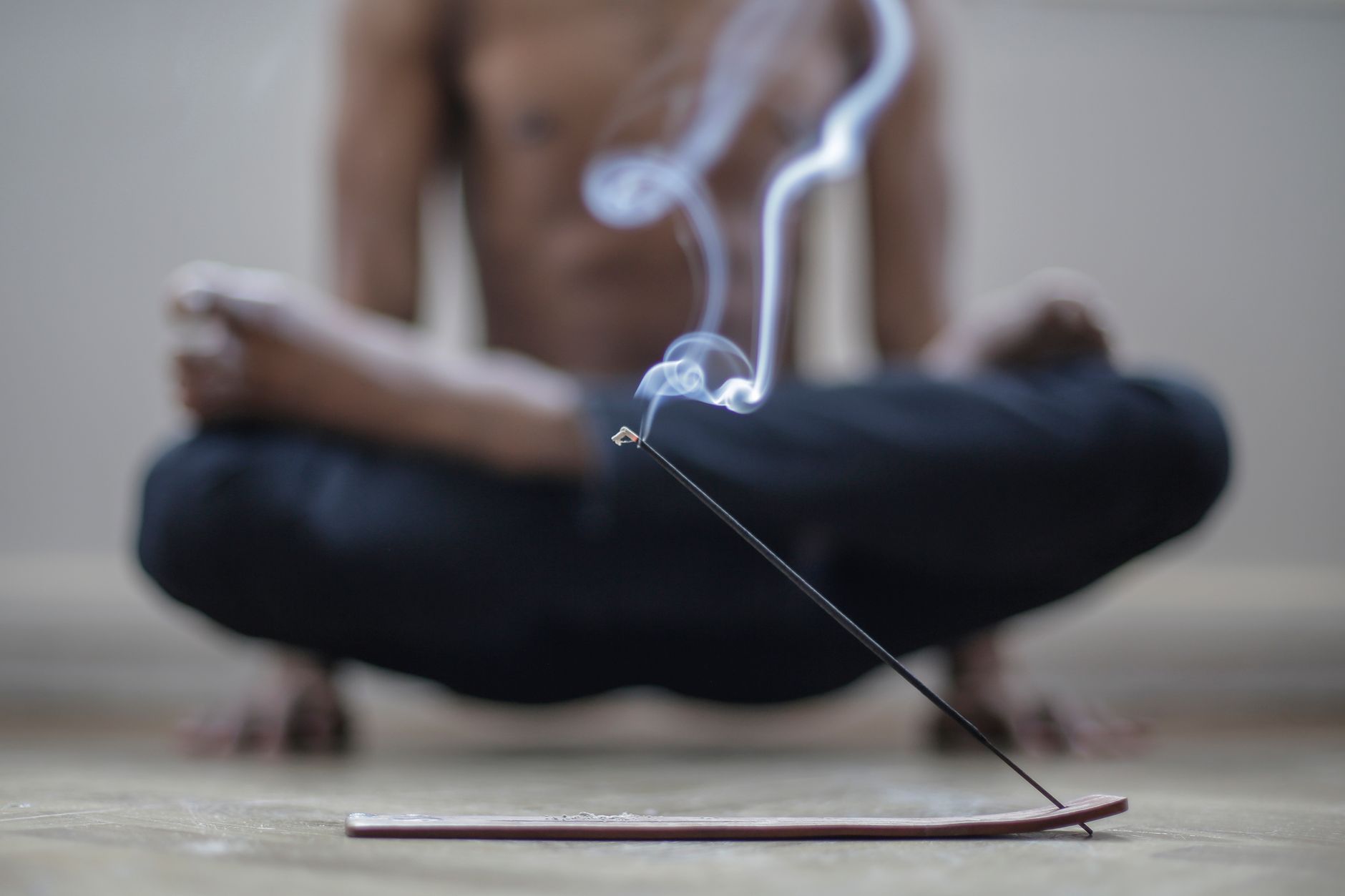
- Keep one anchor ritual each day — morning tea, an evening walk, a few minutes of quiet breath.
- Tell one person your plan and check in once. Safety is part of freedom.
- Leave space in the itinerary. The best hours are usually the unplanned ones.
Who It’s NOT For
Honesty matters here. Solitude is not medicine for everyone, and it is not a test of spiritual fitness. If you are in acute grief, deep depression, or a season of real isolation that already feels unbearable, adding more aloneness can deepen the wound rather than heal it. There is a difference between chosen solitude and imposed loneliness, and the body knows it.
It is also not for the traveller who comes alive through conversation — who learns a city by arguing with a taxi driver and sharing a table with strangers. That is a legitimate path. Some of us are built for the market, not the monastery. And it is certainly not for anyone who needs constant stimulation to feel safe. There is no shame in knowing that about yourself. The gift of solitude is only a gift if you actually want to receive it.
A Profound Insight
Here is the counter-intuitive part, the idea I would carve on a trail marker if I could: solitude in travel is not about being alone. It is about learning to be good company for yourself. The old pilgrims did not walk to become hermits. They walked so they could return home more present, more patient, more available to the people they loved. The silence was never the destination. It was the tuning fork.
I have watched students return from solo retreats and suddenly listen better. They interrupt less. They notice when a friend is tired. This is the quiet paradox. The more time you spend alone with yourself, the less lonely you become — and the more room you have for others. The retreat is not an escape from community. It is a way of restoring yourself for it.
So the question worth carrying home is this: what would you hear if you stopped talking long enough to listen?
You do not need a distant mountain or a month of leave. A single quiet morning in a town where no one knows your name can do the work. Pack lightly. Leave the headphones in the bag. Walk until the commentary runs out. Then sit, and let the silence be the teacher it has always been. The road will bring you back. It always does — a little emptier, and somehow more full.