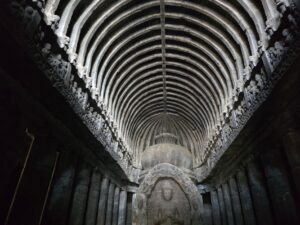
There is a moment on every journey when the world goes quiet enough to hear yourself again. It rarely arrives on schedule. It comes after the train rattles past the last station, after the crowd thins at the temple gate, after you stop scrolling and start listening. I have chased that moment across continents — through the call to prayer in Fes, the wind through Icelandic basalt, the low hum of a monastery at dawn — and I have learned that sound and silence are not opposites. They are partners. One gives shape to the other. The trick is knowing which one a place is offering you, and having the humility to receive it.
“Silence is not the absence of sound. It is the presence of attention.”
Historical Context
Long before noise-cancelling headphones, pilgrims understood that the ear is a spiritual organ. In the Hindu tradition, nada yoga — the yoga of sound — treats the inner vibration as the seed of all creation. The Nada Bindu Upanishad describes a practitioner sitting still until the outer world dissolves and only the unstruck sound remains. Across the Himalayas, Tibetan monks trained for years to hear the subtle frequencies of the mind, using overtone chanting as both prayer and cartography of consciousness.
In Japan, the concept of ma — the meaningful interval between things — shaped gardens, tea ceremonies, and architecture. A pause is not empty. It holds the room together. Walk the philosopher’s path at Ginkaku-ji in Kyoto and you feel it: gravel raked into stillness, a single pine leaning into space, the deliberate silence between stones.
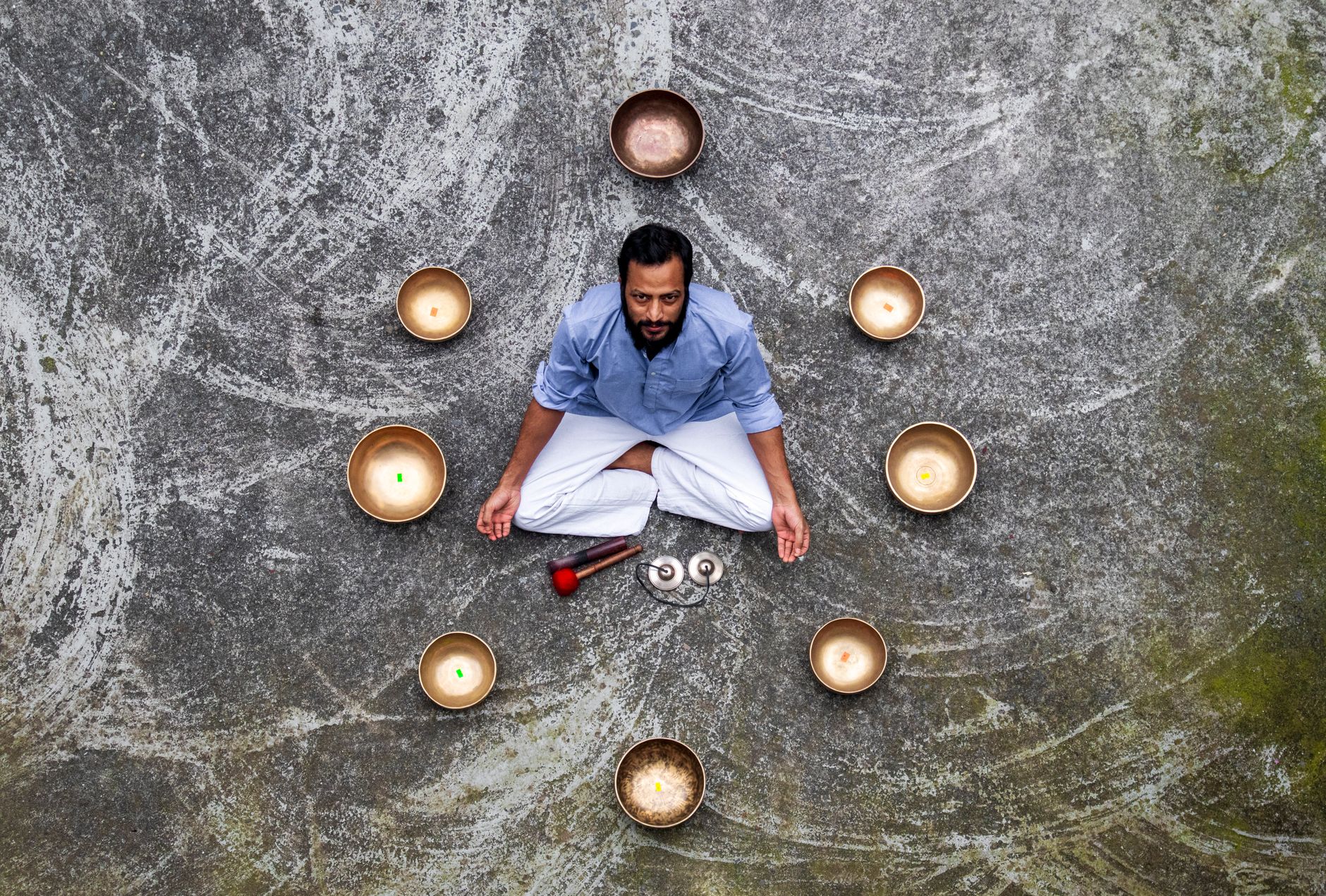
The Islamic world gave us the adhan, that five-times-daily call that slices through the noise of a city and gathers it back into devotion. And in the Christian West, Gregorian chant emerged as a way of praying without words that distract — a long, unhurried breath made audible. Every tradition, it seems, arrived at the same discovery: sound, when used with intention, becomes a doorway to silence.
What does this mean for the traveler? It means the places we visit are not just sights. They are soundscapes with histories. The bells of a Tuscan hill town carry centuries of agrarian rhythm. The call of a muezzin carries a theology of time. To listen is to receive an inheritance.
The Experience
It begins with a shift in the body. The shoulders drop half an inch. The jaw unclenches. You notice your own breath, which has been running the whole time beneath the noise, patient and uncelebrated.
In the Sinai desert, I once sat outside a Bedouin tent at dusk. The wind moved across the sand with a sound like paper turning in an old book. Then it stopped. What followed was not silence exactly. It was a fullness — the desert humming at a frequency just below hearing, the sky pressing down, my own heartbeat suddenly the loudest thing for miles. I understood, in that moment, why the mystics went to the desert. Not to escape the world, but to hear it clearly.
In a Kyoto tea room, the silence is different. It is a held breath. The host moves with precision, the whisk clicks against the bowl, water pours from a height, and every sound lands like a note in a composition. You are not listening to silence. You are listening to the shape of it.
And then there is the sound of a city waking. Varanasi at 4:30 a.m., bells and conches and the slap of wet clothes against stone steps. It is loud, chaotic, holy. The silence here is interior — a stillness you carry inside the noise. That, too, is a practice.
Pay attention to what your ears are doing on the road. Are they braced? Reaching? Retreating? The ear is honest. It tells you what the mind is trying to hide.

Who It’s For
This way of traveling is for the person who suspects that the itinerary is not the point. The one who books a slow train instead of a flight because the rhythm matters. Who lingers in a chapel long after the tour group has left. Who notices that a cathedral and a forest ask different things of the body.
It is for the traveler willing to be bored. Boredom, after all, is just silence wearing a disguise. Stay with it long enough and it becomes wonder.
It is also for anyone in grief, in transition, in the middle of a life that has grown too loud. Sound and silence are medicine. A wind chime in a mountain village can do what a year of therapy cannot. A single bell can unlock a locked chest.
And it is for the seeker who understands that pilgrimage is not about arrival. It is about attunement. You go somewhere new not to see it, but to hear yourself differently within it.
Who It’s NOT For
Honesty requires a boundary. This is not for the traveler who needs constant stimulation, who measures a day by how many pins dropped on the map, who feels silence as absence rather than presence. If your nervous system reads quiet as threat, forcing it will not serve you. Start smaller. A park at dawn. A long bath without music. The path is gradual.
It is also not for anyone who treats local soundscapes as a personal soundtrack. The call to prayer is not ambiance. The temple bell is not a meditation app. If you cannot approach another culture’s sonic traditions with reverence and permission, stay home and listen to your own.
And it is not for the traveler who expects silence to fix them. Silence is a mirror, not a fixer. It shows you what is already there. Sometimes what is there is uncomfortable. That, too, is information.
A Profound Insight
Here is the counter-intuitive truth I have carried home from every journey: the goal is not to find silence. It is to become silence. You cannot always control the world’s volume. Trains will screech. Neighbors will argue. Your own mind will churn. But you can cultivate an inner room where the noise does not reach — a place that travels with you, unaffected by time zones or tuk-tuk engines.
The mystics called this the cave of the heart. The yogis called it the seat of the self. Whatever you name it, it is portable. That is the gift. You do not need to book a flight to find it. You need to practice being still long enough to notice it was never lost.
Sound is the teacher. Silence is the lesson. And you — the traveler — are the student who keeps forgetting and remembering, forgetting and remembering, until one day the two become the same thing.
- Travel slowly. Choose one destination and stay longer than feels efficient. Depth comes from repetition, not novelty.
- Arrive early. Sacred sites and natural landscapes reveal their soundscapes before the crowds arrive. Set an alarm. It is worth it.
- Practice one silent hour a day. No music, no podcast, no phone. Just you and the place you are in. Let it speak.
- Listen for the local rhythm. Bells, calls, market cries, birdsong — each place has a signature. Learn it like a language.
- Carry the silence home. Build a five-minute morning ritual that keeps the inner room open. The journey continues after the suitcase is unpacked.
Travel is not an escape from noise. It is a practice of listening. The world is always speaking — in bells and wind and the space between heartbeats. Your only task is to arrive with ears open and expectations quiet. Wherever you go next, go gently. Go listening. And when the silence finds you, do not flinch. Bow to it. It has been waiting a long time for you to notice.