The world is a noisy place, not just in its decibels but in its demands. It buzzes in our pockets, vibrates on our wrists, and glows in the dark of our bedrooms. We are tethered to a constant stream of information, a digital current that pulls us away from the shore of the present moment. We travel to see the world, but often we merely observe it through a 5.5-inch screen, filtering the Taj Mahal through Instagram’s algorithms and the Northern Lights through a grainy video call. We are present, but absent.
The antidote is not a vacation, but a pilgrimage. A digital detox travel experience is not merely about switching off your phone; it is about switching on your senses. It is a deliberate, conscious choice to step out of the metaverse and back into the universe. It is a slow, poetic unraveling of the self, a journey that promises not just a change of scenery, but a change of being.
The journey begins with the act of surrender. The moment you power down your devices, the silence is deafening. The first few hours are a withdrawal. You feel phantom vibrations in your pocket, a ghostly itch to check for notifications. Your mind, accustomed to its constant dopamine drip, rebels. It wanders, it frets, it feels lost in a fog. This is the detox, the necessary purging of the digital toxins that have clogged our attention. You must sit with this discomfort, acknowledge the addictive pull, and let it pass. It is in this discomfort that the true transformation begins.
With the digital noise silenced, the world’s true soundtrack emerges. You begin to travel slowly, not as a tourist rushing between landmarks, but as a wanderer drifting with the current of a place. Slow travel is a philosophy of immersion. Instead of seeing three cities in five days, you stay in one village for a week. You learn the rhythm of the local bakery, the daily siesta of the shopkeeper, the quiet hour when the monastery bells ring. You trade the checklist of sights for the texture of daily life.
In a rural village in the Italian Apennines, I discovered this. With no Wi-Fi and a phone that served only as a camera (which I soon ignored), I found myself sitting on a stone wall, simply watching the sun climb over the olive groves. I watched an elderly woman hang her laundry, the white sheets snapping in the wind like the wings of a great bird. I heard the clip-clop of a farmer’s cart, the low murmur of conversation in a dialect I didn’t understand but felt in my bones. I was not doing anything. I was simply being. Hours stretched into what felt like days, each moment saturated with a richness I had never known. The world, I realized, is not a fast-paced spectacle; it is a slow, unfolding poem.
This new pace opens the door to true cultural immersion. Without the buffer of a screen, you are forced to connect with the world directly. You learn to communicate not through translation apps, but through gestures, smiles, and shared meals. You become a participant, not an observer. In a bustling souk in Marrakech, I found myself lost, with no GPS to guide me. Panic began to set in, but then I looked around. I saw a tea merchant, his face etched with kindness. I approached him, pointed at my map, and he motioned for me to sit. He poured me a glass of sweet mint tea, and for an hour, we sat in companionable silence, communicating through the universal language of hospitality. He then walked me halfway across the city, guiding me not just to my destination, but to a deeper understanding of his home.
This is the heart of inner transformation. When you are stripped of your digital identity—your likes, your shares, your curated online persona—you are left with your authentic self. The quiet forces you to confront your own thoughts. The solitude, not to be confused with loneliness, becomes a fertile ground for introspection. You begin to notice things you’ve been too distracted to see: the intricate patterns in a leaf, the way the light catches the dust in a temple, the sound of your own breathing. You realize that the most important journey is the one inward.
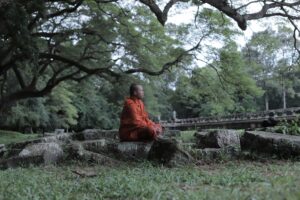
In a Zen monastery in the mountains of Japan, I experienced this profound interior shift. I rose before dawn, walked through the misty gardens, and sat in zazen meditation. The silence was so profound it felt like a physical presence. With my mind uncluttered by the day’s next task, I could finally hear the whisper of my own soul. I felt a sense of peace that no notification could ever deliver. It was not an escape from reality, but a return to it. I was not running away from my life; I was running toward it.
By the end of my time, the world had become brighter, sharper, more vivid. Colors seemed more intense, flavors more distinct, human connections more meaningful. I realized that the digital detox had not subtracted from my life; it had added a layer of clarity. It had given me back my time, my attention, and my presence.
You do not need to climb the Himalayas to find this. You can choose a remote cabin, a quiet coastal town, or even just a weekend at home with your devices locked away. The location is merely the stage; the transformation is the play.
The final test comes when you return. As you power on your phone, a flood of messages, emails, and updates rushes in. But you are different. You are the observer, not the observed. You see the stream for what it is: a river of other people’s lives, other people’s urgencies. You can dip your toes in, but you no longer need to dive in. You have learned to swim in a different ocean—the vast, deep, and ever-present ocean of the now.
Digital detox travel is not an escape from the world; it is a return to it. It is a reminder that the greatest technology ever created is not in our pockets, but between our ears and within our hearts. It is the art of being human, in a world that has forgotten how. So, pack your bags, leave your charger at home, and go. The world is waiting to be felt, not just seen. And you are waiting to be found.