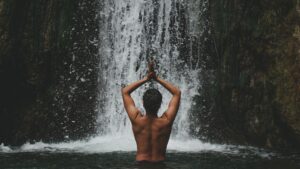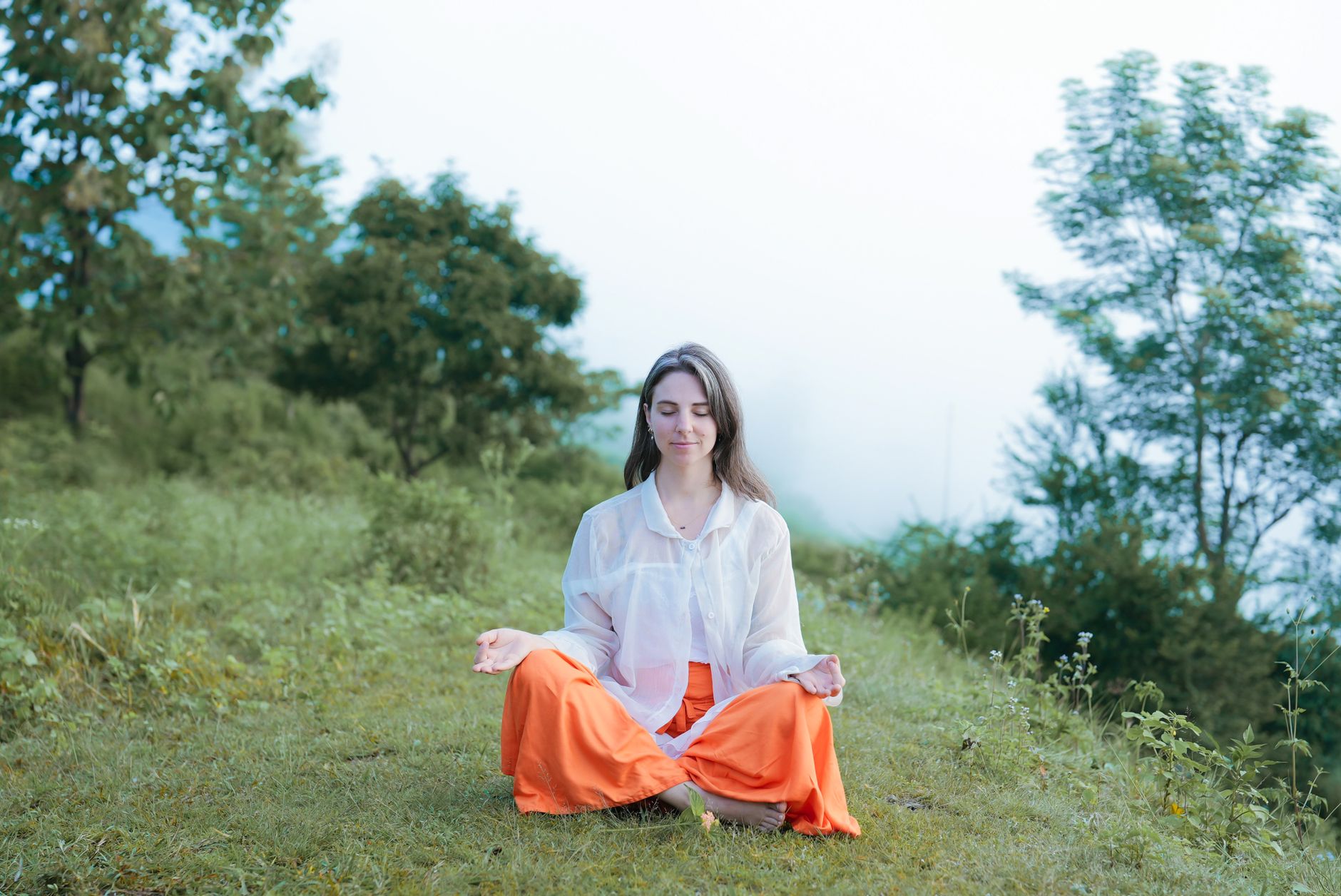
Beneath the noise of a modern life, a particular silence waits. Not the silence of an empty room or a muted phone. Something older — the hush of a forest floor at dusk, the held breath of a mountain before dawn. To find it, you must first agree to disappear. Not from the world, but from the version of yourself that answers emails at midnight and measures its worth in notifications. Unplugging in nature is not a retreat from responsibility. It is a return to a rhythm your body already knows, one it has simply forgotten how to hear.
“The clearest way into the Universe is through a forest wilderness.” — John Muir
Historical Context
Long before the phrase “digital detox” entered our vocabulary, our ancestors understood that certain landscapes held a power to restore the weary mind. The Japanese practice of shinrin-yoku, or forest bathing, was formalized in the 1980s as a public health response to urban burnout, but its roots reach back centuries into Shinto and Buddhist reverence for the natural world. To walk slowly among cedars was never merely a stroll; it was a form of prayer, a way of letting the self dissolve into something larger.
In the West, the Romantic poets sought the same medicine. Wordsworth wandered the Lake District not to escape his thoughts but to meet them more clearly. Thoreau built his cabin at Walden Pond not as a rejection of society but as a laboratory for living deliberately. The tradition is older still — Indigenous peoples across every continent have long understood that the land is not a backdrop for human drama but a living teacher, one that speaks in wind and water rather than words.

What we call “unplugging” today is not a new invention. It is a remembering. The tools have changed. The longing has not.
The Experience
You arrive with a mind still racing. The first hour is the hardest. Your hand reaches for a pocket that holds nothing. Your thoughts loop back to unanswered messages, to the low-grade anxiety of being unreachable. This is normal. The nervous system does not surrender its habits easily.
Then something shifts. Perhaps it is the weight of your own footsteps on soft earth. Perhaps it is the way the light filters through leaves and lands on your skin in shifting patterns. You notice the smell of damp moss, the distant call of a bird you cannot name, the cool air entering your lungs with a slowness that feels almost luxurious. The body begins to settle. The mind follows.
By the second day, time loosens. Meals happen when you are hungry, not when a clock tells you to eat. Sleep comes earlier, deeper. You begin to notice small things — the way a spider repairs its web, the sound of a stream changing pitch as it moves over rocks. These details were always there. You were simply too loud to hear them.
And then, without warning, a kind of spaciousness opens. It is not happiness exactly, not peace in the way we usually mean it. It is something more ordinary and more profound: the simple fact of being alive in a body, on a planet, under a sky. You are not solving anything. You are not optimizing. You are just here. And that, it turns out, is enough.

Who It’s For
This kind of travel serves the person who feels a quiet exhaustion they cannot quite name. The one who has achieved the goals, met the deadlines, kept the promises — and still wakes at 3 a.m. with a hollow feeling in the chest. It is for the traveller who suspects that the constant stream of information is not nourishing them but slowly eroding their capacity for wonder.
It is also for the beginner, the one who has never slept under the stars or walked a trail without a podcast in their ears. You do not need to be an athlete. You do not need expensive gear. You need only a willingness to be uncomfortable for a little while, and a curiosity about what might emerge when the noise stops.
I have led retreats for CEOs and for schoolteachers, for new mothers and for retirees. The common thread is not their background but their hunger. They arrive wanting something they cannot articulate. They leave having found it anyway.
Who It’s NOT For
This is not for the person who wants a scenic backdrop for their Instagram feed. If your primary goal is to capture the perfect image, you will miss the entire point. The forest does not perform for cameras. It reveals itself only to those who are willing to be unremarkable.
It is also not for anyone in acute crisis. If you are wrestling with severe depression, active addiction, or a recent trauma, the wilderness can be too raw, too unfiltered. Nature is a mirror, and sometimes the reflection is more than we can bear alone. Seek professional support first. The mountains will still be there when you are ready.
And it is not for the traveller who needs constant stimulation, who measures a day by how many sights they have seen. Slowness is the medicine here. If you cannot tolerate boredom, you will not find what you are looking for. You will only find more of the same restlessness, just in prettier surroundings.
A Profound Insight
Here is the counter-intuitive truth: unplugging is not about escaping technology. It is about learning to be present without it. The goal is not to reject the modern world but to develop a nervous system sturdy enough to live in it without losing yourself.
When you spend three days in a forest, you are not becoming a different person. You are becoming more yourself. The thoughts that arise are not distractions; they are messages. The boredom is not a problem; it is a doorway. The discomfort is not a sign that you are doing it wrong; it is the feeling of old patterns loosening their grip.
I once sat by a river for four hours, doing nothing. No book, no journal, no camera. Just watching water move over stones. By the third hour, I began to cry — not from sadness, but from a kind of recognition. I had forgotten how to simply be. The river had not forgotten. It had been waiting for me to remember.
You do not need to go to the Himalayas or the Amazon. A city park at dawn will do. A patch of grass behind your apartment. The point is not the location. The point is the quality of attention you bring to it. Can you sit still long enough to hear your own heartbeat? Can you let the world be as it is, without needing to change it, photograph it, or share it?
That capacity — to be fully here, without agenda — is the only real souvenir worth bringing home.
So here is what I would offer you, distilled into a few simple reminders:
- Choose a place within a day’s travel, not a week’s. The closer it is, the more likely you are to actually go.
- Leave the phone behind entirely, or lock it in the car. Airplane mode is not enough; the temptation to check is too strong.
- Bring a paper notebook and a pen. Writing by hand slows your thoughts and deepens your attention.
- Plan nothing for the first three hours. Let boredom arrive. Let it pass. Something else will take its place.
- Walk slowly. Slower than feels natural. The pace of the forest is not the pace of the city.
- At least once, sit still for an hour with no task. Just watch. Just listen. Just breathe.
The world will still be there when you return. The emails, the deadlines, the endless scroll — none of it will have disappeared. But you will have changed. You will carry a small, quiet room inside you, one that no notification can enter. And when the noise grows loud again, as it always does, you will know the way back. You will remember the river. You will remember the silence. You will remember that you are not your thoughts, not your productivity, not your inbox. You are a living being, breathing in and out, part of a world that was here long before you and will remain long after. That is not a small thing. That is everything.