There is a moment on every long journey when the itinerary dissolves. The train is late. The map is wrong. You stand at the ticket counter, months of practiced language failing you, absurd and open, with nothing to do but wait. Most travellers treat this as failure. I have come to treat it as the beginning of the real journey — the one that happens when the plans fall away and something truer steps forward. Travel, done consciously, is not an escape from the self. It is a confrontation with it. And like any honest confrontation, it asks more of us than we expected to give.
“We travel, some of us forever, to seek other states, other lives, other souls.” — Anaïs Nin
Historical Context
The idea that travel transforms the traveller is older than any airport. In India, the tradition of tirtha-yatra — pilgrimage to sacred crossings — stretches back thousands of years. The word tirtha means a ford, a place where a river can be crossed. The pilgrim travels not to see a sight but to cross a threshold within themselves. The destination is fixed. The transformation is not.
In Japan, the poet Bashō walked the narrow roads of the north in the seventeenth century and wrote that every day was a journey, every place a home. His travel diaries became scripture for those who understand that the road itself is the teacher. In the Islamic tradition, the hajj strips the pilgrim of status and clothing alike, so that the millionaire and the labourer walk side by side in the same white cloth. And in the European Grand Tour of the eighteenth century, young travellers crossed the continent not merely to collect art and ruins but to become, through distance, someone other than who they were at home.
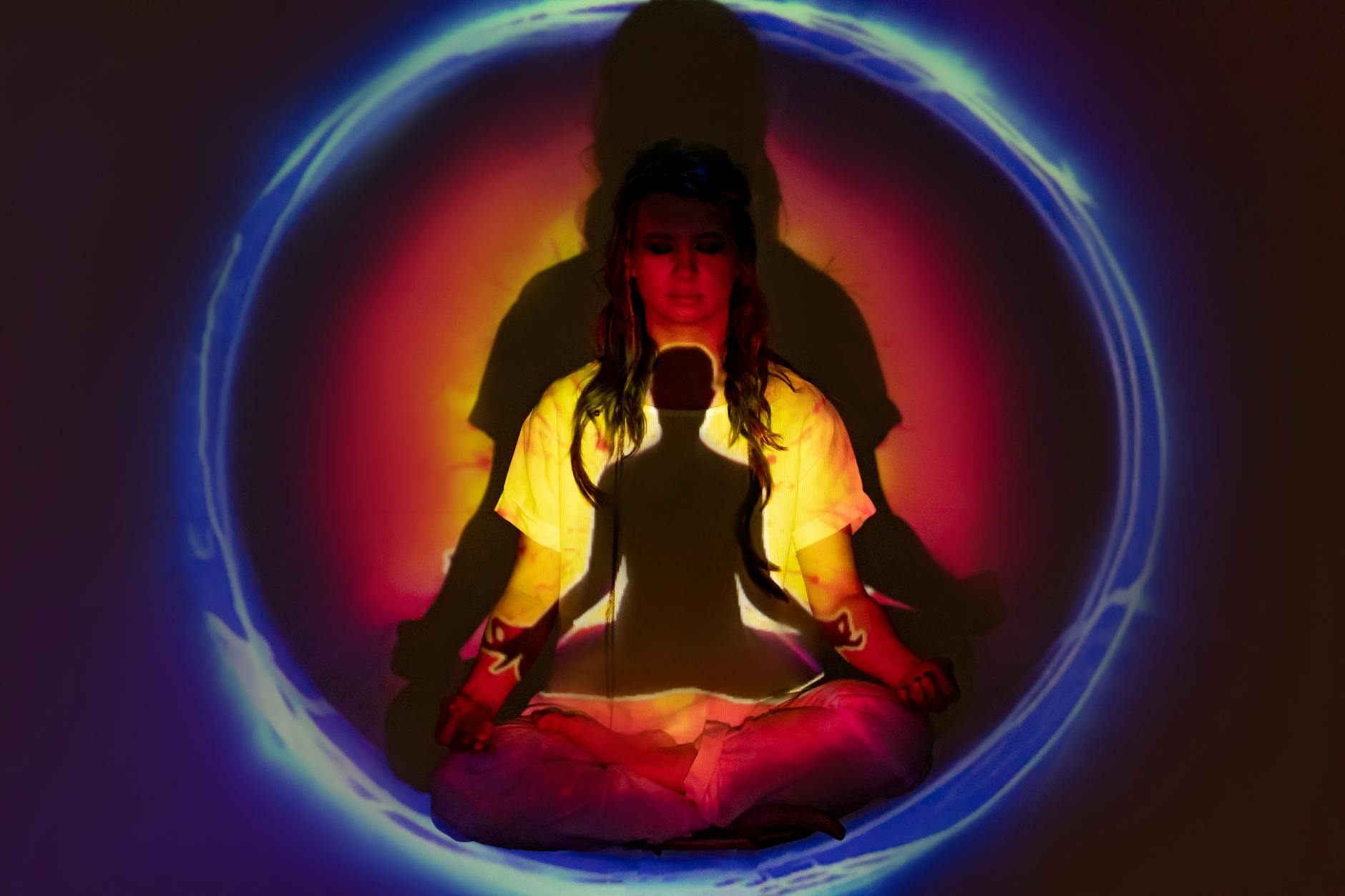
What unites these traditions is a single conviction: that leaving home is a technology for seeing the self. The ancients understood something our modern travel industry often forgets — that the point of the journey is not the photograph at the end. It is the person who returns.
The Experience
Here is what it actually feels like. You wake in a room you did not choose, in a city whose name you mispronounce. The light is wrong. The sounds are wrong. For a few disorienting minutes you do not know who you are, and this is the gift. The self you assembled so carefully at home — the job title, the habits, the opinions you defend at dinner parties — has no furniture here to lean against.
You walk. You sit in a café and order something you cannot name. The coffee is bitter and perfect. An old man at the next table watches you struggle with the cup and laughs, not unkindly, and something in your chest loosens. You are, for the first time in years, a beginner. The ego hates this. The soul drinks it like water.
Or it happens on a mountain. You have been climbing for hours, breath ragged, calves burning, and you stop at a bend where the valley opens beneath you like a held breath. The wind moves through the pines. You are not thinking about your mortgage or your unfinished conversation with your mother. You are not thinking about anything at all. You are simply here, small and enormous at once, and the question that has been following you for years finally catches up and asks itself: Who are you, when no one is watching?
Travel does not answer this question. It creates the silence in which the question can be heard.

Who It’s For
This kind of travel is for the person who is tired of performing. The one who has succeeded at the things they were told to want and feels a strange emptiness at the centre of it. The one who suspects that the restlessness they carry is not a flaw but a compass.
It suits the traveller willing to be uncomfortable — not recklessly, but honestly. Someone who can sit with a wrong turn without panic. Someone who understands that a delayed flight is not an attack but an invitation. Someone who would rather have one real conversation with a stranger than ten perfect photographs.
And it is for the person willing to travel slowly. To stay in one place long enough to be recognised. To return to the same tea stall three mornings in a row until the owner nods at you like an old friend. Depth, not distance.
Who It’s NOT For
Let me be honest, because honesty is a form of care. This is not for the traveller who needs to control every hour. If your itinerary is a fortress, the road will feel like a siege, and you will spend your journey defending yourself against it.
It is not for the person seeking pure escape. Travel cannot outrun what you carry. The grief, the anxiety, the marriage that is quietly ending — these things fit neatly in a carry-on bag. They will meet you at the gate in every city. No amount of distance dissolves what has not been faced.
Nor is it for the collector of places. If the goal is to tick off countries, to accumulate stamps and stories that impress, the journey stays on the surface. You will come home with a fuller passport and an emptier self. That is a real risk, and I have fallen into it more times than I care to admit.
A Profound Insight
Here is the counter-intuitive truth I have carried home from many roads: the self you discover in travel is not a new self. It is the one that was there all along, buried under expectation.
We imagine that distance creates transformation. It does not. Distance only removes the noise. What remains is what was always true — your particular way of noticing, your particular tenderness, your particular fear. The stranger in the foreign city is not a stranger at all. It is you, unedited.
This is why the return home is often harder than the departure. The road gives you a mirror; home asks you to keep looking into it. The real work of travel begins when the suitcase is unpacked and the ordinary days resume. Will you live as the person you met on the mountain, or will you quietly become the person you were before?
Carry this: the journey is not the places you go. It is the attention you bring. And attention, unlike a passport, can be renewed every single day.
Some practical anchors for the conscious traveller:
- Travel slower than feels efficient. Stay in one place for at least a week. Let the novelty wear off so the real place can appear.
- Keep a written journal, not a photo roll. Record what you felt, not only what you saw. The feelings are the souvenirs that last.
- Eat where the locals eat. Sit down. Ask questions. Let a meal become a conversation and a conversation become a friendship.
- Build in silence. One hour a day without a phone, without a plan, without a destination. Walk. Sit. Breathe. Let the mind settle like water in a glass.
- Plan the return as carefully as the departure. Give yourself a day or two of emptiness before the calendar fills. The integration matters as much as the journey.
I have stood at the edge of the sea in a country whose language I never learned and felt more understood than I have in rooms full of people who know my name. That is the paradox of travel. The further we go, the closer we come. The more unfamiliar the world becomes, the more familiar we become to ourselves.
So travel gently. Travel slowly. Travel with your eyes open and your heart unhurried. And when you return — because you always return — come back as someone who has been met by the world, and by themselves, and has not looked away.
That is the journey. Everything else is logistics.