The tea arrived in a clay cup so small it fit inside my palm. The woman pouring it did not ask my name. She asked how many breaths I had taken since waking. I counted badly, guessed, laughed. She refilled the cup anyway. That was in a mountain village where the morning bus leaves once and no one hurries to catch it. I had come to travel, which is to say I had come to collect places the way a child collects stones. She was teaching me something else entirely. Arrival is not the same as presence, and most of us cross oceans without ever leaving the noise inside our own heads.
“The journey is not from one place to another. It is from forgetting to remembering.”
Historical Context
Travel with intention is older than the word for tourism. Pilgrimage is its ancestor: the long walk to a sacred spring, the crossing of a desert to reach a teacher, the circuit of a temple done barefoot and slow. In India, the practice of yatra has carried seekers to rivers and shrines for thousands of years. The point was never the destination. The point was the transformation of the one who walked. Medieval pilgrims on the Camino de Santiago wore scallop shells and moved at the pace of their own bodies, and many arrived changed in ways they could not name.
What we call mindful travel today is a modern name for a very old instinct. It emerged as a counterweight to the industrialisation of leisure — the package tour, the itinerary packed like a suitcase, the idea that a place could be consumed in three days and photographed in forty. Writers and wanderers pushed back. The slow travel movement, the rise of retreats and walking holidays, the return to the village guesthouse over the chain hotel: all of it is a quiet rebellion against speed. The tradition I inherited, through yoga and through the teachers who taught me, holds a simple conviction. Attention is the real currency of any journey. Spend it well and a single afternoon in an unfamiliar street can teach you more than a month of motion.

The Experience
Intention does not announce itself. It arrives as a small shift in the body. You notice you are standing still, and you are not waiting for anything. The light on the wall is doing something you would have missed at a faster pace. Somewhere a dog barks, then stops, and the silence that follows feels earned.
I have felt this in the cool of a stone courtyard at dawn, the air still holding the night, my feet cold against the flagstones. I have felt it on a train where the windows fogged and a stranger shared his oranges without a word. There is a particular quality to a morning when you have decided not to decide, when the day is allowed to unfold and you follow it the way you would follow a river. The senses sharpen. You hear the language around you as music before it becomes meaning. You smell bread and diesel and rain coming. You notice that your shoulders have dropped.
The counter-intuitive part, the thing I resisted for years: the less you plan, the more you receive. I used to build itineraries like fortresses, convinced that preparation was the same as care. It was not. It was fear wearing the costume of diligence. When I finally left a day blank and let it fill itself, the day gave me a wedding procession, a conversation with a baker, and a nap under a fig tree. None of it was on any list. All of it is what I remember.
Stillness is the practice. Not the stillness of doing nothing, but the stillness of not reaching. You sit in a café and you do not check your phone. You watch the street perform itself. You let the discomfort of unoccupied time rise and fall, and you learn that it is not discomfort at all but a kind of relief you had forgotten how to feel. The minutes stretch. The afternoon opens like a hand. You are doing nothing, and for the first time in months, nothing is exactly enough.

Who It’s For
This way of travelling serves the person who has returned from a trip exhausted rather than restored, who has a camera roll full of places and a memory full of blur. It serves the one who suspects that the answer is not a longer itinerary but a quieter one. It is for the traveller willing to trade a checklist for a single deep encounter.
It suits people in transition — after a loss, a leaving, a change of work — who need the road to hold them while they rearrange themselves. It suits the introvert who finds group tours loud and the sensitive soul who absorbs a city like weather. It suits anyone who has ever stood in front of a famous monument and felt nothing, and wondered what was wrong with them. Nothing was wrong. They were simply standing in the wrong relationship to the moment.
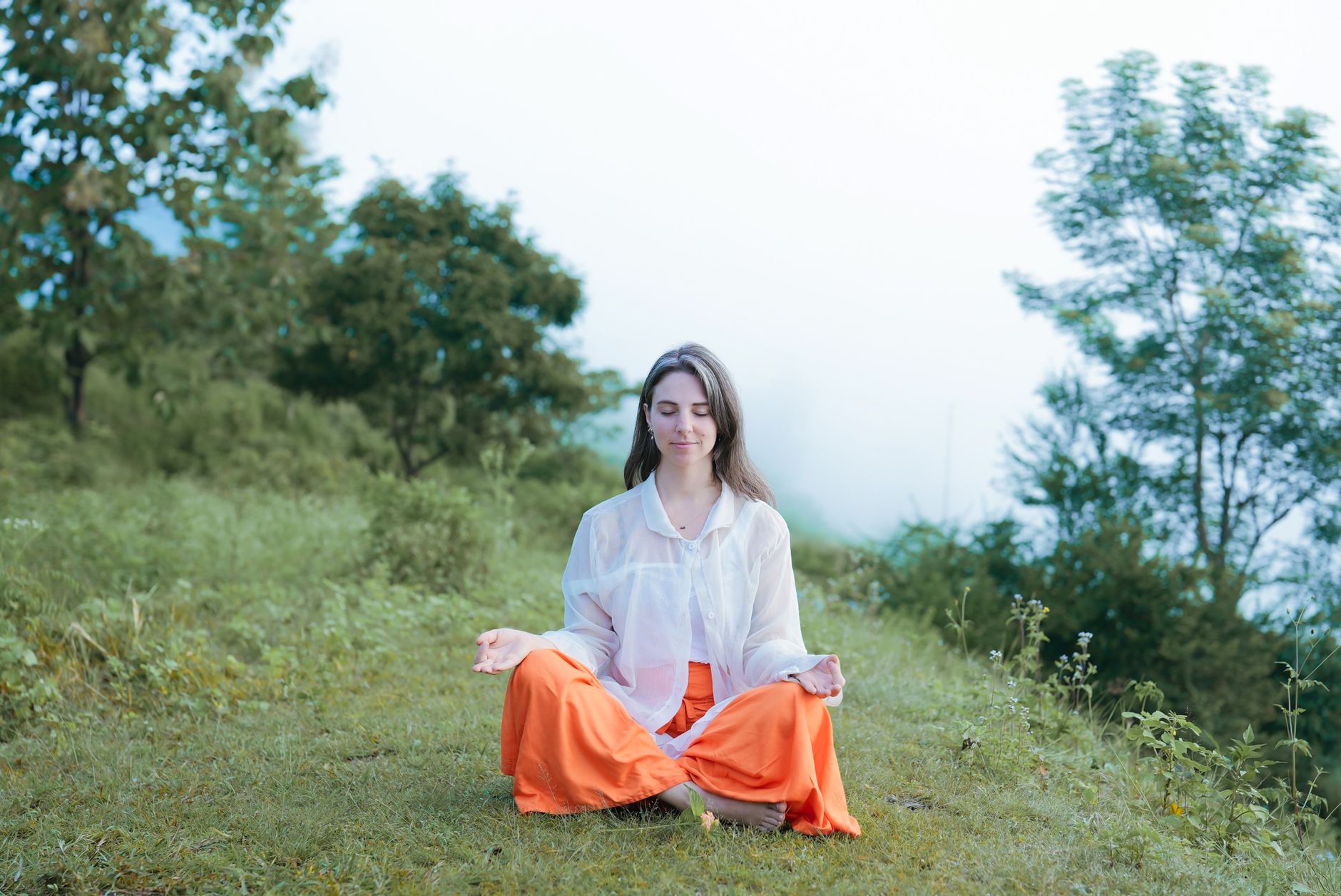
And it suits the beginner, too. You do not need a meditation practice or a decade of yoga to travel with intention. You need a willingness to be a little bored, a little unproductive, a little less certain. The rest is practice, and practice is just returning, again and again, to the place where you actually are.
Who It’s NOT For
Honest boundaries matter, so here is one. This is not for the traveller whose joy lives in momentum. Some people are happiest with a train to catch, a museum queue to beat, a city to conquer in a weekend. Their energy is real and their pleasure is real. Asking them to sit still in a courtyard would be a small cruelty. Know yourself. If your nervous system hums at speed, honour that.
It is also not for someone in crisis who needs the structure of a guided plan, or for a parent travelling with young children who must move at the rhythm of nap times and snacks. Intention is not a luxury of the leisured; it is a disposition. But it can wait. There are seasons for slow travel and seasons for survival travel, and both are legitimate. The practice will be there when you are ready, and it will not hold your absence against you.
A Profound Insight
Here is the idea worth carrying home: the place is never the teacher. You are. A destination can only offer conditions — the unfamiliar street, the strange language, the food you did not order. What you do with those conditions is the whole of the journey. This is why two people can walk the same path and one returns transformed while the other returns with souvenirs. The difference is not the path. It is the quality of attention brought to it.
This insight travels with you, which is the point. You do not need a passport to practise it. The same attention that turns a foreign village into a teacher can turn your own kitchen into one. The journey inward and the journey outward are not two journeys. They are one, and the road is simply the occasion for noticing that they were never separate.
Ask yourself this, honestly: when did you last arrive somewhere and actually be there? Not photograph it, not compare it, not narrate it for the people back home. Just be there. If the answer is hard to find, you already know what to practise.
Practical Intentions to Carry
- Leave one full day unplanned on every trip, and defend it from your own urge to fill it.
- Begin each morning with three slow breaths before you look at a screen or a map.
- Choose one sense to follow for a day — sound, or smell — and let it lead you through the place.
- Speak to one stranger each day without an agenda beyond curiosity.
- Keep a small notebook and write one sentence each evening about what you noticed, not what you did.
- Return to the same café or corner twice, and let familiarity deepen rather than dull the place.
None of this is complicated. All of it requires the one thing we are most reluctant to give: our full presence, unhurried, undistracted, unimpressive. The clay cup is small. The tea is ordinary. And still, if you hold it with both hands and pay attention, the morning becomes something you will carry for years.