The tea arrived in a chipped enamel cup, so hot it fogged my glasses. The woman who poured it said nothing at all. Three days into a silent walk across the Kii Peninsula, I held that small cup of bancha—bitter, grassy, steam curling into the cold morning—and realized it was the first thing in months that asked nothing of me. No notifications. No small talk. Just heat in my hands and the sound of a river I couldn’t yet see. Travel does this. It strips the familiar away until you’re left holding something simple, and in that simplicity you finally hear yourself think.
We do not travel to escape the self, but to meet it somewhere it has never stood before.
Historical Context
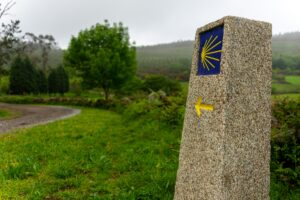
Pilgrimage is older than any map. Long before “wellness travel” became an industry, humans walked toward something sacred and came back altered. In Japan, the Kumano Kodō—the network of forest trails I was walking—has carried pilgrims for over a thousand years. Emperors once made the journey on foot through cedar and mist to reach the three grand shrines of Kumano, seeking purification, healing, and a kind of rebirth. The path was never merely transportation. It was the practice itself.
Consider the Camino de Santiago, walked by millions since the ninth century, or the Buddhist circumambulations of stupas in Nepal, or the hajj that draws the faithful to Mecca. Every culture seems to have intuited the same truth: that moving the body across distance can move the soul toward clarity. The medieval Christian pilgrim, the Sufi wanderer, the Aboriginal songline walker—all understood that geography and inner life are woven from the same thread.

What we call “conscious travel” today is a rediscovery more than an invention. The seekers of the past didn’t chase comfort; they walked until their feet ached and their minds quieted. They carried little. They moved slowly. They let the land teach them. I find that humbling. Our ancestors knew something we keep forgetting—that the destination was never the point.
The Experience
On the fourth morning, the forest began to speak. Not in words—in texture. The crunch of frost underfoot, the wet slap of fern fronds against my thighs, the sudden hush when the wind died. I noticed my breath growing longer, my shoulders dropping by degrees. Somewhere between the third shrine and the fourth, I stopped checking the time.
There is a particular quality of silence that descends on a pilgrim path. It isn’t empty. It hums. You hear your own footsteps like a heartbeat, and after a while your thoughts slow to match them. I ate rice balls on a moss-covered stone and cried—not from sadness, exactly, but from the sheer unfamiliar relief of being unhurried. When did I last sit with myself for an hour without reaching for a screen? Have you noticed how rarely we allow our own company?
Evenings brought a different teaching. In the small inns, or minshuku, along the way, I’d soak in a wooden bath, the water so mineral-warm it seemed to hold me upright. Steam rose around my face. The day’s miles dissolved. I slept deeper than I had in years, no dreams I could recall, just a heavy, honest rest. This is the body’s quiet reward for moving with intention.
Travel like this recalibrates the senses. Colors sharpen. Food tastes of itself—a persimmon eaten on a stone wall, its sweetness almost shocking. You become, for a while, a child again: curious, present, unguarded. The world doesn’t change. Your capacity to receive it does.

Who It’s For
This way of traveling serves the person who suspects they’ve been living at arm’s length from their own life. The one who has optimized everything—calendar, inbox, sleep score—and still feels a hollow hum beneath it all. You don’t need to be spiritual in any formal sense. You don’t need to know a mantra from a mala bead.
It suits those willing to trade efficiency for attention. Someone who can accept a slow train, a strange bed, a meal they didn’t choose. The traveller who is ready to be a beginner again—awkward, uncertain, alive. If you can sit with discomfort without immediately fixing it, you’re already halfway down the path.
I’ll be honest: the people who gain most from conscious travel are often the ones who least expect it. The burned-out engineer. The new parent stealing a week. The person between chapters of a life, standing in the doorway of what comes next. They arrive wanting a vacation and leave having met themselves.
Who It’s NOT For
Let me draw an honest boundary. If your ideal journey is a curated resort where every need is anticipated before you feel it, this path will frustrate you. Sacred travel asks you to carry your own bag, to tolerate boredom, to sit with questions that don’t resolve. Some days are simply cold and wet and long.
This also isn’t for the person seeking a guaranteed transformation. The forest doesn’t promise enlightenment. It offers conditions—silence, rhythm, distance—and what you do inside those conditions is yours alone. Arrive expecting a hallmark moment and you’ll likely miss the quiet one that actually arrives. There’s no itinerary for awakening.
A Profound Insight
Here is the idea I carried home, and it runs against everything we’re told about travel as accumulation: the point of leaving is not to collect experiences but to lose the self you’ve been performing. The pilgrim path doesn’t add anything to you. It subtracts. It peels away the noise, the roles, the story you’ve rehearsed for years—until what remains is something simpler and more true.
This is counter-intuitive in a culture that treats travel as a highlight reel. We photograph the summit and miss the climb. But the real gift of a journey taken slowly is subtraction. You return lighter, not fuller. The souvenirs that matter are the habits of attention you bring back: how you pour your morning tea, how you listen, how you walk.
To hold this, consider what a mindful journey asks of you:
- Move slowly and on foot where you can—distance walked is distance absorbed.
- Build in silence. A day without conversation is not a wasted day.
- Choose one practice to carry: a morning sit, a gratitude note, a barefoot walk.
- Leave room for boredom and let it ripen into attention.
- Return with a ritual, not a souvenir—something small you repeat at home.
The trail taught me that self-discovery is less a discovery than a remembering. You don’t find a new self waiting at the shrine. You notice the one who was there all along, buried under schedules and expectations, patient as a stone beneath moss.
Conclusion
I still keep the chipped enamel cup—not as a trophy, but as a reminder. Some mornings I fill it with tea and sit for ten minutes doing nothing at all, and the forest comes back to me: the frost, the hush, the long green corridor of cedar. Travel changed me not because I went somewhere extraordinary, but because I finally slowed down enough to arrive where I already was.
The path is still out there, winding through mist and old stone. It waits for anyone willing to walk it with open hands. You don’t need a plane ticket to begin—only the willingness to take one honest step, and then another, and to notice what stirs in the quiet between them. Wherever you are right now, the journey has already started. The only question is whether you’ll walk it awake.