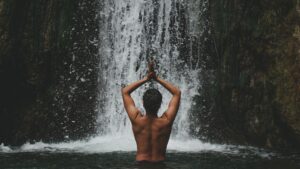
There is a particular kind of tiredness that follows a week of sightseeing — the ache of a body moved through museums and train stations and cathedrals until every step becomes a negotiation. We call it a holiday. We return home needing another one. Somewhere along the way, travel became a performance of seeing, a frantic accumulation of experiences filed away for later. But there is another way. Older, quieter, and it asks almost nothing of you except your presence.
Doing nothing is not the absence of experience. It is the willingness to let experience arrive without your chasing it.
Historical Context
The art of doing nothing has a long pedigree, though we rarely grant it the dignity of a lineage. In Japan, it lives inside the practice of boketto — gazing vacantly into the distance without thinking, a word that carries no shame. In Italy, they gave it a name so beautiful it became a legal defence: dolce far niente, the sweetness of doing nothing. The Dutch have niksen, a verb for the deliberate act of being idle, of occupying space without purpose. And in the ancient yogic texts, there is turiya, the fourth state of consciousness beyond waking, dreaming, and deep sleep — a stillness that is not passive but profoundly alert.
These traditions emerged not in idleness but in defiance. They rose in cultures that understood something we have forgotten: that rest is not a reward for productivity but a condition of it. The medieval monks who practised otium sanctum — holy leisure — were not escaping their duties. They were tending the ground from which all meaningful action grows. When Petrarch climbed Mont Ventoux in 1336 and confessed that the view moved him more than any book, he was not being lazy. He was inventing a new way of paying attention. The contemplative life has always required a certain courage — the courage to stop.
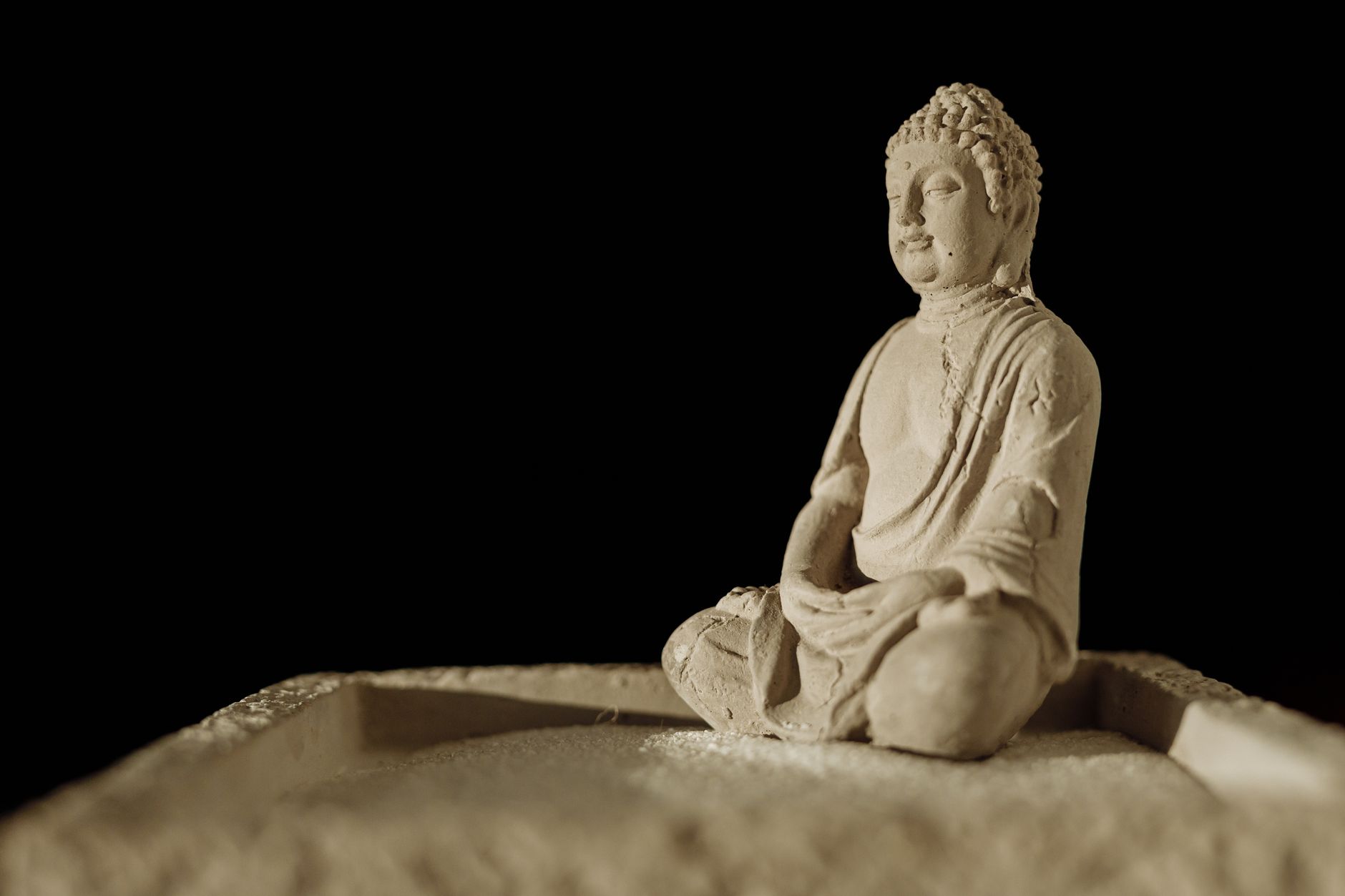
Travel, at its best, is a form of pilgrimage. And every pilgrimage tradition in the world includes rest as a station, not an interruption. The pilgrim who collapses by the roadside and watches clouds pass has not failed the journey. She has entered it more deeply.
The Experience
You will know it by the sounds that arrive when you stop moving. First, the breath. Then the distant hum of a city going about its business without needing your participation. A spoon against ceramic somewhere. The rustle of leaves you had not noticed were there. This is not silence — it is the sound of the world continuing, indifferent to your itinerary, and there is a strange comfort in that.
Find a café chair that faces nothing in particular. Order something small. Let the coffee go cold. Watch how the light moves across the table in increments you would never notice if you were reading or photographing. The waiter will not rush you. In fact, if you choose the right place — a square in Lisbon, a bench in Kyoto, a terrace in Marrakech — the waiter will actively ignore you, which is its own form of hospitality. To be left alone is a gift that few destinations still know how to give.
The first hour is the hardest. Your mind will reach for its lists. It will calculate distances, review reservations, wonder whether you are wasting the trip. Let it. The thoughts will pass like weather. Then, somewhere in the second hour, something loosens. The boundary between you and the afternoon thins. You are no longer a traveller doing nothing. You are simply a person, breathing, in a place, and that is enough.
I once spent four hours on a stone wall in a hill town in Umbria, watching a cat sleep in a doorway. I remember almost nothing else from that trip. I remember everything about that wall. The warmth of the stone through my trousers. The way the cat’s ear twitched at a sound I could not hear. The moment a bell rang somewhere below and I did not check the time. That afternoon has stayed with me longer than any museum I paid to enter.
What does it feel like, truly? It feels like being slightly bored, and then not bored at all. It feels like the first ten minutes of a meditation when you are certain you are doing it wrong, followed by the sudden discovery that there is no wrong. It feels like the opposite of travel as you have known it — and therefore, paradoxically, like the most honest travel there is.
Who It’s For
This way of travelling serves the person who has grown exhausted by their own ambition. The one who has returned from three countries in ten days and felt nothing but relief at the airport. The one who secretly suspects that the highlight of their last trip was the hour they spent in a bathtub, not the cathedral they queued for. If you have ever felt guilty for resting during a holiday, this is for you. If your camera roll is full of photographs you have never looked at again, this is for you. If you are willing to trade one afternoon of seeing for one afternoon of being, you are exactly the traveller this practice was made for.
It also serves the person in transition — after a loss, between jobs, at the edge of a decision. Doing nothing in an unfamiliar place gives the mind a new room to wander in. The change of scenery does not distract you from your life. It gives you enough distance to see it clearly.
Who It’s NOT For
Honesty matters here. This is not for the traveller on a tight schedule with three cities left to see. It is not for the parent of a toddler who has exactly ninety minutes of nap time to explore. It is not for the person who feels genuinely alive in motion — who finds their stillness in the rhythm of walking, the shuffle of a market, the hum of a night train. Doing nothing is not a moral achievement. It is a practice that suits some temperaments and not others.
And here is the counter-intuitive part: the art of doing nothing is not for people who are already good at it. If you are naturally idle, if you drift through days without direction, this practice will not deepen you. It will only confirm you. The art of doing nothing is a discipline for the over-productive, the over-scheduled, the ones who need permission. For everyone else, it is simply Tuesday.
A Profound Insight
Here is the idea worth carrying home: doing nothing is not the opposite of doing something. It is the ground from which all doing arises. The breath that sustains every action comes from a place of rest. The most creative minds in history understood this — they built fallow time into their lives not as a luxury but as a necessity. When you learn to be still in a foreign place, you are not avoiding the journey. You are learning to let the journey come to you. And that capacity — to receive rather than pursue — will follow you back into your ordinary life, where it is needed even more.
Consider what you might hear if you stopped trying to hear anything. Consider what you might see if you stopped looking for the next thing to see. The world has been waiting for you to slow down. It has been patient. It will still be there when you do.
- Choose one afternoon of your trip and schedule nothing. No reservations, no tickets, no route.
- Find a public seat — a square, a bench, a café — and stay for at least two hours.
- Leave your phone in your bag. Resist the urge to document. The experience is the record.
- Expect the first hour to feel uncomfortable. Stay anyway. Discomfort is the doorway.
- Notice one small thing with complete attention — a leaf, a sound, a stranger’s laugh. Let it be enough.
You do not need to travel to a monastery or a silent retreat to practise this. You need only a chair, a willingness to be unproductive, and the quiet courage to let an hour pass without earning it. The destination is not the point. The point is the moment you stop moving long enough to notice you were always already here. When you return home, you will carry something the guidebooks cannot sell you: the memory of an afternoon that asked nothing of you, and gave everything back.