Some meals you eat. Others eat you. I learned the difference on a stone terrace in northern Thailand, holding a bowl of rice cooked by hands I would never meet, grown in water I would never touch, carried to my table by a woman whose name I mispronounced for three days straight. Before that bowl, I had spent twenty years eating while walking, eating while scrolling, eating while rehearsing conversations I would never have. The rice was warm. The morning was cool. And for the first time in my adult life, I noticed I was not actually present for my own breakfast.
Mindful eating retreats are not about food. They are about attention. And attention, as any meditation teacher will tell you, is the rarest currency we carry.
“When you eat, just eat. When you walk, just walk. Above all, do not wobble.”
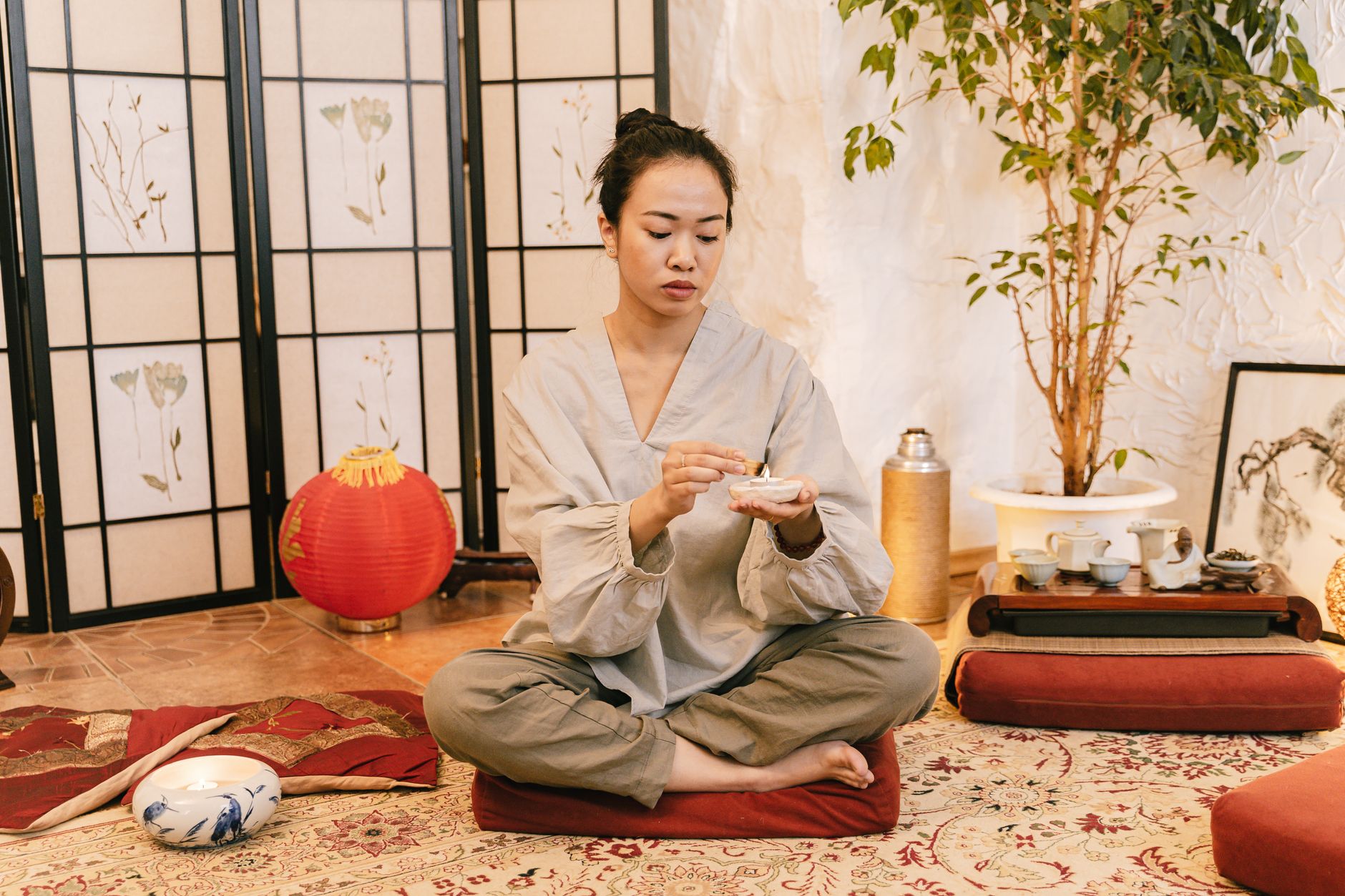
Photo by Rishikesh Yogkulam on Pexels
— Zen proverb, adapted
Historical Context
Eating as spiritual discipline is older than any retreat industry. Buddhist monks in the Theravada tradition have taken their midday meal in silence for over two thousand years, treating each bite as a meditation on impermanence. In Japan, the Zen tradition of oryoki — eating from nested bowls with precise, ritualized movements — turns a simple meal into a ceremony of gratitude that can last an hour. India’s Ayurvedic approach to food predates the Buddha by centuries, prescribing not just what to eat but how, when, and in what state of mind.
The modern mindful eating retreat borrows from all of these lineages, sometimes gracefully and sometimes clumsily. The first formal programs emerged in the 1990s, when Jon Kabat-Zinn’s Mindfulness-Based Stress Reduction curriculum began including raisin-eating exercises — a practice that sounds absurd until you try it. One raisin. Five minutes. You will be astonished by what you taste.
The retreats themselves are now scattered across the world: a converted monastery in Tuscany, a permaculture farm in Costa Rica, a Zen center in the Catskills, a rice terrace in Bali. Some are rigorous, requiring noble silence for a week. Others are gentle, blending meditation with cooking classes and slow walks through olive groves. The best ones share a single quality — they slow you down enough to notice what you have been missing.
The Experience
You arrive hungry in ways you cannot name. Not for food. For stillness.
The first meal is usually silent. This is disorienting. You will reach for your phone. It will not be there. You will look at other people. They will be looking at their food. You will feel, at first, a kind of panic — the panic of a mind that has forgotten how to be unoccupied. Then, slowly, the food itself begins to speak.
A carrot, eaten slowly, tastes of soil and rain. A piece of bread, chewed forty times, becomes sweet in a way that fast eating never reveals. You notice the weight of the fork in your hand. You notice the temperature of the room. You notice that you have been holding your breath, and you let it go.
By the third day, something shifts. Meals become the anchor of the day rather than an interruption. You begin to taste not just flavors but textures, not just textures but the labor behind them — the farmer, the cook, the sun, the water. Gratitude arrives uninvited, which is the only way it ever arrives.
The afternoons are for walking meditation, journaling, or simply sitting. The evenings are often lighter meals, soups and steamed vegetables, food that asks nothing of you but your presence. You sleep deeply. You wake before the alarm.
And then, somewhere around day five, you realize you have not thought about your inbox in hours. This is not a small thing. This is a revolution.
Photo by Kevin Malik on Pexels
Who It’s For
This retreat serves the traveler who is exhausted by their own speed. The one who has eaten at three-Michelin-star restaurants and remembered none of them. The one who suspects that their relationship with food has become transactional, a series of refueling stops rather than a conversation with the earth.
It is also for the person in transition — after a loss, a diagnosis, a divorce, a career change. When the ground shifts beneath you, a mindful eating retreat offers something rare: a way to rebuild your relationship with your own body, one bite at a time. You do not need to be a meditator. You do not need to be spiritual. You only need to be willing to sit with yourself for a few days and see what surfaces.
Many retreats welcome solo travelers, and the silence makes it easy to be alone without being lonely. Couples sometimes attend together, though I have noticed that silent retreats can be harder on couples than on individuals — the silence exposes things that conversation usually covers.
Who It’s NOT For
Let me be honest, because the retreat industry rarely is.
This is not for you if you are looking for a spa vacation with better food. A mindful eating retreat is not a wellness resort. There may be no wine list, no infinity pool, no afternoon massage. There will be silence, and silence is not always comfortable.
It is not for you if you have an active eating disorder. The intensity of food-focused meditation can be destabilizing for someone in acute recovery. Seek clinical support first. A retreat is not therapy, and any program that claims otherwise should be viewed with suspicion.
It is not for you if you want to be entertained. There will be no cooking demonstrations by celebrity chefs, no wine tastings, no curated cultural excursions. The point is subtraction, not addition.
And it is not for you if you are unwilling to be bored. Boredom is the doorway. If you cannot sit in the antechamber, you will not reach the room.
A Profound Insight
Here is the counter-intuitive truth that took me years to accept: mindful eating is not about eating more slowly. It is about noticing that you were never really eating at all.
Most of us live at a slight remove from our own lives. We eat while planning the next meal. We walk while rehearsing the next conversation. We are perpetually elsewhere, and the elsewhere is always less nourishing than the here. A retreat does not teach you a technique. It removes the distractions that kept you from noticing what was always present.
The insight worth carrying home is this: you do not need a retreat to practice presence. You need a bowl of rice and the willingness to taste it. The retreat is simply a container. The practice is portable. Every meal is an opportunity to return.
Ask yourself this: when was the last time you tasted something fully — not just the flavor, but the moment itself?
Here are the takeaways I would offer anyone considering this path:
Start small. Eat one meal a week in silence, without your phone, without music, without company. Notice what changes.
Choose retreats with lineage. Look for teachers trained in established traditions — Zen, Vipassana, Ayurveda, or MBSR — rather than wellness influencers with a certificate.
Check the food philosophy. A good retreat sources locally, cooks simply, and treats meals as practice rather than performance. Ask questions before you book.
Prepare for discomfort. Silence, boredom, and unexpected emotion are part of the curriculum. Do not mistake them for failure.
Bring it home. The retreat ends. The practice does not have to. One mindful meal a day is enough to change your relationship with food, and with yourself.
The rice I ate on that stone terrace in Thailand was not the best rice I have ever tasted. It was simply the first rice I had ever truly tasted. That is the difference a mindful eating retreat makes — not in the food, but in the one who eats it. You arrive hungry for something you cannot name. You leave knowing that the something was always there, waiting in the bowl, waiting in the breath, waiting in the ordinary miracle of a single bite taken with your whole attention.
Go slowly. Taste everything. And when you forget — because you will forget — begin again.