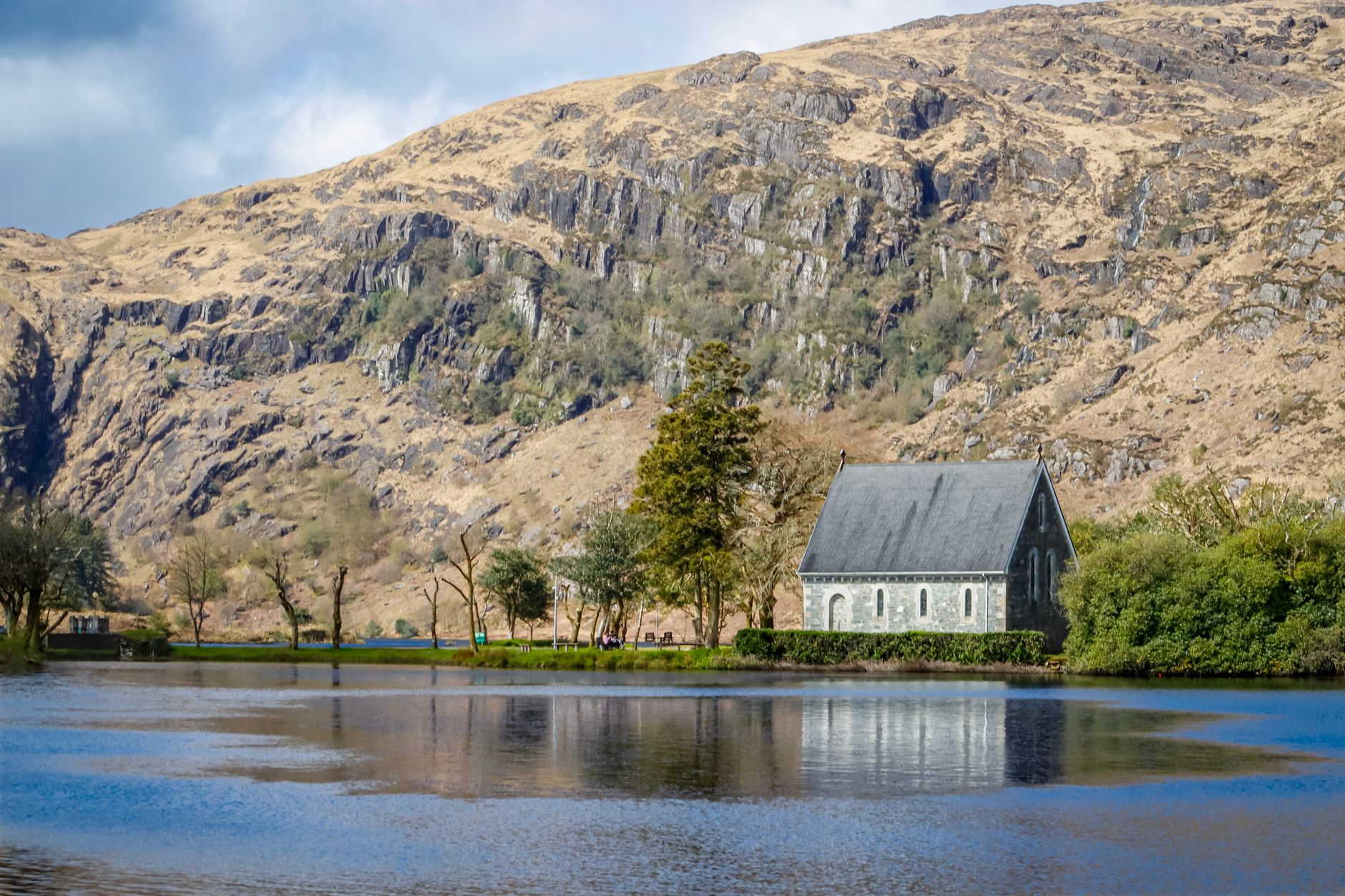
The rain arrives sideways at the Hill of Tara, and I let it. Somewhere beneath my boots, the Lia Fáil — the Stone of Destiny — holds its silence. I had come expecting thunder, some cinematic thrum of ancient kings. Instead: wet grass, a low grey sky, the smell of sheep, and a wind that pushed at my chest like a hand asking me to slow down. Ireland’s sacred sites rarely announce themselves. They wait. They let you arrive with all your noise and then quietly outlast it. This is the first lesson of mindful travel here: the land does not perform for you. It simply continues, and asks whether you are willing to join it.
“The sacred is not a place you visit. It is a way of arriving.”
Historical Context
Ireland’s Celtic sacred landscape is older than the Celts themselves. That surprises many visitors. The great passage tombs — Newgrange, Knowth, Dowth in the Boyne Valley — were raised around 3200 BCE, centuries before the pyramids, by a Neolithic people whose language and gods we will never recover. The Celts arrived much later, perhaps around 500 BCE, and found a countryside already dense with meaning. They did what wise newcomers do: they absorbed rather than erased, folding the old mounds and wells into their own cosmology of gods, heroes, and thin places. Nothing was torn down. Everything was layered over, the way a patient hand lays a second coat of paint.
What we call “Celtic spirituality” today is a layered thing — archaeology, medieval scribes, nineteenth-century romanticism, and a good measure of modern longing all pressed together like strata in a cliff. The monastic settlements complicate it further. When Christianity came in the fifth century, it did not sweep the old sites away. It built on top of them. At Glendalough, a hermit named Kevin founded a monastery in the sixth century in a valley so remote it feels like a held breath. At the Rock of Cashel, a fortress of kings became a cathedral. The pattern repeats across the island: pagan hill, Christian church, both still humming with the same quiet current. Stand in one of these places long enough and you feel the seams — the older stone under the newer, the prayers stacked like sediment.
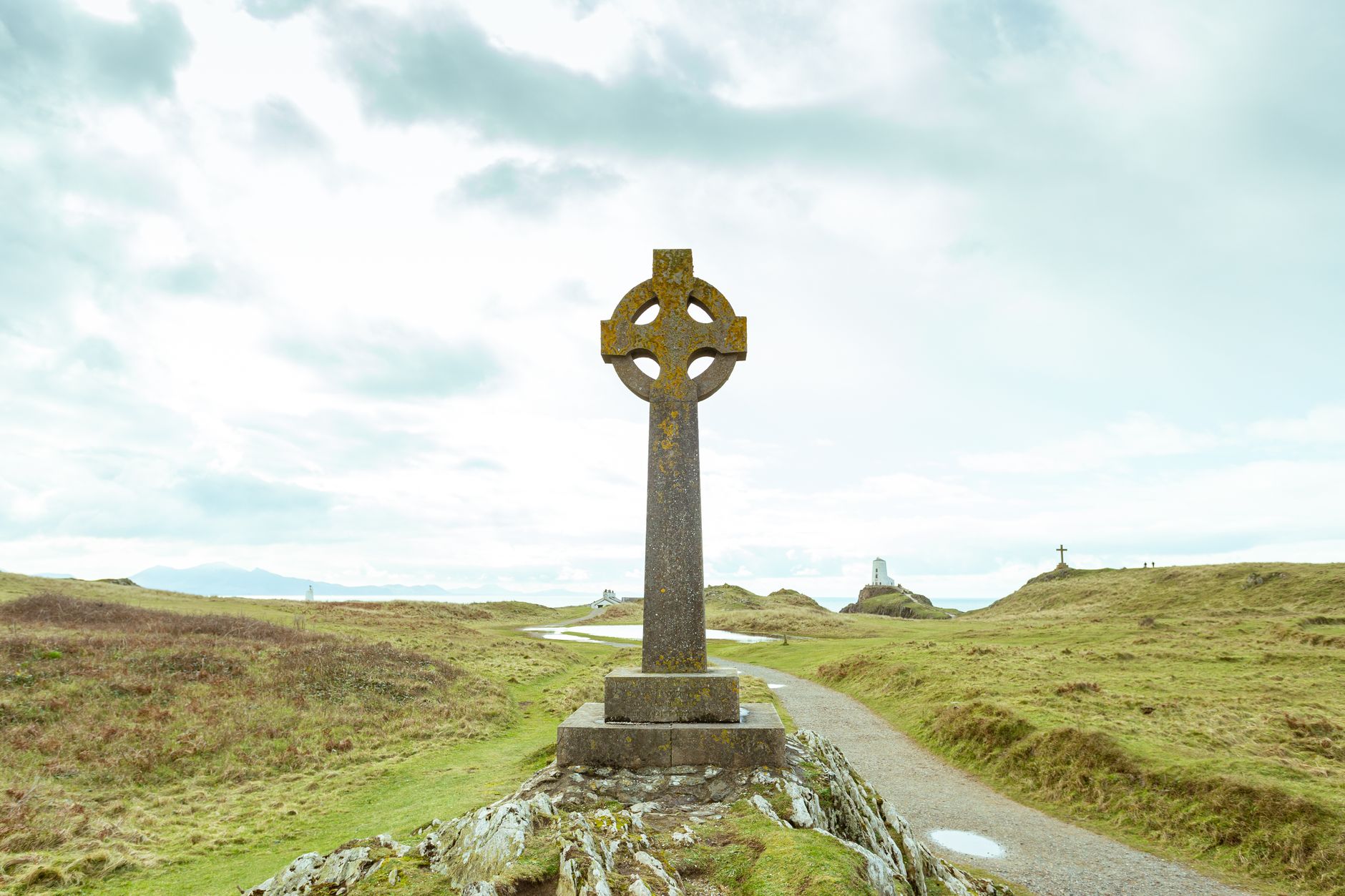
Here is the counter-intuitive opinion I will offer, and I mean it gently: much of what tourists are sold as “Celtic” is a modern invention, and that is not necessarily a problem. The triskeles on souvenir mugs, the druid tours, the candlelit “Celtic blessing” ceremonies — they are a recent layer, not an ancient one. But a tradition stays alive by being remade. The question is not whether a ritual is authentic to 300 BCE. The question is whether it makes you more present. A fabricated ceremony performed with real attention may serve you better than a genuine ruin photographed without any. I have watched a man kneel at a well with genuine tears and I have watched a crowd trample a tomb while checking their phones. The century of the ritual mattered less than the quality of the attention.
The Experience
Walk into Newgrange and the first thing you notice is the temperature. It drops. The passage is narrow, the stones cold and slightly damp, and you must bow — genuinely bow — to enter. I find that fitting. You cannot swagger into a tomb. The guide kills the artificial lights and for a few minutes the chamber is absolute black, and then a thin blade of midwinter sun (simulated, on most days, but faithful) creeps along the floor toward the back wall. People gasp. I have seen this a hundred times in photographs. In the dark, with strangers breathing beside me, it undid me completely. The body knows what the photograph cannot carry: the cold, the close air, the smallness of being inside something built by hands that are gone.
The sensory life of these sites is what stays. At Glendalough, the walk between the two lakes takes perhaps forty minutes and passes a ruined round tower that leans slightly, like a monk caught mid-thought. Ferns. The mineral smell of wet stone. A robin that followed our small group for a hundred metres, entirely unimpressed. At Poulnabrone dolmen in the Burren, the limestone pavement stretches in grey slabs to the horizon and the portal tomb sits in it like a table set for guests who never came. Wind. Always wind. You learn to stop fighting it. You learn to lean into it instead, to let it comb through you, to understand that the discomfort is part of the teaching.
And the wells. Holy wells are scattered across the country, many still visited, many dressed with clooties — strips of cloth tied to branches, each one a prayer left behind. I tied one at a well in County Clare and felt faintly ridiculous, then unexpectedly moved. The water was cold and clear and tasted of nothing at all, which somehow made it more sacred. Do you notice how quickly the mind wants to explain a place like this, to name it, date it, file it? The practice is to resist that for a while. Stand there. Let the explanation wait outside the gate. The well has been receiving prayers longer than any of us have been alive, and it does not require you to understand it before it will hold you.
Timing matters more than any guidebook admits. Midwinter at Newgrange draws crowds for the solstice alignment, but the quiet months — February, November — give you the sites almost alone. Go early. Go in rain, if you can bear it, because rain empties the car parks and softens the stone and makes the whole island feel like one continuous, breathing thing. Bring no agenda beyond arrival. The best hours I spent in Ireland were unplanned ones — a detour to a field, a roadside well with no sign, a long sit on a wall watching cloud shadows move across a hill. None of them were on any itinerary. All of them are still with me.

Who It’s For
This journey serves the traveller who is tired of collecting. If you have stood in front of enough cathedrals taking photographs you will never look at again, and you felt something missing, these sites offer a different economy. They reward slowness. They reward silence. They reward the person willing to sit on wet grass for twenty minutes doing nothing that could be posted online. There is a particular kind of traveller who has begun to suspect that the checklist is the problem — that the more places you tick off, the less any of them touch you. This landscape is medicine for that suspicion.
It suits the walker, the journal-keeper, the one who travels to think. It suits anyone in transition — after a loss, a leaving, a long illness — because these places have absorbed centuries of human asking and they do not flinch. Grief sits easily in a ruined monastery; the stones have heard it before. It suits the spiritual seeker who is allergic to dogma but hungry for ritual. And it suits the curious sceptic, honestly, perhaps most of all: someone who wants the archaeology and the atmosphere together, who can hold “this is a Neolithic tomb” and “this place is alive” in the same open hand. The sceptic is often the one who feels it most, precisely because they did not come expecting to.
Who It’s NOT For
Let me be honest about the boundary. If you need comfort, predictability, and a full itinerary of guaranteed highlights, this is not the trip. Irish weather will rearrange your plans. Sites close early. Roads narrow to single lanes. Some of the most moving places are unmarked fields behind a farmer’s gate, and you may drive past them twice without knowing. The land here does not owe you convenience. It offers something better, but you have to meet it halfway, and halfway often means getting wet.
It is also not for the traveller who wants spectacle on demand. There are no light shows at most of these places, no gift-shop certainties, no one to tell you exactly what to feel. If you need a guide to narrate every stone with confident facts, you will find the silence frustrating rather than fertile. And if accessibility is a hard requirement, be candid with yourself: many sites involve uneven ground, stiles, and long walks. Some — Newgrange’s chamber, the climb at Cashel — are genuinely difficult. Choose with care and honesty, and the land will meet you where you are. There is no shame in knowing your own limits; there is only shame in pretending they are not there.
A Profound Insight
The insight I carry home from Ireland is this: sacredness is a quality of attention, not a property of place. The stones at Tara are just stones. The well is just water. What transforms them is a human being who arrives willing to be changed — who pauses, bows, ties a cloth, sits in the dark. The Celts understood this. So did the monks who came after them. So did the Neolithic farmers who aligned a tomb to the winter sun because they wanted to remember that light returns. Each generation, in its own idiom, made the same gesture: stop, notice, trust that the light comes back.
This is portable. You do not need to fly to Ireland to practice it. But Ireland is a good teacher, because the land has been holding this lesson for five thousand years and has grown patient with slow learners. The practice is simply to bring the same quality of attention to your own street, your own kitchen window, the tree you walk past every morning without seeing. The thin places are everywhere. We are usually the ones who are too thick to notice. Start where you are. The ground beneath your feet has been here longer than you have, and it is not going anywhere.
Before you go, hold these in mind:
- Travel in the shoulder months — February and November — for solitude and softer light.
- Build in unstructured time at each site; arrive with no agenda beyond presence.
- Carry a small journal and record what you notice, not what you are told.
- Respect the local customs: ask before tying clooties, never remove stones, leave no trace.
- Pair each famous site with a quiet, unmarked one nearby — the contrast teaches you.
- Walk whenever you can. The approach matters as much as the arrival.
I left Ireland with wet boots and a pocket full of small stones I did not take. The last morning, I stood again at Tara in a drizzle and understood that I had not come to find anything. I had come to stop looking for a while. The wind pushed at my chest, the grass held its water, and the land continued — patient, indifferent, generous — exactly as it has for five thousand years. That is the invitation these sites extend, and it is offered to anyone willing to accept it slowly. Pack light. Walk softly. Let the rain arrive sideways, and let it.