The train from Kandy to Ella takes seven hours. The distance is barely a hundred miles. I know this because I have made the journey four times, and each time the same thing happens: somewhere past Nanu Oya, the tea pickers look up from the slopes and wave, and I stop checking the clock. Outside the window, mist threads through the eucalyptus. The carriage sways. A man beside me shares his mandarins without a word. There is no faster way to arrive at this state of presence, I have learned, than to travel so slowly that the destination begins to lose its grip on you.
“The journey is the thing.” — Homer
Historical Context
Slow travel is not a modern invention dressed in linen. It is a return to something older than the railroad. For most of human history, movement was measured in seasons and footfalls. Pilgrims walked the Camino de Santiago for months, not days. Merchants on the Silk Road surrendered years to the distance between Samarkand and Chang’an. The body moved at the pace of the earth, and the mind had time to settle into the rhythm.

The phrase itself draws from the Slow Food movement, born in 1986 when Carlo Petrini protested a McDonald’s opening near the Spanish Steps in Rome. Petrini’s insistence was simple: pleasure and sustenance deserve time. That philosophy migrated naturally into travel, where it found fertile ground among those weary of the checklist holiday. But the roots go deeper still — into the contemplative traditions of walking meditation, the Buddhist practice of aimless wandering, the Japanese concept of tabi, where the road itself is the teacher.
I grew up between two worlds, my mother’s Indian childhood and my father’s English one, and I learned early that speed is not neutral. The faster you move, the less you notice. The less you notice, the more you carry home only photographs and no understanding. Slow travel offers a corrective — not a rule, but a rhythm.
The Experience
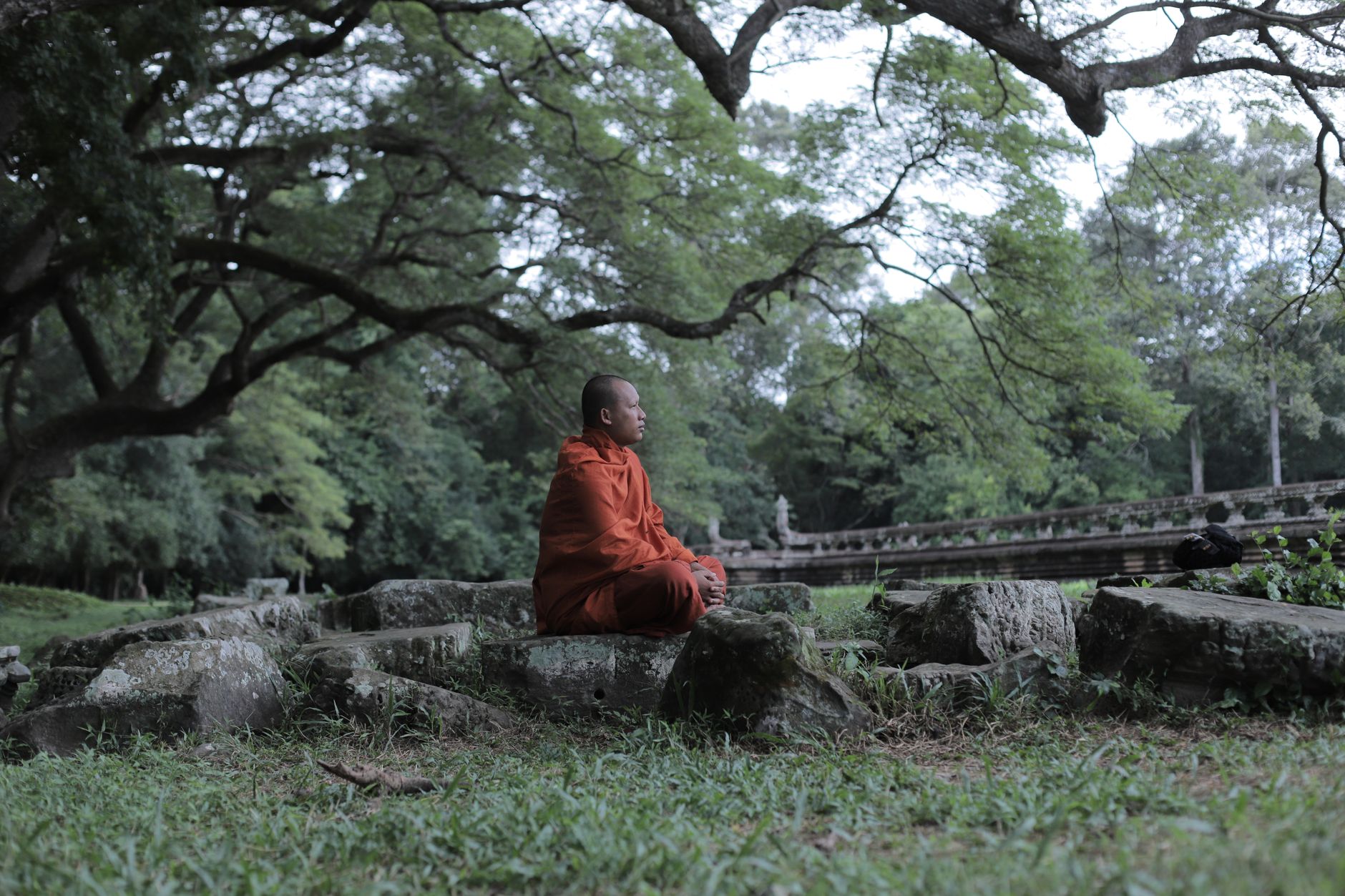
Here is what it actually feels like. You wake without an alarm in a guesthouse where the owner has left fresh mango on the sill. The morning is not a schedule; it is a texture. You walk to the market not to buy, but to listen — the vendor’s call, the bicycle bell, the low hum of a language you are beginning to hear as music rather than noise. You sit on a stone step for twenty minutes doing nothing at all, and nothing at all becomes the richest part of the day.
There is a moment, usually in the second week, when the mind stops reaching. It stops trying to extract value from every hour. You find yourself watching a heron for the length of an entire breath cycle, and you do not think about the heron. You simply watch. This is the gift slow travel gives: the restoration of attention as a natural faculty, not a productivity tool.
The senses sharpen differently. Sound arrives first — the particular clatter of a distant temple bell, the hiss of a pressure cooker through an open window. Then smell: jasmine in the evening air, diesel and cardamom from a roadside stall. Taste becomes patient; you wait for the meal to be cooked rather than reheating something from a packet. And touch — the cool of a marble floor under bare feet, the rough bark of a tree you rest against while the afternoon passes.
Have you noticed how a single day on foot can hold more memory than a week of flights?
Who It’s For
This way of travelling serves the person who suspects that their holidays have become another form of work. The one who returns from a trip more tired than when they left, with a camera roll of sights and a quiet sense that something was missed. It suits the recovering overachiever — the project manager, the parent, the person who schedules their rest. It suits anyone who has ever stood in front of a cathedral or a mountain and felt, with a small pang of guilt, that they were supposed to feel more than they did.
Slow travel is for the traveller willing to be bored. That is the honest prerequisite. The first few days of unscheduled time can feel like withdrawal. You will reach for your phone. You will wonder if you are wasting the trip. This is normal. The boredom is the doorway, not the obstacle. If you can sit with it for forty-eight hours, something loosens. The mind finds its own rhythm again, the one that runs beneath the noise.
It also serves the traveller with a curiosity about people rather than monuments. The slow path puts you in the same café three mornings in a row. The barista learns your order. You learn the name of her sister. This is not incidental — it is the whole point. You are not collecting destinations; you are entering a place, however briefly, as a guest rather than a spectator.
Who It’s NOT For
Let me be honest, because the slow travel conversation often lacks honesty. This is not for the traveller with two weeks of annual leave and a deep longing to see the temples of Angkor, the beaches of Thailand, and the streets of Hanoi. The math does not work. Slow travel requires an abundance of time that many people simply do not have, and pretending otherwise is a kind of spiritual gatekeeping.
It is also not for the person who finds deep comfort in structure. Some travellers thrive on the architecture of a planned itinerary; the anticipation, the sequence, the sense of accomplishment at each milestone. That is a legitimate way to move through the world. Slow travel is not morally superior. It is simply a different relationship with time, and it asks for a tolerance of ambiguity that not everyone wants to cultivate on their holiday.
And it is not for anyone travelling with young children and a tight budget. I have tried. The slow path becomes the frantic path very quickly when a toddler is involved. There are seasons for this practice. Honour the season you are in.
A Profound Insight
Here is the idea worth carrying home, and it is counter-intuitive: the purpose of slow travel is not to see more. It is to need less. When you move slowly through a place, you begin to notice how little is required for contentment — a warm meal, a shaded bench, a conversation with a stranger, the sound of rain on a tin roof. The pace recalibrates your baseline for what constitutes a good day. You return home not with a longer list of places to visit, but with a shorter list of things you require to feel whole.
This is why the practice unsettles some people. It quietly dismantles the assumption that more is better. It asks you to consider that the frantic accumulation of experiences — countries, cities, photographs — might be a way of avoiding the present moment rather than entering it. The slow traveller learns that arrival is not the reward. The walking is.
I think often of the tea pickers on that train to Ella. They were not travelling anywhere. They were simply there, in the mist, their hands moving through the leaves. And I, passing through at the speed of a train, felt for a moment like the one who had arrived, and they the ones who had always been home.
Conclusion
You do not need to cross an ocean to practise this. Slow travel is a disposition before it is a destination. It can begin on a bus you would normally have taken a taxi to avoid. It can begin with a walk to the end of your own street, taken without purpose. The philosophy is portable because it is not really about geography at all — it is about the quality of attention you bring to wherever your feet happen to be.
Start small. Choose one journey this year and double the time you would normally give it. Leave a day unplanned. Sit somewhere public for an hour and simply watch. Notice what happens to your breathing. Notice what you remember a month later. The places that stay with us are rarely the ones we saw the most of. They are the ones we felt the most in. Travel slowly enough, and you may find that the world has been waiting for you to catch up.
- Choose one journey and give it twice the time you think it needs — the surplus is where the experience lives.
- Leave at least one full day unplanned in every destination; let the place tell you what it wants to show you.
- Return to the same café, market, or square three mornings in a row; familiarity is the doorway to belonging.
- Practise sitting with boredom for forty-eight hours before deciding slow travel is not for you.
- Measure a good day by what you noticed, not by what you saw.