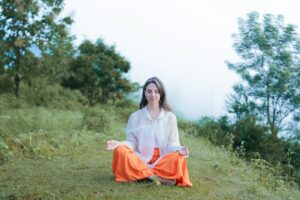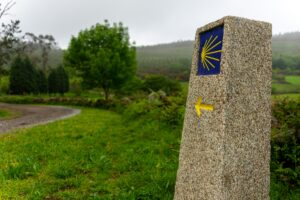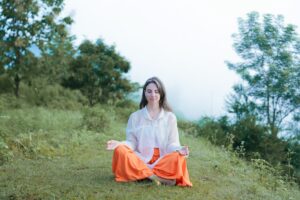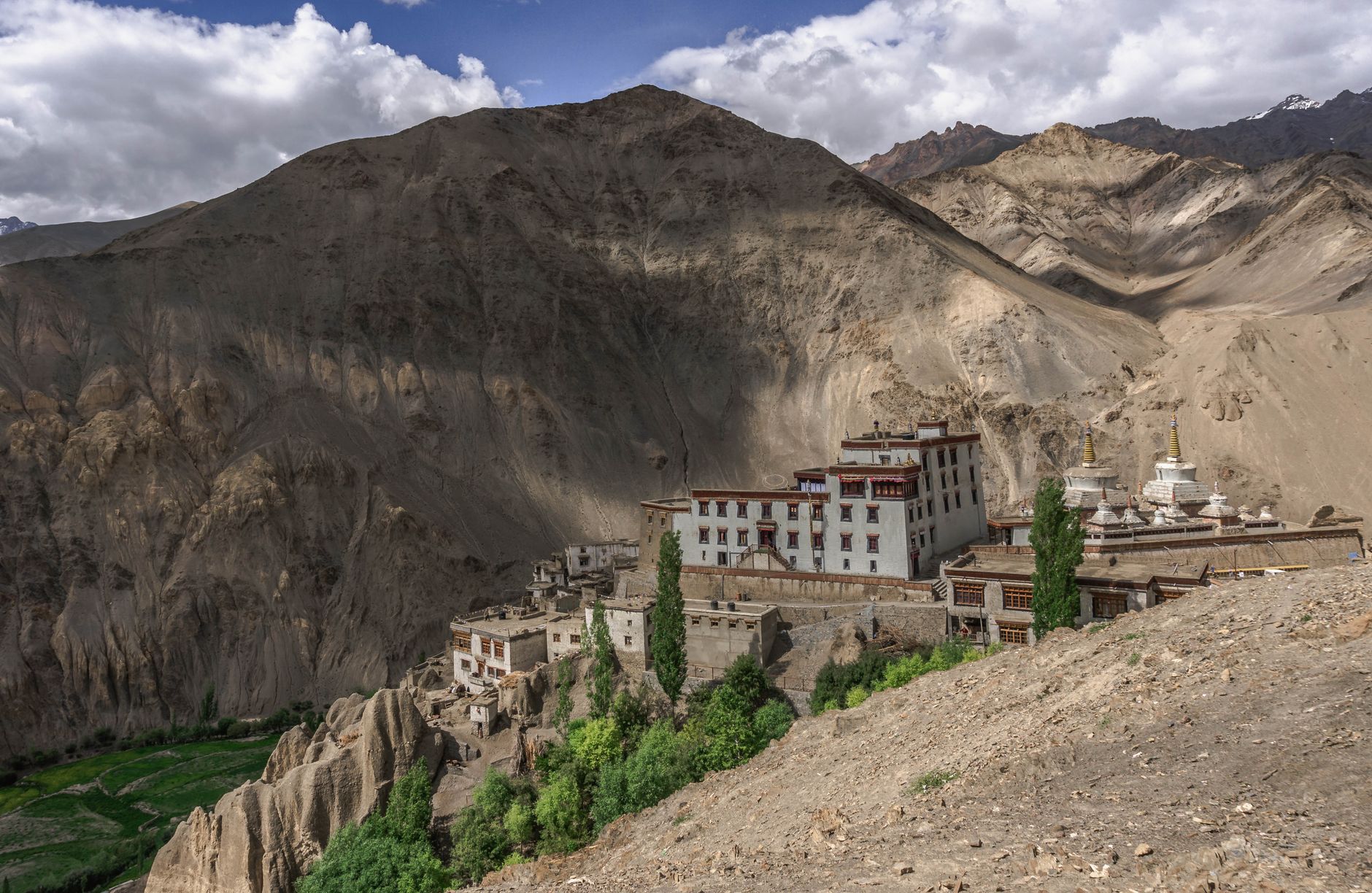
The bell rope is frayed to a soft grey whisper under my palm, worn smooth by centuries of hands that reached for the same sound. I pull once. The bronze note rolls down the cliff face, crosses the gorge, and returns a heartbeat later, thinner, as if the mountain itself answered. Below me the Aegean is a hammered sheet of silver. Above, the monastery clings to the rock like a swallow’s nest built by prayer. I came here to teach breathing. I stayed because the place taught me to breathe. Some journeys ask you to move. This one asked me to stop.
“The mountain does not hurry, and still it rises.”
Historical Context
Greece’s mountain monasteries did not begin as tourist destinations. They began as refusals. When the Roman world tilted toward cities and commerce, a scattering of men and women walked the other way, into the Pindus range, onto the crags of Meteora, up the inaccessible spine of Mount Athos. They were not fleeing the world so much as choosing a steeper one.
Meteora gives the tradition its most theatrical form. Sandstone pillars rise hundreds of metres from the plain of Thessaly, and beginning in the fourteenth century, hermits and monastic communities built on their summits. For generations, the only access was a basket on a rope, hauled by hand. Supplies, pilgrims, and the occasional reluctant donkey went up swaying. The monasteries of Great Meteoron, Varlaam, and Rousanou still stand, now reached by carved steps and bridges, though the vertigo remains honest.

Mount Athos, the monastic republic on the Chalkidiki peninsula, holds a different gravity. For over a thousand years, twenty monasteries have governed a peninsula closed to women and to casual visitors. Access requires a permit, a patience for bureaucracy, and a willingness to arrive by boat to a place where time is measured in services rather than hours. It is the oldest continuous monastic community in the Orthodox world, and it guards its rhythms fiercely.
Then there is the quieter tradition — the small monasteries of the Zagori villages, the cliffside chapels of Crete’s White Mountains, the hermitages of the Peloponnese. Fewer postcards, fewer buses. These are the places where the tradition feels less like heritage and more like a living pulse. The thread across all of them is the same: silence held deliberately, as a discipline and a gift.
The Experience
Arrival is always a small humiliation, and I mean that kindly. The legs burn. The lungs negotiate. The mind, so accustomed to being interesting, goes quiet because it has nothing left to say. You climb, and the climb edits you.
Inside the walls, the air changes. Beeswax and old wood and the mineral cool of stone that has never once been warm. Light falls through a narrow window and lands on a fresco of a saint whose eyes seem to follow you with something closer to amusement than judgment. A monk passes with a tray. He does not perform hospitality; he simply offers it, the way a tree offers shade.
The services begin before dawn. I am not Orthodox, and I do not pretend to be. But standing in the dark church while a single voice chants and the candle flames lean together, I understand something about attention. The body settles. The breath lengthens on its own. Nobody instructs you to relax. The room does it for you.
Afternoons are for walking. Paths thread between the pillars, and the silence has texture — the tick of a goat bell, wind combing through scrub, the distant argument of crows. I sat on a rock for an hour and did nothing I could report. That was the point. The mountain taught me that rest is not a reward for productivity. It is a birthright I had misplaced.
Evenings bring the long table. Bread, olives, a little wine, whatever the garden gave. Conversation is sparse and unhurried. Someone asks where I am from. I answer. The answer feels smaller and truer than usual, stripped of the resume I usually attach to it.

Who It’s For
This journey serves the traveller who is tired of being entertained. If you have ever booked a holiday and returned more depleted than you left, these mountains are for you. It suits people who can sit with discomfort — steep stairs, early bells, simple food — and find in that simplicity a strange relief.
It rewards the seeker more than the sightseer. You do not need to be religious. You do need to be curious about silence. Bring a willingness to follow someone else’s rhythm for a few days. The monks keep hours that predate your calendar app, and there is a deep medicine in that.
It is also, quietly, for the solo traveller. Monasteries receive you as one person, not as a party. You eat when the bell says eat. You walk when the path calls. Loneliness and solitude are different rooms, and here you learn which one you have been living in.
Who It’s NOT For
Let me be honest about the boundary. This is not a spa with a view. If you need a late breakfast, a cocktail at sunset, and a schedule that bends to your mood, the mountain will frustrate you. Meals are fixed. Silence is requested in many spaces. Wi-Fi is a rumour.
It is not for anyone who needs step-free access or predictable comfort. The paths are uneven, the stairs are many, and the mattresses are honest. It is not for the traveller who wants to photograph everything — some places, especially on Athos, ask you to leave the camera in the bag.
And it is not for those seeking spiritual spectacle. The monasteries do not perform for visitors. If you arrive expecting transcendence on demand, you may leave feeling cheated. Transcendence, in my experience, arrives on its own schedule and rarely when summoned. What you will find instead is ordinary holiness: a bowl of soup, a shared silence, a bell that rings whether or not anyone is listening.
A Profound Insight
Here is the idea I carried down the mountain, and it surprised me. The monks are not detached from the world. They are more attentive to it than anyone I have met. They know the weather by the smell of the wind. They know which fig tree ripens first. Their withdrawal is not an escape from life; it is a way of listening to it without the noise that usually drowns it.
That reframes something for me. I had always imagined spiritual practice as a turning away. Standing in that courtyard, I saw it as a turning toward — a deliberate, daily choice to pay attention to what is actually here. The counter-intuitive part? The less they chase the world, the more fully it seems to arrive.
You do not need a mountain to practice this. You need a boundary and a bell. A time each day when you stop, and let the silence do its work.
Bringing It Home
Before you go, a few practical threads to hold:
- Research access in advance — Mount Athos requires a permit and a boat; Meteora is open but respects dress codes and quiet hours.
- Pack light and modestly: covered shoulders, long trousers, soft-soled shoes for stone stairs and long services.
- Ask before photographing people or interiors; many spaces hold silence as a form of prayer.
- Build in a buffer day on either side — the mountain keeps its own time, and transport follows the weather, not your itinerary.
- Leave your phone in your bag during services. You will not miss it. You may miss the bell if you do not.
The descent is always faster than the climb, and always quieter. I walked down through the afternoon heat with the bell still ringing somewhere behind me, fainter with each turn of the path. I have taught many breathing practices. None of them worked as well as that frayed rope and the note it sent across the gorge. The mountain does not hurry. Neither, now, do I.