A pebble from the Ganges sits in a tin of sandalwood powder. Beside it, a tea light, a folded photograph, a sprig of dried rosemary. All of it fits inside a hotel washbag. I have built this small shrine on windowsills from Rishikesh to Lisbon, and I have learned that the altar is never about the objects. It is about the pause. The five minutes before sleep when the room stops being a room and becomes a place you have chosen to inhabit. Travel loosens us from ritual. Ritual is what keeps us tethered to ourselves. So we pack one deliberately.
An altar is not a place you go. It is a place you make.
Historical Context
The portable shrine is older than most religions that claim it. Nomadic peoples across the steppes carried felt-covered shrines strapped to camels. Roman soldiers on campaign kept lararia — small niches for household gods — in their tents and barracks. Japanese travellers have long carried omamori, small amulets tucked into bags, and the kamidana at home is a scaled-down version of something far larger. The impulse is consistent across continents: when you leave home, you bring a fragment of the sacred with you. The sacred is what makes a strange place survivable.
The word altar itself comes from the Latin altare, meaning a raised place for offering. Note the modesty of that definition. A raised place. Not a temple. Not a consecrated stone. A place slightly above the floor where you set something down with intention. This matters for the traveller, who has no floor to claim and no permission to build. The tradition has always accommodated the displaced. Hindu households carry small brass murtis wrapped in cloth. Muslim travellers perform salah wherever prayer is due, the earth itself serving as the mosque. The altar travels because the need travels.

What the historical record shows, quietly, is that these portable shrines were rarely elaborate. A shell. A coin. A lock of hair. The grand altars of cathedrals are the exception, not the rule. The ordinary altar has always been small enough to carry and plain enough to reconstruct in an unfamiliar room.
The Experience
Here is what actually happens. You arrive somewhere tired, in that hollow way that travel produces — the body in one time zone, the mind in another. The room is anonymous. The lamp is too bright. You unpack the bag and, before the clothes, you set out the cloth. It might be a square of silk, a folded scarf, a bandana. Then the objects, each one placed with both hands, which is a small ceremony in itself. The room changes temperature. Not literally, though sometimes it seems to.
The light matters more than you expect. A single candle or a small battery lamp shifts the whole geometry of a hotel room. Shadows pool. The hard edges of the furniture soften. You sit on the floor, because altars are low, and the low position is the point — it asks the body to bow slightly, to be humble in a place where you are a guest. The scent arrives next. Sandalwood, or cedar, or whatever resin you carry. Smell is the fastest route to memory, and the familiar scent tells the nervous system that this is a known place, that you are not lost, that some part of home is here in a tin.
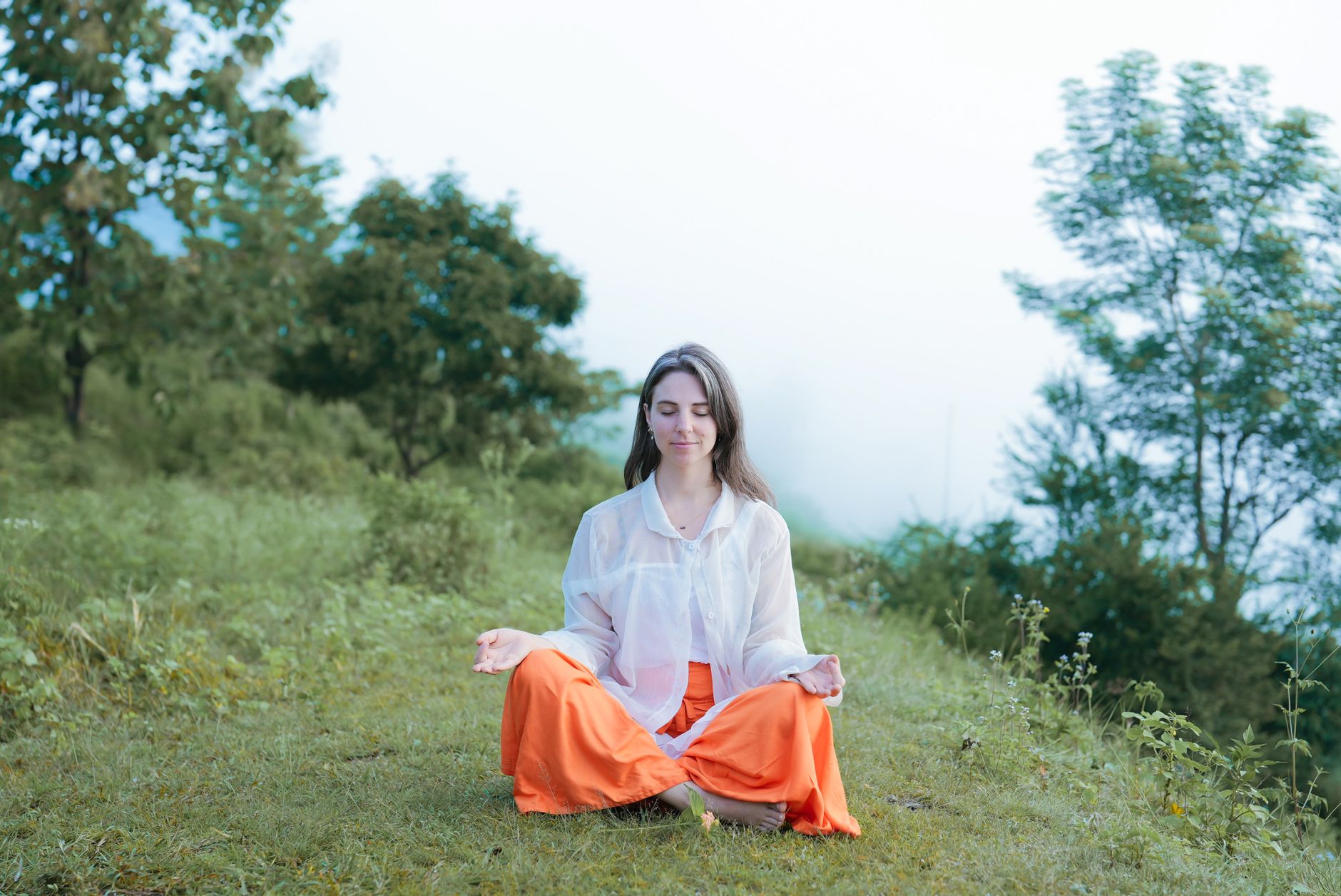
Then the silence. Not the absence of sound — there is always traffic, a lift, a neighbour’s television — but the silence you choose inside the noise. You breathe. You touch the pebble. You remember why you came. The whole practice takes four minutes, maybe six. And yet the room is never quite the same room afterward. You have claimed it. Not with a flag, but with attention. The altar is a small declaration: I am here, and I am not merely passing through.
I have made altars on ferries, in hostel bunks, once on a train between Varanasi and Lucknow, the objects balanced on a folded blanket. Each time the same shift occurs. The space becomes inhabitable rather than merely occupied. Do you know that difference? The difference between a place you sleep and a place you have greeted?

Who It’s For
This practice serves the traveller who feels the disorientation of movement more keenly than the thrill. The one who arrives in a beautiful city and finds, by the second evening, a strange loneliness settling in — not because the place is lacking, but because the self has been unmoored from its routines. If you have ever stood in a magnificent square and felt nothing, this is for you.
It suits slow travellers, long-stay visitors, pilgrims, and anyone who treats a journey as an inner practice rather than a checklist. It suits people in transition — the recently bereaved, the newly separated, the ones between jobs or countries — for whom a small fixed point is a lifeline. It suits the light packer, because the whole kit fits in a pocket. It fits the person who prays, and it fits the person who does not know what they believe but knows they need a moment of stillness before sleep. The altar does not require a theology. It requires only that you show up and place something down with care.
It is also, quietly, for the person travelling with others — a partner, children, a group — who needs a private corner that is theirs alone. A folded cloth on a nightstand can be a room within a room.
Who It’s NOT For
Honest boundaries matter. This practice is not for the traveller who wants to move fast and light with no attachments, who finds ritual fussy, who would rather spend the four minutes walking to a viewpoint. That is a legitimate way to travel. I will not pretend otherwise.
It is not for the person who treats objects as decoration and will forget the altar by the third day, leaving the cloth crumpled in the bottom of the bag as a small reproach. An altar neglected is worse than no altar at all; it becomes a monument to intention you did not keep. It is not for anyone travelling in a context where open ritual would draw unwanted attention or disrespect the local culture. Use discretion. A quiet cloth and a closed tin ask nothing of anyone. A lit candle in a shared dormitory asks plenty.
And it is not for the traveller seeking a guaranteed spiritual experience. The altar does not manufacture transcendence. It offers a frame. Some nights the frame holds nothing but a tired body and a racing mind, and that, too, is an honest offering.
A Profound Insight
Here is the counter-intuitive claim, and I will stand behind it: the altar is not there to make you feel at home. It is there to help you feel fully away. A common error is to build the altar as a replica of home — the same objects, the same order, the same intention of comfort. But comfort is not the aim. The aim is presence, and presence is sharpened by contrast, not softened by familiarity. When I place the Ganges pebble on a windowsill in Lisbon, I am not pretending I am in India. I am letting the two places sit beside each other, and in that adjacency I feel the strange, wide truth of being a body that has been many places and is now here. The altar makes the strangeness of the new place legible rather than erased. It says: this is not home, and that is the gift.
Carry that home. Not the literal altar — though you may — but the understanding that any place becomes sacred through the quality of attention you bring to it. The kitchen counter, the desk, the corner of a rented room. You do not need to travel to make an altar. You need only to decide that this small patch of surface will hold your intention for a few minutes each day. The altar is a rehearsal for a life lived with care. The objects are just the beginning.
Conclusion
Build the small shrine. Pack the pebble, the cloth, the tea light, the photograph of someone you love. Set it out before you unpack the rest. Light it, or don’t. Kneel, or sit. Breathe for four minutes and let the room become a place you have greeted. The practice asks almost nothing of you — a pocket of space, a handful of grams, a few minutes of your evening — and it returns something difficult to name. A thread. A tether. A quiet insistence that you are here, whole, in a place that is not home, and that this is enough. Travel will scatter you. The altar gathers you back. Begin tonight, wherever you are.
- Keep the kit small: a cloth, one or two meaningful objects, a light source, a scent. It should fit in a pocket or washbag.
- Set the altar out before unpacking anything else — the first act in a new room is the most potent.
- Place each object with both hands and a breath; the ceremony is in the care, not the objects.
- Keep the altar low and the light soft; let the body bow slightly, even if only in the shoulders.
- Do not build a replica of home — let the new place sit beside the familiar, and feel the contrast.
- If you cannot keep the practice, pack it away cleanly; a neglected altar becomes a small reproach.