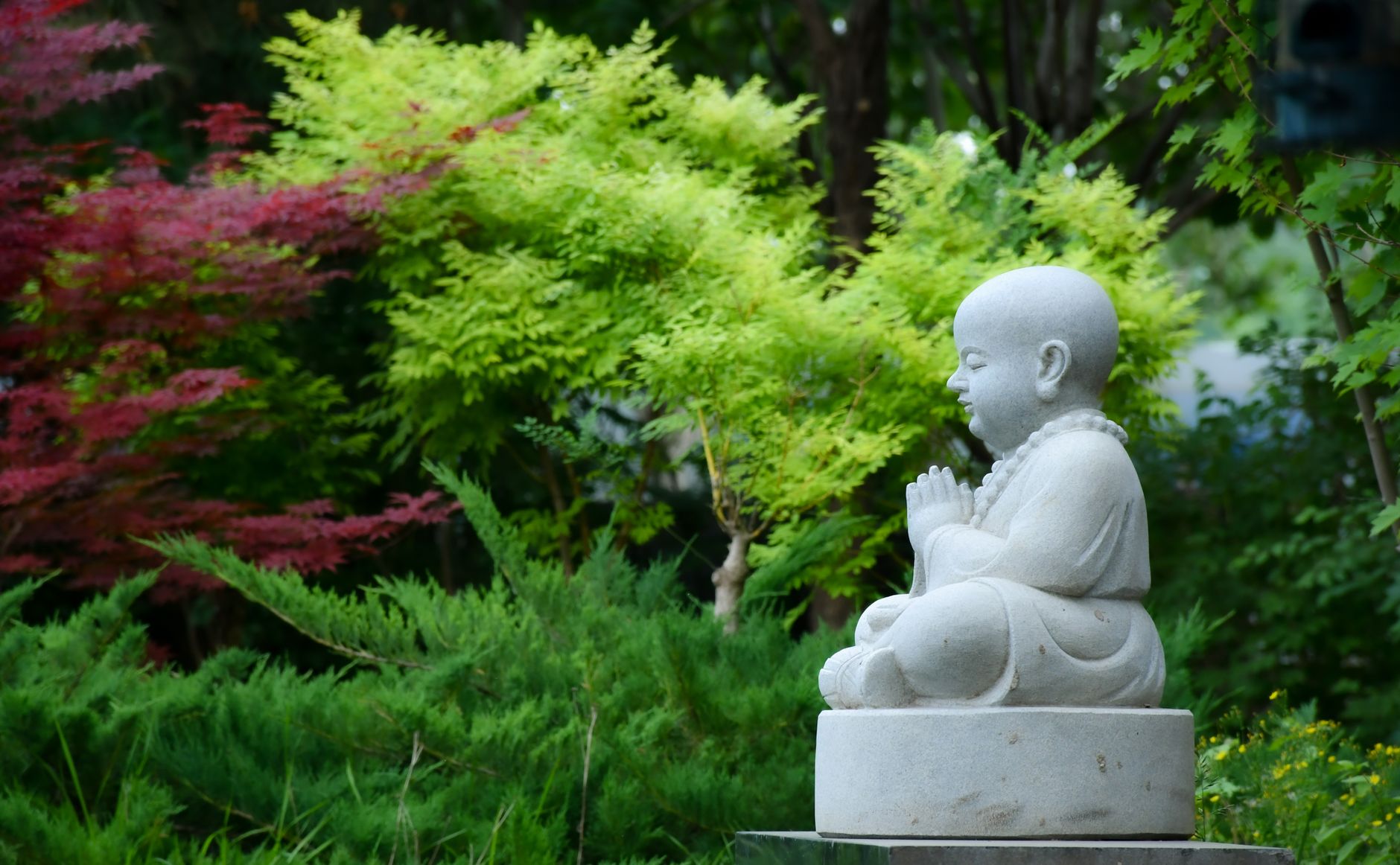
The garden does not perform for you. This is the first lesson, and it arrives slowly. You step through a wooden gate in Kyoto, or a stone arch in Granada, and the world you left behind — the itinerary, the camera, the low hum of hurry — stays outside. What remains is moss, water, and the patient geometry of a place built for something other than efficiency. Sacred gardens were never designed to impress visitors. They were built to hold silence, and they ask the same of you.
To wander a sacred garden is to be a guest in someone else’s prayer.
Historical Context
The idea of a garden as holy ground is older than most of our religions. Persian walled gardens, the pairidaēza from which we borrow the word “paradise,” were built as earthly mirrors of heaven — enclosed, watered, ordered against the chaos of the desert. That vision travelled. It entered the courtyards of Moorish Spain, the chahar bagh of the Mughal emperors, the cloisters of medieval Europe. Everywhere it landed, the garden became a place where the divine could be approached through the senses rather than through doctrine.
Japan shaped the tradition with particular restraint. The moss garden at Saihō-ji, the dry landscapes of Ryōan-ji, the borrowed-scenery gardens of Kyoto’s temples — these emerged from Zen practice, where a garden was a tool for meditation rather than a display of wealth. A rake pulled through gravel could hold a monk’s attention for an hour. The garden was not decoration. It was a question.

What connects these traditions across continents is a shared conviction: that tending a garden is a form of prayer, and walking through one is a form of listening. The sacred garden is not a building you visit. It is a living thing that has been kept alive by hands you will never meet.
The Experience
Arrive early. Before the tour groups, before the light turns hard. Sacred gardens reward the person who comes first and leaves last.
The senses wake in a different order here. Sound comes first — water, always water, a stream channelled with such care that its sound was designed centuries ago. Then the cool of stone underfoot, the particular dampness of a shaded path. Then smell: wet earth, cedar, the green breath of moss after rain. Sight arrives last, and when it does, it is quieter than you expect. These gardens are not spectacular. They are precise.
Walk slowly enough to notice that the path is never straight. Sacred gardens curve. They hide and reveal. A turn brings a lantern you did not see coming; a hedge opens onto a view that was framed for you long before you were born. This is not accident. It is choreography, and you are the dancer whether you know it or not.
Sit down somewhere. This is the instruction people ignore most. A bench, a stone, the edge of a veranda. Let ten minutes pass without doing anything at all. The garden will begin to move — a leaf, a bird, the slow drift of a cloud reflected in still water. You are not watching a garden. You are being taught to watch.
And then something loosens. The mental list you carried in — the reservations, the messages, the small anxieties — grows quiet. Not gone. Quiet. The garden has not solved anything. It has simply made room.

Who It’s For
This kind of travel serves the wanderer who is tired of being a spectator. If you have ever stood in front of a monument, taken the photograph, and felt nothing, a sacred garden may return something to you. It is for the traveller who prefers a slow morning to a full itinerary, who would rather sit in one place for an hour than tick off five.
It is for the seeker, the contemplative, the person who suspects that the deepest travel happens inward. It is for anyone willing to be bored for a while in order to arrive somewhere real.
Practically, it suits those who can move at their own pace and who value silence over commentary. Bring a notebook, not a selfie stick. Bring curiosity, not a checklist.
- Go at opening time, and stay until the crowds arrive — then leave.
- Sit for at least ten minutes in one place before moving on.
- Leave the phone in your bag; let your eyes do the recording.
- Learn one fact about the garden’s history before you enter, and let it colour what you see.
- Return to the same garden twice if you can — it will not be the same place.
Who It’s NOT For
Honesty matters here. The sacred garden is not for everyone, and pretending otherwise does no one any good.
If you measure a day by how much you saw, this will frustrate you. Sacred gardens are small. You can cross some of them in a minute. There is no climax, no grand reveal, no gift shop worth the name. If you need stimulation, spectacle, or a story that resolves, look elsewhere — a cathedral, a market, a mountain.
It is also not for the traveller who cannot tolerate stillness. Some people find silence oppressive rather than freeing, and that is not a failing. Know yourself. A garden will not change your nature; it will only show it to you more clearly.
A Profound Insight
Here is the idea worth carrying home, and it runs against everything our culture teaches about travel: the garden is not the destination. You are.
We are trained to believe that meaning lives in the place — that if we find the right garden, the right temple, the right view, we will be transformed. But the gardeners who built these spaces knew better. They built vessels for attention, not experiences to be consumed. The garden does nothing. It simply waits, and in its waiting it offers you the one thing modern life takes from you daily: the chance to be present without purpose.
Carry that home. Let it reshape how you walk through an ordinary park, a courtyard, your own small balcony. The sacred was never confined to the famous places. It was always available to anyone willing to slow down enough to notice it.
So here is my question for you: when did you last stand still long enough to hear a place breathe?
Sacred gardens ask for very little. A little time. A little quiet. A willingness to be a guest rather than a consumer. Find one on your next journey — not the most famous, necessarily, but the one that calls you to sit. Enter slowly. Leave your hurry at the gate. And when you go, carry the garden’s patience with you, because that, more than any photograph, is the souvenir that lasts.