Your feet already know how to pray. They have been doing it your whole life, pressing into the earth, carrying you from one moment to the next, asking for nothing in return. The trouble is that we rarely listen. We walk to arrive — to reach the train, the summit, the café, the next item on a list we cannot quite remember writing. Somewhere along the way, walking stopped being a practice and became a transaction. The slow, deliberate pilgrimage traditions of the world exist to undo that forgetting. They ask only that you place one foot down, then the other, and let the rhythm do the teaching.
Walk as if you are kissing the earth with your feet.
Historical Context
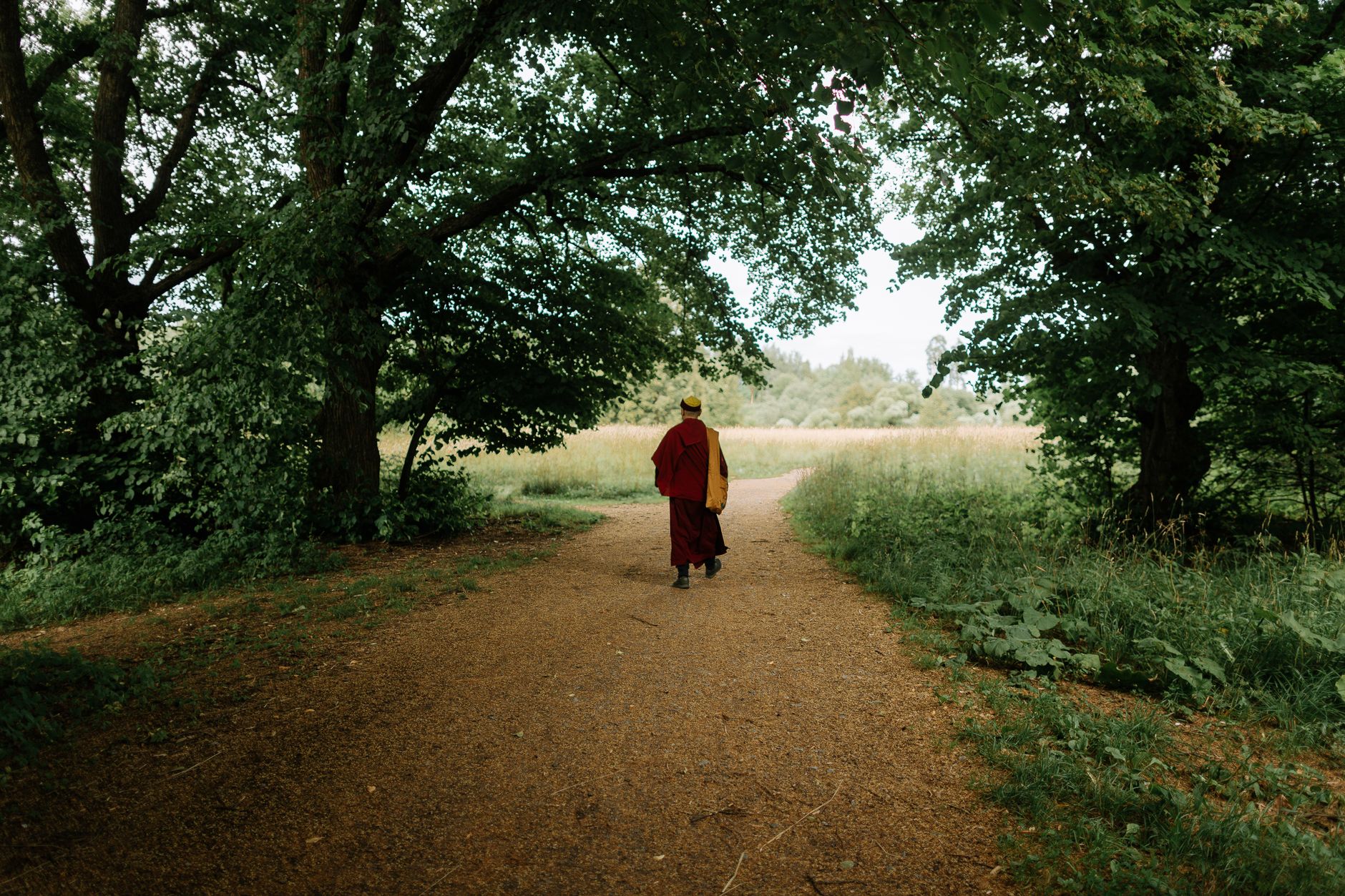
Long before walking became recreation, it was devotion. In Japan, the Shugendō mountain ascetics — the yamabushi — walked the ridges of the Kii Peninsula not to conquer them but to be shaped by them. The Kumano Kodō, a network of pilgrimage routes over a thousand years old, was never simply a path between shrines. It was the shrine. Every stone, every cedar, every river crossing held a lesson, and the walking itself was the liturgy.
Consider the Camino de Santiago, where pilgrims have pressed their palms against the same stone markers since the ninth century. Or the kora around Mount Kailash, a thirty-eight-mile circumambulation that Tibetan Buddhists, Hindus, Jains, and Bön practitioners have walked for millennia — some prostrating themselves the entire distance. The Islamic Hajj, the Buddhist pradakshina around a stupa, the Christian labyrinth walked on bended knee. Humanity has always understood something the modern mind forgets: that the body in motion can become a doorway.

What unites these traditions is not the destination. It is the pace. Each one insists on slowness — a speed at which the mind can catch up with the feet. The pilgrim does not rush toward enlightenment. She walks toward it at the speed of her own breath, and often the walking takes longer than the arriving ever could.
The Experience
The first hour is the hardest. Your mind is loud. It replays conversations, rehearses worries, drafts emails you will never send. Your legs want to move faster. Your phone hums in your pocket like a small, insistent animal. This is normal. This is the noise the practice is designed to dissolve.
Then something shifts. Maybe it is the third mile, maybe the fifth. The rhythm of your stride begins to synchronize with your breath without your willing it. Four steps in, four steps out. The soles of your feet register the ground with startling precision — the cool of slate, the give of pine needles, the small shock of gravel. You notice that you have stopped narrating your experience and started having one.
Sound arrives differently. Not as a single stream but as layers: your own footfalls, the wind combing through leaves, a distant bell, the blood moving in your ears. The air tastes of something you cannot name. On a long pilgrimage, the body finds a strange economy — hunger becomes honest, sleep becomes deep, and the small comforts (a cup of tea, a dry sock, a stone bench in the shade) take on a brightness they never had at home. You are not becoming a different person. You are becoming a more attentive one.
There are moments of boredom so pure they feel like a gift. Let them come. Boredom is the doorway the mind uses to slip into stillness, and stillness is where the real walking begins.
Who It’s For
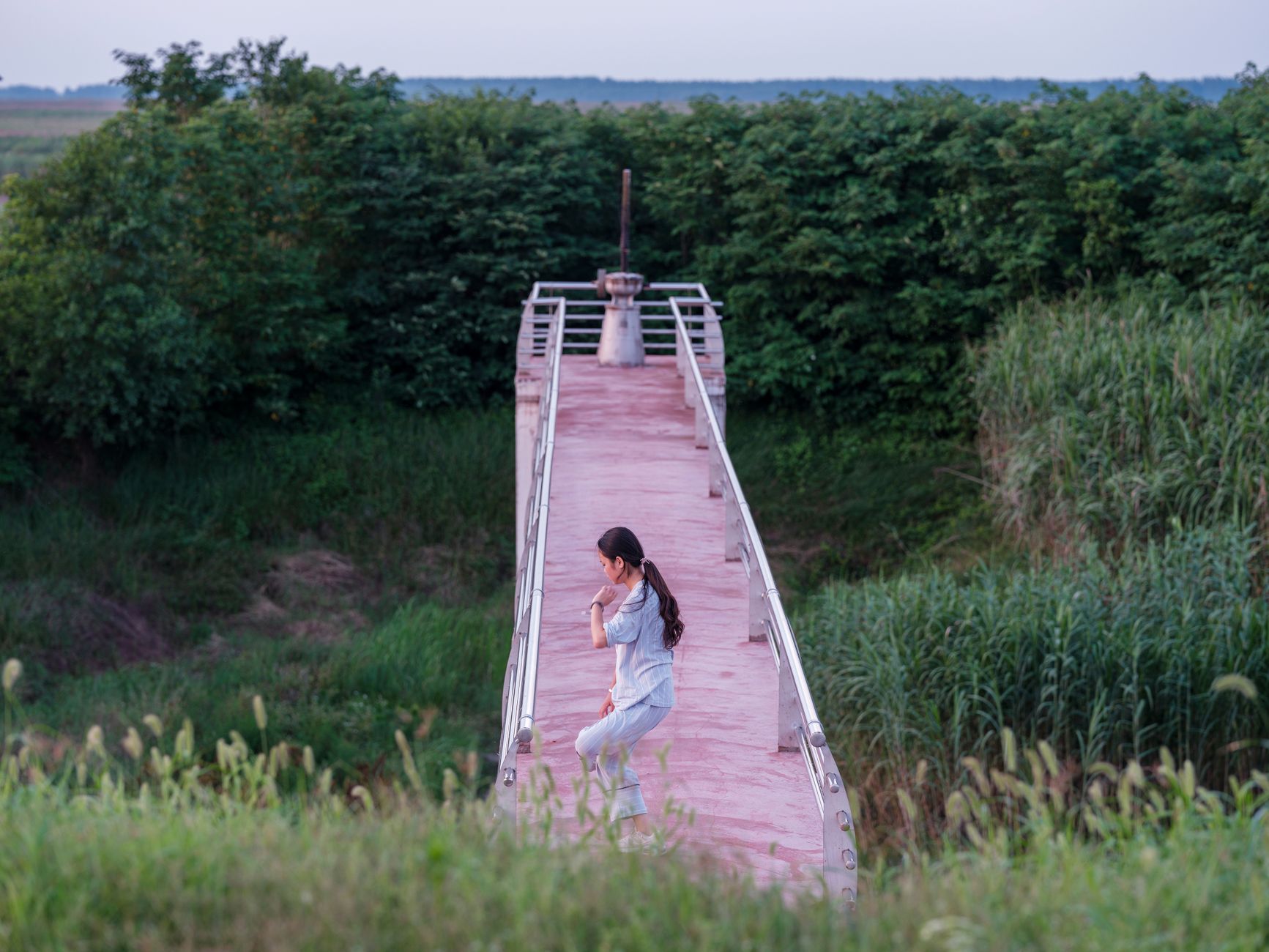
This practice serves the traveller who suspects that the pace of modern life has quietly stolen something. The one who has returned from a vacation more tired than they left. The one who wants to see a place — truly see it — rather than photograph it from a moving vehicle. If you have ever felt that the most meaningful moments of a journey were the unplanned ones, the slow ones, the ones that happened when you stopped trying to get somewhere, mindful walking will feel like coming home.
It is also for the person in transition. The one between jobs, between relationships, between versions of themselves. Walking slowly over long distances has a way of letting the mind untangle what it could not untangle sitting still. There is a reason grief walks. There is a reason monks pace. The body, when it moves at the right speed, becomes a kind of altar where the heart can finally speak.
And it is for anyone who has ever felt that travel should be more than a checklist. If the idea of walking the same path your ancestors walked — or strangers walked a thousand years before you — stirs something in your chest, you already know.
Who It’s NOT For
This is not for the traveller who measures a day by how many sights they saw. If your joy comes from efficiency — the perfect itinerary, the maximum number of landmarks, the photo that proves you were there — mindful walking will feel like wasted time. It will frustrate you. You will want to move faster, and the practice will refuse you.
It is also not for anyone in acute physical pain, or recovering from injury, or walking with a body that needs rest rather than distance. There is no virtue in suffering. The pilgrimage traditions themselves are clear on this: the path serves the walker, not the other way around. If your body says no, listen. The practice will still be there when you are ready.
And it is not for the person seeking a guarantee. Mindful walking does not promise transformation. It offers only the walk itself — the ground, the breath, the moment. What you do with that offering is yours.
A Profound Insight
Here is the counter-intuitive truth, and it took me years to accept it: the destination is not the point, and neither is the journey. The point is the walking itself — the ordinary, unglamorous, repetitive act of placing one foot in front of the other, again and again, until the act becomes so familiar that it disappears and only presence remains.
We are conditioned to believe that meaning lives at the end of things — at the summit, at the shrine, at the finish line. But the pilgrim traditions of the world suggest otherwise. They suggest that meaning is not a destination at all. It is a quality of attention. It is what happens when you stop treating the present moment as a corridor to somewhere else and start treating it as the room you are already standing in.
Carry this home. Not the memory of the view, but the capacity to walk to your kitchen with the same reverence you walked the mountain. The sacred is not located on a distant trail. It is located in the willingness to be here, now, with your feet on the ground. The trail was never the teacher. It was the mirror.
So here is the question worth carrying: if the walking itself is the destination, what are you rushing toward — and what might you find if you stopped?
- Walk at the speed of your breath, not the speed of your thoughts. Four steps in, four steps out is a reliable rhythm to begin.
- Leave the headphones behind for at least the first hour. Let the soundscape of the place become your music.
- Choose a route with history — a pilgrimage path, an old trade road, a coastal trail walked for centuries — so that your footsteps join a lineage.
- Resist the urge to document. Take one photograph at the end, not twenty along the way. Let your memory do the work of seeing.
- End each day with three sentences: what you noticed, what you released, what you are grateful for.
The path is old, and it is patient. It has been waiting for you longer than you know. All you have to do is begin — slowly, deliberately, with the next single step. The rest will teach itself. Your feet already know the way.