Gratitude arrives differently when you are far from home. At home, it can become a habit of convenience — a quick note in a journal, a whispered thank-you before sleep. On the road, it turns sharper. More urgent. The unfamiliar strips away your routines, your assumptions, your usual defenses. What remains is raw, open attention. Tended carefully, that attention becomes gratitude. Not the polite kind. The kind that aches.
Gratitude is not a response to abundance. It is a way of seeing that makes abundance appear.
Historical Context
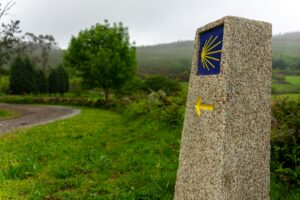
The practice of giving thanks while journeying is older than any written record. Pilgrims walking the Camino de Santiago in the ninth century carried no maps, no reservations, no certainty of a bed. A staff. A gourd. A prayer. Gratitude was not a mood they cultivated. It was a survival strategy. Each meal, each dry patch of ground, each stranger who offered bread — not conveniences. Gifts, received as such.
In the Buddhist tradition, the practice of kataññutā — often translated as gratitude — is considered a foundation of ethical life. The Buddha taught that even the air we breathe is a gift from countless conditions: trees, sunlight, rain, time. To travel with this understanding is to walk through the world as a recipient rather than a consumer.

Islamic tradition offers a parallel. The traveler’s dua, or supplication, includes thanks for safe passage and provision. The Sufi poets — Rumi, Hafiz — wrote endlessly about the guest house of the heart, where every arriving experience, pleasant or painful, deserves welcome. Gratitude, in this lineage, is not selective. It does not wait for the good room or the perfect sunset.
Indigenous cultures across every continent have long understood that travel requires permission and reciprocity. You do not simply pass through a place. You are hosted by it. You owe something back — attention, respect, gratitude. The Maori concept of kaitiakitanga — guardianship — extends this further. To visit a place is to enter a relationship with it.
What all these traditions share is a refusal to separate gratitude from awareness. You cannot be grateful for what you do not notice. And you cannot notice what you are rushing past.
The Experience
It begins with the senses. The smell of rain on hot stone in a Moroccan medina. The weight of a ceramic cup of tea in your hands on a train through the Indian countryside. The sound of a language you do not speak, rising and falling like music you cannot read but feel in your chest. These are not grand moments. They are small ones, and they are everywhere.
Gratitude while traveling often arrives uninvited. You are sitting on a curb, exhausted, your feet blistered, your plans ruined by a missed connection. And then someone hands you a glass of water. Or a child laughs. Or the light changes and suddenly the whole street is gold. You feel it — a warmth in the sternum, a softening behind the eyes. That is gratitude. It does not require a good day. It requires a present one.
I remember sitting on a wooden bench in a small town in northern Thailand. I had been traveling for three weeks and had grown tired of my own company. A woman set down a plate of mango and sticky rice without a word. She did not smile. She did not ask for anything. She simply placed it there and walked away. I ate slowly. I cried a little. Not from sadness — from the sheer unexpectedness of being cared for by a stranger. That plate of rice was not a transaction. It was a transmission.
This is what gratitude feels like on the road. It is not a thought. It is a physical event. Your breath deepens. Your shoulders drop. You become, for a moment, entirely here.
And then it passes. That is the nature of all experience. But the residue remains. You carry it forward like a stone warmed in your pocket.

Who It’s For
This practice is for the traveler who is willing to be changed. Not the one who wants to collect countries like stamps. Not the one who needs every meal to be photogenic and every view to be Instagrammable. The one who is willing to sit with discomfort, to be lost, to be humbled by their own ignorance.
It is for the slow traveler. The one who takes the night bus because it is cheaper and arrives exhausted but awake. The one who learns ten words in a new language and uses them badly. The one who says yes to the invitation to a family dinner even though they cannot understand the conversation.
It is for the traveler who understands that gratitude is not about having a good time. It is about paying attention. And attention is always available, even when comfort is not.
If you have ever felt a lump in your throat at the sight of a stranger’s kindness, this practice is already alive in you. You are simply being asked to tend it.
Who It’s NOT For
This is not for the traveler who needs to control everything. Gratitude requires surrender. It asks you to receive what is given rather than demand what you expected. If you cannot tolerate a cold shower, a delayed train, or a meal that is not what you ordered, this practice will feel like a betrayal of your standards.
It is also not for the traveler who uses gratitude as a bypass. There is a difference between accepting what is and pretending that everything is fine. Gratitude does not mean ignoring injustice, discomfort, or danger. It does not mean smiling through mistreatment. It does not mean silencing your own needs. If you are in a situation that is harmful, gratitude is not the appropriate response. Safety is.
And finally, this practice is not for the traveler who is looking for a technique. Gratitude is not a productivity hack. It is not a way to optimize your trip or increase your happiness score. It is a relationship with reality. And relationships require time, honesty, and a willingness to be uncomfortable.
A Profound Insight
The most counterintuitive truth about gratitude is this: it is not a feeling. It is a decision. You do not wait to feel grateful before you practice gratitude. You practice gratitude in order to feel it. The feeling is a byproduct, not a prerequisite.
This matters because travel is full of moments when you do not feel grateful. You feel tired. You feel annoyed. You feel like you made a mistake coming here. In those moments, the practice is not to force a feeling. It is to make a choice. You choose to notice one thing — just one — that is supporting your life right now. The air entering your lungs. The ground beneath your feet. The fact that you have a body that can move through the world.
That single act of noticing is enough. It does not fix everything. It does not make the blisters disappear. But it changes your relationship to the blisters. They become part of the journey rather than a betrayal of it.
Carry this home. Not as a souvenir. As a practice. The world is always giving you something. The question is whether you are available to receive it.
- Begin each travel day by naming three things you are grateful for before you leave your room.
- When something goes wrong, pause and ask: what is this moment offering me that I did not expect?
- Write one sentence of gratitude each night, not for the best thing that happened, but for the most ordinary.
- Thank one person each day — a server, a driver, a stranger — out loud, and mean it.
- At the end of your trip, read back through your notes and notice what you actually valued.
Gratitude is not a destination. It is a way of walking. You do not arrive at it. You practice it, moment by moment, step by step, breath by breath. And slowly, without fanfare, the world becomes less of a place you are passing through and more of a place you are part of. That is the gift. That is the journey. And it is always, always available.