The first thing the mountains teach you is how small your breath really is. In Kathmandu, the air moves thick with diesel and marigold, and somewhere beneath the noise a bell is always ringing. Nepal does not offer serenity as a gift. It asks you to earn it, one slow inhale at a time. I came here the first time chasing a photograph. I left carrying something I could not name for years afterward. This is not a country you visit. It is a country that visits you, then rearranges the furniture of your inner life while you sleep.
“The mountain does not call the strong. It calls the willing.”
Historical Context
Nepal sits at a crossroads that has been spiritual for longer than most nations have existed. The Kathmandu Valley alone holds seven UNESCO World Heritage sites within a few kilometers, each carrying centuries of layered devotion. Swayambhunath, the monkey temple, watches over the city from its hilltop with painted eyes that seem to follow you down every alley. Legend says the valley was once a lake, and a lotus bloomed at its center, radiating light. A bodhisattva drained the water with a single sword stroke, and the lotus became the stupa. Whether you believe the story matters less than what it does to you when you hear it standing on that hill at dawn.
Boudhanath, the great stupa, anchors a Tibetan community that grew after 1959, when thousands fled across the Himalayas. Pashupatinath, on the banks of the Bagmati, has drawn Shiva devotees for over a thousand years. Beyond the valley, the pilgrimage circuits of the Annapurna region and the trails toward Everest base camp have carried traders, monks, and seekers for generations. Here is what strikes me: the spiritual geography here was not built for tourists. It was built for people who walked for weeks to arrive. That intention lingers in the stone.
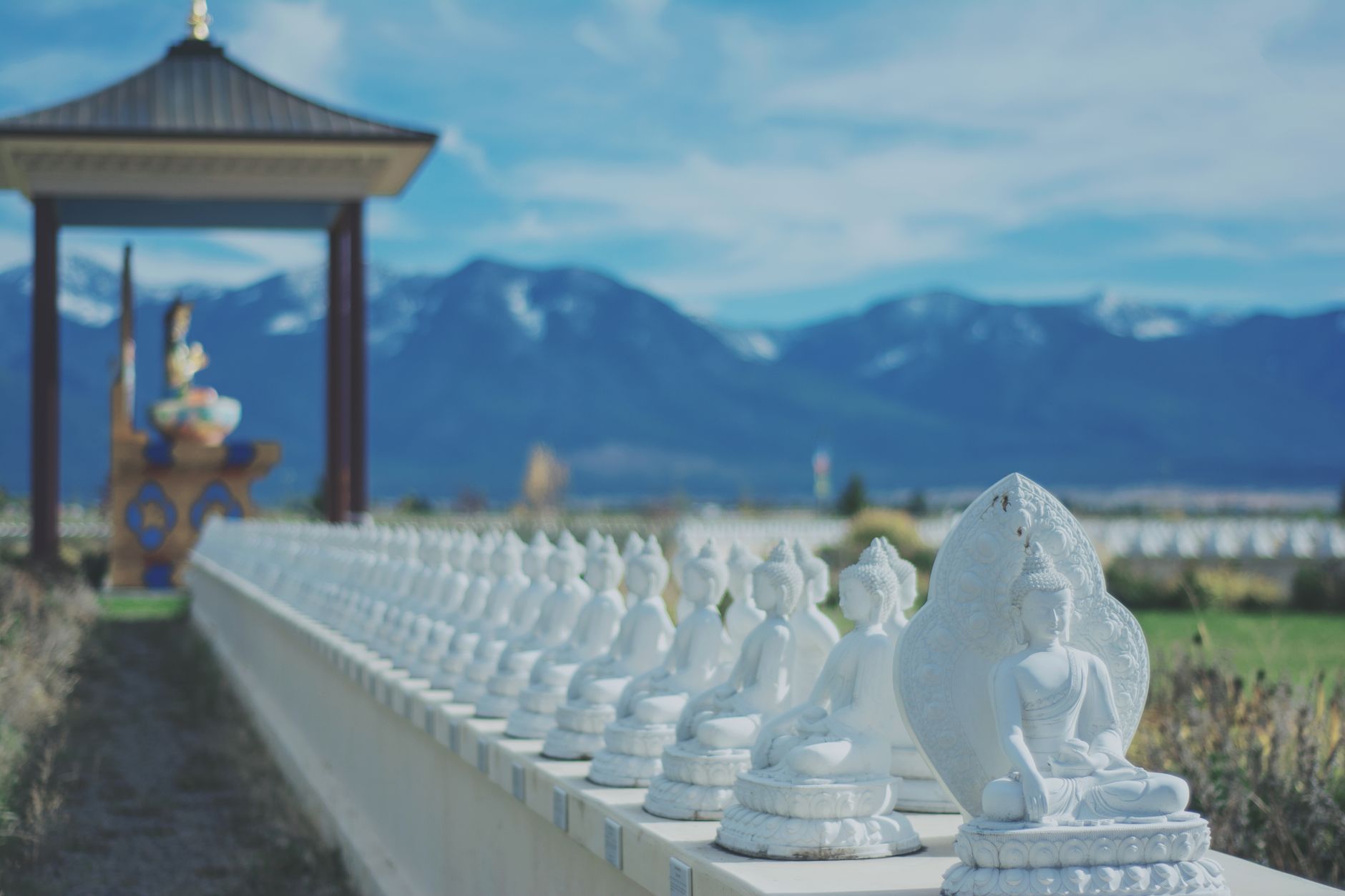
Lumbini, in the southern Terai, is where Siddhartha Gautama was born. It is quieter than the valley, flatter, hotter. Pilgrims from Thailand, Sri Lanka, and Korea have built monasteries there in their own architectural styles, so the site feels like a small United Nations of devotion. Nobody argues about whose Buddhism is correct. They just sit. And that, perhaps, is the oldest teaching of all.
The Experience
Wake before the sun in Boudhanath and you will hear the low groan of conch shells and the slap of bare feet on stone. Old women walk clockwise around the stupa, spinning copper prayer wheels with their right hands, counting malas with their left. Butter lamps flicker in the cold. The smell is juniper and yak butter and dust. You join the circuit not because anyone tells you to, but because the current of bodies pulls you in, and suddenly you are part of something older than your own heartbeat.
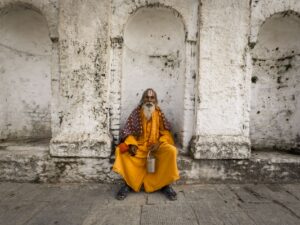
At Pashupatinath, the experience turns raw. Sadhus sit on stone platforms with ash on their skin and marigold garlands around their necks. Smoke rises from the cremation ghats across the river, and families grieve openly. Death is not hidden here. It is woven into the daily rhythm, visible from the temple steps. The first time I stood there, I felt intrusive, then ashamed of feeling intrusive, then something loosened in my chest that I had been holding for years. Grief, it turns out, is portable. You can carry it across an ocean and set it down on a riverbank.
In the mountains, the experience becomes elemental. Trekking toward Annapurna Base Camp, you pass through rhododendron forests and terraced fields and villages where children shout “Namaste” and run alongside you for a hundred meters. The altitude slows you. Your thoughts slow with it. By the third or fourth day, the chatter in your head has thinned to something almost bearable. You eat dal bhat twice a day and sleep when the sun goes down. The simplicity is not a retreat from life. It is a return to it.
And then there is the silence above treeline. At 4,000 meters, the wind sounds like a cello. Prayer flags snap against the sky. You sit on a rock and realize you have not checked your phone in two days, and you do not miss it. That is the moment the journey stops being about the destination.
Who It’s For
This journey serves the traveler who is tired of collecting places and ready to be changed by one. It is for the person who can sit with discomfort without needing to fix it. Who can wake at 4 a.m. for a puja and not complain about the cold. Who understands that a pilgrimage is not a vacation, and that the most meaningful moments often arrive uninvited, in the middle of a dusty bus ride or a wrong turn down a narrow lane.
It is also for the seeker who has done some inner work already. Nepal is not a substitute for therapy, and no mountain will heal what you refuse to face. But if you come with a willingness to look honestly at your own mind, the country will hold space for that looking. The temples do not judge. The mountains certainly do not. They simply witness.
Practically speaking, this trip suits someone with moderate fitness and a flexible schedule. Two to three weeks is ideal. You will want time in the valley, time on the trail, and time in Lumbini if the southern plains call to you. Bring layers, bring patience, and bring less than you think you need.
Who It’s NOT For
Let me be honest, because too many travel articles are not. Nepal is not for the traveler who needs comfort at every turn. The roads are rough. The power goes out. The water is not always hot. You will get sick at some point, probably from something you cannot identify, and you will spend a day in a guesthouse room listening to your own stomach and wondering why you came.
It is not for the person seeking a spiritual aesthetic to post online. The sadhus at Pashupatinath are not props. The monks at Boudhanath are not background. If you come here to perform mindfulness rather than practice it, the country will gently, then firmly, expose you. That exposure is a gift, but only if you are ready to receive it.
It is also not for the traveler who needs a strict itinerary with guaranteed outcomes. Nepal operates on its own clock. Flights cancel. Buses break down. Festivals appear without warning and swallow entire streets. If uncertainty makes you anxious rather than curious, you will spend the trip fighting the country instead of listening to it.
A Profound Insight
Here is the counter-intuitive thing I have learned after years of guiding seekers through these valleys: the sacred is not found in the temples. It is found in the gaps between them. The walk from one stupa to the next, the tea break on a stone wall, the stranger who shares her umbrella in the rain. The pilgrimage is not the destination. It is the ordinary moment you almost missed because you were busy looking for something extraordinary.
Nepal will not hand you enlightenment. It will hand you a cup of milk tea and a view of the Himalayas, and it will wait to see what you do with that. Most of us arrive carrying a list of things we want the journey to fix. The mountains do not read lists. They simply stand there, ancient and indifferent, until you finally stop asking them to be something they are not. And in that stopping, something opens.
- Travel with intention, not just an itinerary — decide what you are actually seeking before you go.
- Spend at least three days in the Kathmandu Valley before heading to the mountains. Acclimatization is physical and spiritual.
- Walk the kora at Boudhanath at dawn, clockwise, with no destination in mind.
- Carry a small notebook. The insights that arrive on the trail tend to dissolve by dinner.
- Respect the rituals you encounter. Ask before photographing, and put the camera down more often than you think you should.
- Let at least one plan fall apart. That is usually where the real journey begins.
You do not need to be a yogi to come here. You do not need to know the difference between a stupa and a pagoda. You only need to be willing to slow down, to sit with what arises, and to let the mountains do their quiet work. Nepal is not a place you conquer. It is a place that, if you let it, conquers the noise inside you. And when you fly home, you will find that the noise has not returned. Not entirely. Not yet. And that small silence you carry back — that is the real souvenir, the one no shop in Thamel can sell you.