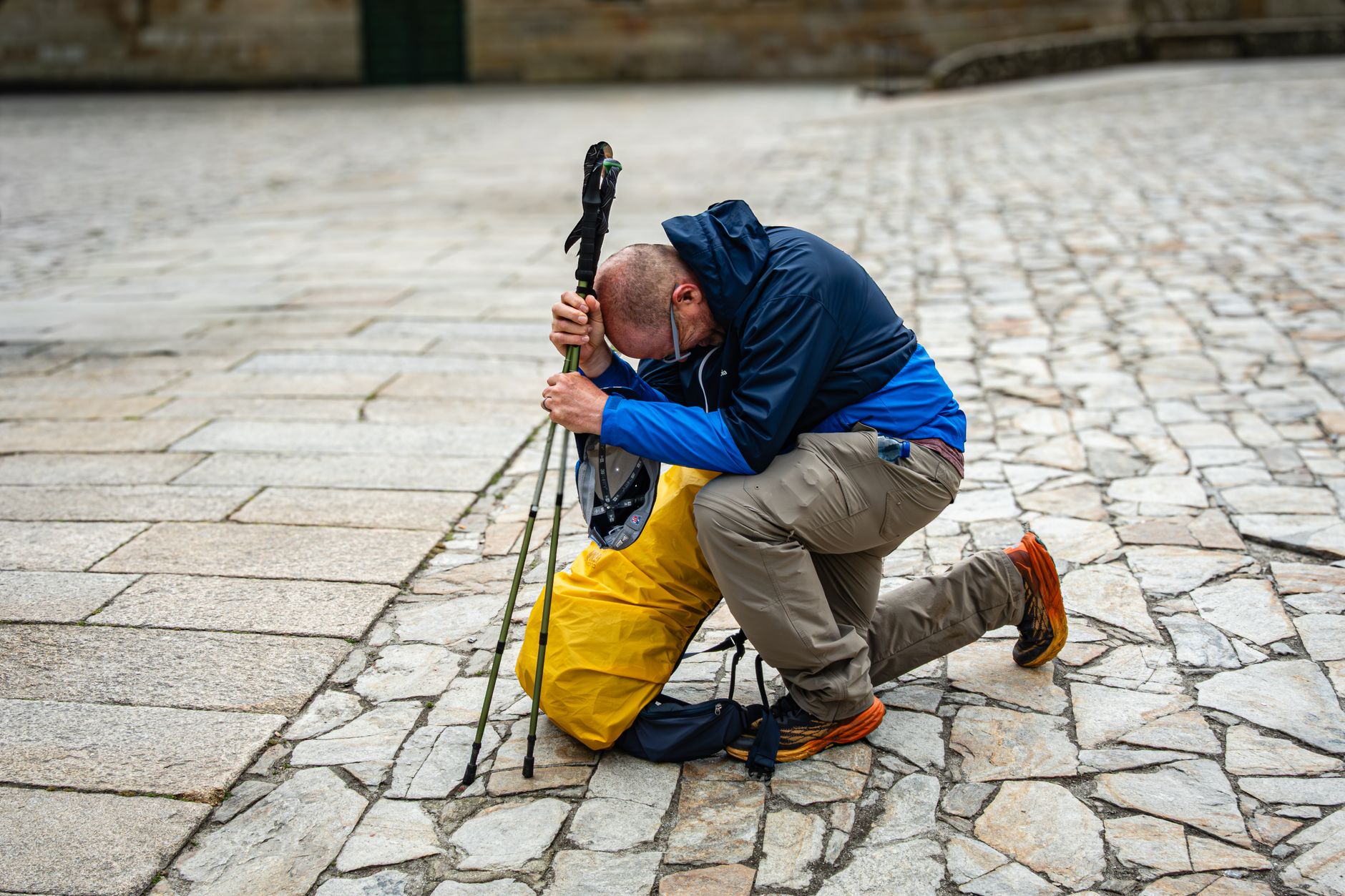
The stone under my palm was warm from a day of sun. Ten centuries of hands had worn it smooth—reaching out for balance, for blessing, for the simple animal comfort of touching something solid. I was somewhere on the Camino Francés, a few kilometres past a village whose name I have already forgotten, and I had stopped walking without deciding to stop. My boots were dusty. A fly circled. Somewhere ahead, a bell marked the hour for no one in particular.
That is the secret these old roads keep: they do not ask you to arrive. They ask only that you keep placing one foot in front of the other, and that you notice what the walking does to you.
“The pilgrimage is not the road. The pilgrimage is the person the road leaves behind.”
Historical Context
Europe is stitched together by pilgrim paths the way an old quilt is stitched by thread you only see when you turn it over. For more than a thousand years, the faithful have walked to Santiago de Compostela, to Rome, to Jerusalem, to Canterbury, to the shrines of a hundred local saints whose names now survive mostly in the mouths of farmers and the ledgers of small museums. The Camino de Santiago alone drew hundreds of thousands of walkers annually in the medieval heyday. Kings and beggars alike, each carrying a scallop shell and a walking staff and the particular sorrow they hoped to lay down at the cathedral door.
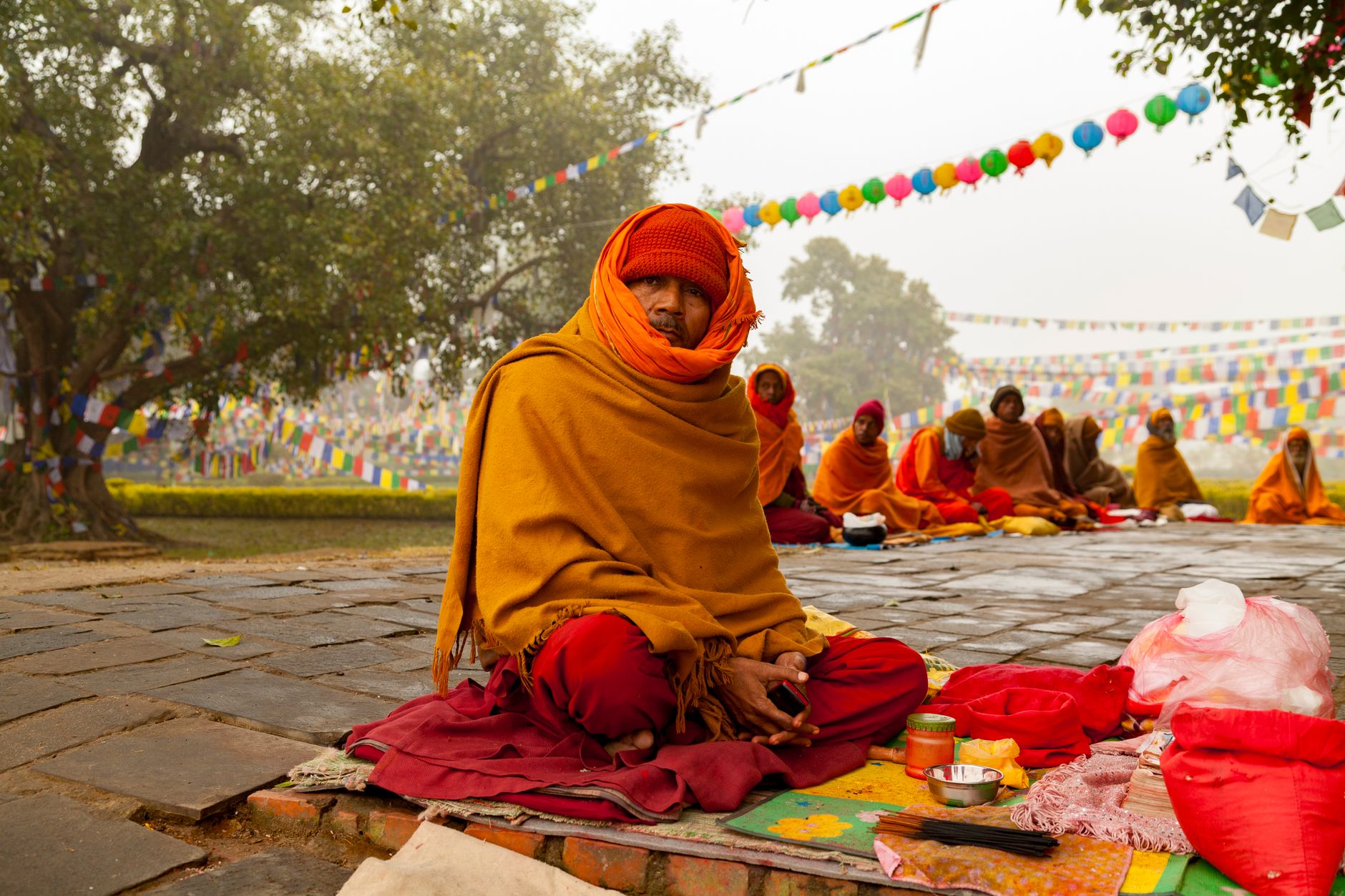
What strikes me, reading the old accounts, is how practical it all was. Pilgrims walked because travel was walking. The hospitals along the route were hostels; the indulgences were, in a sense, the era’s currency of hope. The Via Francigena wound from Canterbury through France and over the Alps to Rome, and its surviving itinerary—written by an archbishop named Sigeric in the tenth century—reads like a list of places to sleep and places to eat. Holiness, it turns out, has always travelled on its stomach.
The Reformation scattered much of this. Shrines were dismantled, routes fell quiet, and for centuries many of these paths were known only to shepherds and to the occasional romantic wanderer. Their revival is recent—really a phenomenon of the last forty years—and it is worth sitting with how strange that is. We are not medieval penitents. We are people with smartphones and knee braces and a vague ache we cannot quite name. Yet something in us still turns toward the old roads. Something in us still wants the scallop shell, the cold fountain, the long silence of a mountain pass.
The Experience
What does it actually feel like? It feels like weather. It feels like the particular grey of a Pyrenean morning, fog sitting low over the pass, your breath loud in your own ears. It feels like the shock of your first blister and the strange tenderness you develop for it, because it is now part of the journey and you have decided to be kind to it. It feels like lunch eaten standing up, bread torn with your hands, cheese that has grown warm in your pack.
The rhythm arrives slowly, often on the third or fourth day, when the body stops arguing. You begin to notice things you would normally walk past: a lizard on a wall, a door painted a blue that has no name, the smell of woodsmoke from a chimney in July. Conversation with strangers becomes easy in a way it rarely is at home. You share a table with a retired teacher from Bavaria and a young nurse from Seoul, and no one asks what you do for a living, because on the road that question feels beside the point. The relevant questions are smaller and larger at once: Where did you start? How are your feet? Why are you here?
Evenings have their own liturgy. You wash your clothes in a sink and hang them on a line. You eat a communal meal that is sometimes excellent and sometimes merely warm. You sleep early, and you sleep deeply, and you wake before the alarm because the dormitory is stirring. There is a quiet that settles over these places at dusk that I have found almost nowhere else—not the silence of a monastery exactly, but something adjacent to it, a silence made by many tired people resting at the same time. It is a quiet with breath in it. A quiet that feels inhabited.
And then there is the walking itself, which is the teaching. Not the destinations. The walking. The way an hour can be both endless and gone in a breath. The way a hill you dreaded turns out to be gentle. The way your mind, denied its usual distractions, begins to speak in a slower voice—one you may not have heard in years. Some days you will walk for six hours and remember almost nothing of them. Other days a single kilometre will open like a room you had forgotten was in your own house.

Who It’s For
This is for the traveller who has grown tired of being a tourist. If you have ever stood in a beautiful place with a camera in your hand and felt oddly absent from it, these routes may call to you. They ask for a different kind of attention—one that is slower, more physical, less interested in the photograph than in the light falling across your own hand.
It suits people at thresholds—after a loss, before a change, in the murky middle of something they cannot yet name. The road is generous with such people. It does not require you to have answers. It only requires time and a willingness to be uncomfortable. It suits walkers who like their days simple and their evenings social, who can find joy in a cold beer after twenty kilometres and in a conversation with a stranger about nothing in particular.
It also suits the solitary. You can walk alone for hours and meet no one, then find yourself at a communal dinner with eight new friends. The alchemy of solitude and company is one of the great gifts of these paths. You choose your own measure of each. No one will ask you to explain why you walked alone all day, and no one will ask you to explain why you didn’t.
Who It’s NOT For
I want to be honest here, because the romantic version of this does harm. These routes are not for everyone, and they are not for every season of a life.
If you need comfort, predictability, and a soft bed at a known hour, the popular routes in high summer will frustrate you. The dormitories are crowded. The beds are bunk beds. Someone will snore. Someone will rustle plastic bags at five in the morning, and you will want to say something unkind. If you are carrying grief so fresh that solitude feels dangerous rather than spacious, walking alone through empty country may not be the medicine you need. And if your body is in a state that makes daily distance a punishment rather than a practice, there is no shame in choosing a shorter route, a supported one, or a different kind of journey entirely.
Here is my counter-intuitive opinion, offered gently: the most transformative pilgrimages are often the ones that go badly. The blister that ends a day early. The rain that never stops. The plan that collapses. We arrive wanting the road to confirm something about ourselves, and the road, being older and wiser, declines. It gives us what we need instead. That is a hard gift to receive, and not everyone is ready for it. Know yourself before you go. The road will not do that knowing for you.
A Profound Insight
Here is the idea I carry home from every long walk, and it has changed how I move through ordinary life.
Pilgrimage teaches that the sacred is not a place you reach but a quality of attention you bring. The cathedral at the end is beautiful, yes. But the grace was in the walking—in the thousand small decisions to continue, in the kindness of strangers, in the willingness to be tired and keep going anyway. The destination is simply where the walking is acknowledged. It is not where the transformation happens. The transformation happens in the middle of nowhere, on a Tuesday, when no one is watching and nothing is being achieved.
Which means you do not have to go to Spain. You do not have to own boots. The practice is available on any walk you take with your full presence. The old roads are a scaffold, a structure that holds you while you learn to pay attention. Once you have learned, the scaffold can come down.
Ask yourself, honestly: what would change if you treated your next ordinary walk—to the shop, around the block, to the bus stop—as though it were a pilgrimage? What would you notice that you currently walk past? The question is not rhetorical. Sit with it before you answer.
Some practical threads to hold as you plan:
- Choose a route that matches your season of life, not your fantasy of yourself—shorter and gentler is often wiser than ambitious.
- Walk fewer kilometres than you think you should for the first three days; let the body find its rhythm before you test it.
- Pack lighter than feels comfortable. You will carry every gram, and lightness is a form of freedom.
- Leave room in your schedule for the unplanned—the extra rest day, the detour, the conversation that runs long.
- Keep a small notebook. Not for the perfect sentence, but for the fragments: a name, a smell, a thing someone said at dinner.
The old roads will still be there when you are ready. They have waited a thousand years. They can wait a little longer.
I think often of that warm stone, and of the hand that had rested there before mine. Somewhere ahead of me on that dusty afternoon, a bell was ringing for no one. Somewhere behind me, a village I cannot name was settling into evening. And I was walking, neither arriving nor departing, simply placing one foot in front of the other on a road that had been walked by the hopeful and the heartbroken for a thousand years. That is all a pilgrimage asks of us, in the end. Not that we be worthy. Not that we be certain. Only that we show up, and keep walking, and let the road do its quiet work. The scallop shell, the stone, the bell—they are all just invitations. The walking is yours to begin.