The shutter clicks, and the heron lifts from the shallows before you have even lowered the camera. You missed it. Or did you? I have stood on that same riverbank in Rishikesh a hundred times, and the photograph I remember most is the one I never took. The bird, the light, the hush of the water moving — all of it lives in my body now, unrecorded and whole. Mindful photography begins in that gap, the half-second between seeing and seizing. It asks you to hold the camera loosely, to let the world arrive before you reach for it.
“The eye that photographs is the same eye that prays — both must learn to wait.”
Historical Context
Photography arrived in 1839, and almost immediately someone began to argue about how it should be done. The early practitioners carried heavy wooden boxes and glass plates, and their slowness forced a kind of patience we have since engineered away. A portrait in the 1850s demanded stillness measured in minutes. The sitter could not fidget. The photographer could not spray and pray. Constraint bred attention.
This contemplative strand never vanished. It surfaced in the twentieth century through photographers who treated the camera as a contemplative instrument rather than a recording device. Minor White spoke of photographing “things for what they are and for what else they are” — a sentence that could have come from a sutra. Paul Caponigro waited hours for light to ripen over stone circles in Ireland and England. In Japan, the tradition of shinzen bi — the beauty of the natural, the unarranged — shaped photographers who walked the same path for years until the landscape agreed to reveal itself.
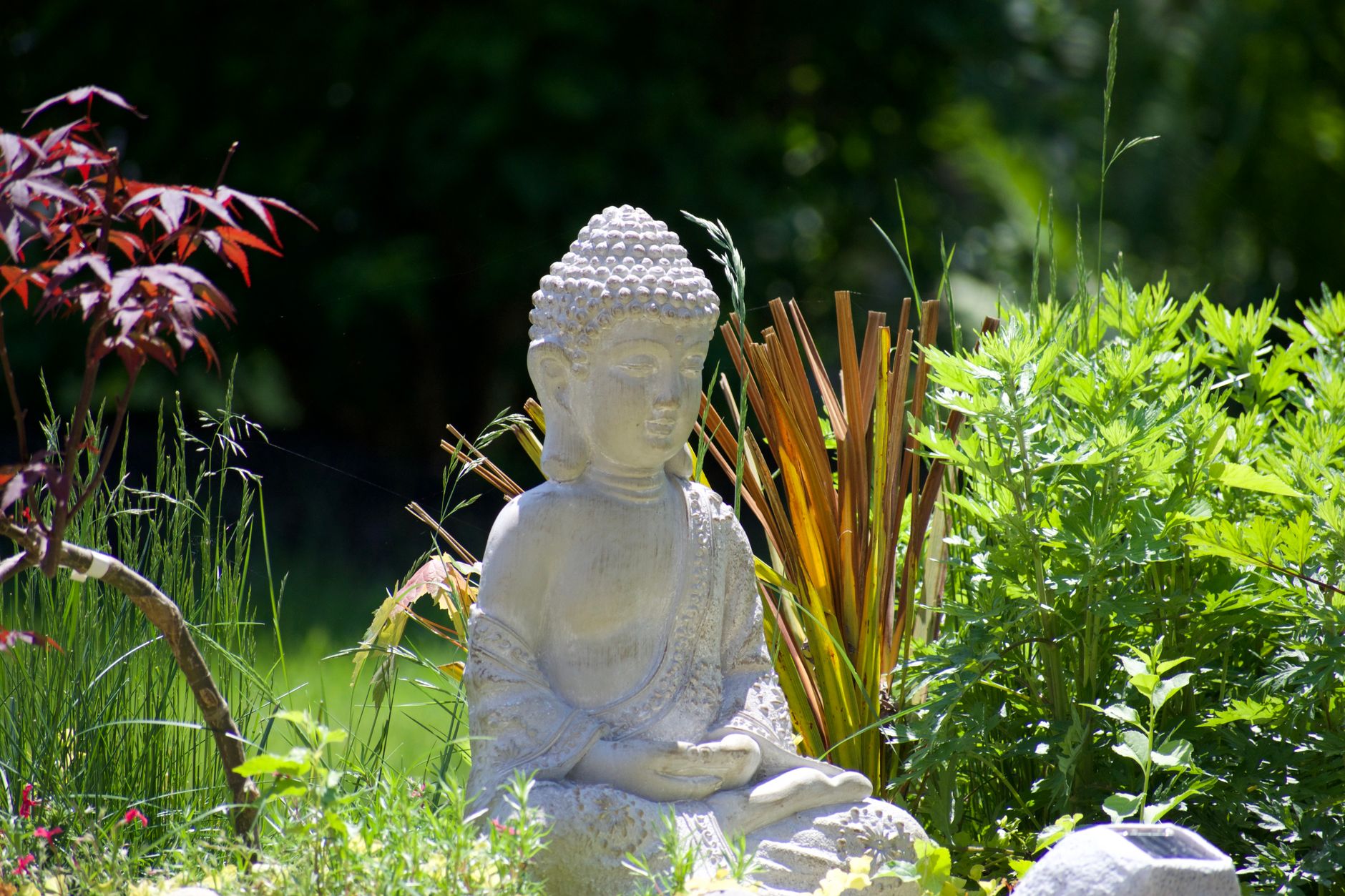
The lineages overlap. Contemplative photography borrows its patience from monastic practice, its non-attachment from Buddhist teaching, and its discipline from the darkroom, where every print was a small lesson in letting go. When I teach this practice on retreats, I tell students they are inheriting a lineage older than the camera itself. The methods are new. The waiting is ancient. Long before anyone thought to fix an image on glass, monks were learning to sit with a single breath until the mind settled like silt in still water. The camera simply gave that old discipline a new object.
The Experience
Here is what it feels like. You walk out at first light with one lens and no plan. The air is cold enough that your breath shows. Somewhere behind you a dog barks, and the sound passes through you without collecting. Your hand rests on the camera but does not raise it. Ten minutes pass. Twenty. The mind begins to quiet the way a pond quiets after a stone sinks.
Then something catches. Not a grand vista — a crack in a painted wall, a woman’s hands sorting marigolds, light pooling in a brass bowl. You notice your chest tighten slightly, the small yes of recognition. You raise the camera slowly. You frame. You breathe out. The shutter releases on the exhale, and the sound is softer than you expected.
The difference between this and ordinary shooting is not technical. It is the quality of contact. Ordinary photography is a transaction: I see, I take. Mindful photography is a conversation: I see, I am seen, something passes between us. The camera becomes a listening device. The photograph becomes a record of attention rather than acquisition.
And the rhythm has a body to it. A full breath in, eyes open and receiving. A full breath out, finger pressing. I ask students to keep this cycle for an hour, and most report that the hour feels like fifteen minutes and a lifetime simultaneously. The streets of a strange city stop being a checklist and become a held gaze. Watch how a market changes when you stop hurrying through it. The vendor who ignored you at first begins to meet your eyes. A child pauses, curious. The world opens to the one who waits, not always to the one who grabs.
You will also notice what you do not photograph. This is the quiet gift. The child playing in the dirt, the old man asleep on a bench — moments that ask to be witnessed, not captured. The camera stays at your chest. You bow, inwardly, and walk on.

Who It’s For
This practice serves the traveller who has come home with a thousand photographs and no memory of the trip. You know the type. Perhaps you are the type. The one who saw the cathedral through a viewfinder and could not describe the smell of the stone. Mindful photography is medicine for that particular hunger.
It suits people who suspect that their camera has become a barrier rather than a bridge. It suits the over-stimulated, the scroll-weary, the ones who feel a small grief at how quickly beauty passes through them unregistered. It suits introverts who want a sanctioned way to linger at the edge of a scene. It suits anyone willing to trade volume for depth, and to accept that the reward will be fewer photographs and more presence.
I have watched accountants, hospice nurses, and one retired submarine captain take to it with the same relief. The camera gives them permission to slow down in public. That permission, it turns out, is rare and precious. A man who spent his career measuring depth in fathoms told me he had never learned to look at a horizon until he put the camera down and simply watched it. The practice undid him, gently, and he was grateful.
Who It’s NOT For
Let me be honest with you. This is not for the traveller on a tight itinerary who needs a record of every landmark by nightfall. If your joy comes from the thrill of the chase — the perfect sunset, the crowded market, the rapid sequence — mindful photography will feel like a leash on a racehorse. It will frustrate you, and you will resent the silence.
It is also not for anyone photographing for professional deliverables under deadline. When a client awaits the file, contemplation is a luxury the schedule cannot afford. There is a time to shoot fast and well. This is not that time.
And it is not for the person who wants a technique, a preset, a formula. There is no formula here. There is only the willingness to be changed by what you see, and not everyone is ready for that exchange. Some come to the practice hoping for better pictures and leave with something they did not ask for — a slower heart, a longer patience. If you are not ready to be rearranged, stay with the chase a while longer.
A Profound Insight
Here is the counter-intuitive claim I have come to trust: the photograph is not the point. The photograph is the residue. What matters is the quality of attention that preceded it — the way you stood, the way you breathed, the way you let the world finish its sentence before you answered. The image is a byproduct of a practice, and the practice is the real souvenir.
This inverts everything we have been taught about travel photography. We treat the image as the goal and the experience as its raw material. Mindful photography reverses the order. The experience is the goal; the image is a small offering left behind, like a stone placed on a cairn. When you return home, you will not remember the photograph. You will remember the morning light on the marigolds and the fact that you were there, unhurried, awake.
Carry this home: whatever you do, do it as if the doing were the destination. The camera is just a convenient teacher for that lesson. So is the dish you wash, the road you drive, the face you love.
Before you close this page, ask yourself: when did I last look at something without needing to keep it?
Conclusion
Mindful photography is a small discipline with a large return. It asks you to walk slower, breathe deeper, and trust that what is given is enough. The technique is simple. The practice takes a lifetime. You will forget it often. You will pick it up again. That is the nature of any practice worth keeping.
Take one lens on your next journey. Leave the rest in the room. Walk out before the streets fill. Wait for the world to offer itself. When it does, receive it with a full breath, and press the shutter as gently as you would close a door on a sleeping child.
- One lens, one hour. Carry a single fixed lens and commit to a full hour of walking without reviewing the screen.
- Breathe before you shoot. Inhale as you frame, exhale as you press. Let the shutter follow the breath, never lead it.
- Photograph the ordinary. The cracked wall, the brass bowl, the sorting hands. Resist the postcard; seek the true.
- Notice what you leave unphotographed. Some moments ask to be witnessed, not captured. Honour the request.
- Review slowly, days later. Let the images settle. The ones that still breathe are the ones that mattered.
Go gently. The light is already waiting.