Incense smoke curls around the stone steps of Swayambhunath at dawn. A grandmother in a maroon shawl is already three circumambulations ahead of me, her prayer beads clicking like a slow metronome. Below us, Kathmandu stirs — horns, dogs, the clatter of a shutter — but up here the noise arrives softened, as if filtered through wool. I have come to Nepal many times, and each arrival teaches me the same quiet lesson: this is not a country you sightsee. It is a country you sit with. The valley holds its sacred places the way a palm holds water — carefully, without spilling.
“The mountain does not ask you to climb it. It asks you to arrive.”
Historical Context
Nepal’s spiritual landscape was shaped long before anyone thought to call it a destination. The Kathmandu Valley alone holds seven UNESCO World Heritage sites clustered within a morning’s walk of one another — a density of sacred architecture matched by few places on earth. Hinduism and Buddhism have grown here side by side for more than two millennia, sharing deities, festivals, and stone.
Swayambhunath, the hilltop stupa I climbed that first morning, carries a foundation story that places its origin at the very creation of the valley itself — a lotus that bloomed from a primordial lake, later crowned by the stupa’s watchful painted eyes. Boudhanath, the largest stupa in Nepal, rose along the trade routes from Tibet; for centuries it was the last great sanctuary merchants and pilgrims reached before the high passes. Pashupatinath, on the banks of the Bagmati, has drawn Shaivite worshippers since at least the fourth century, its pagodas rebuilt and layered across dynasties the way a body accumulates scars and stories.
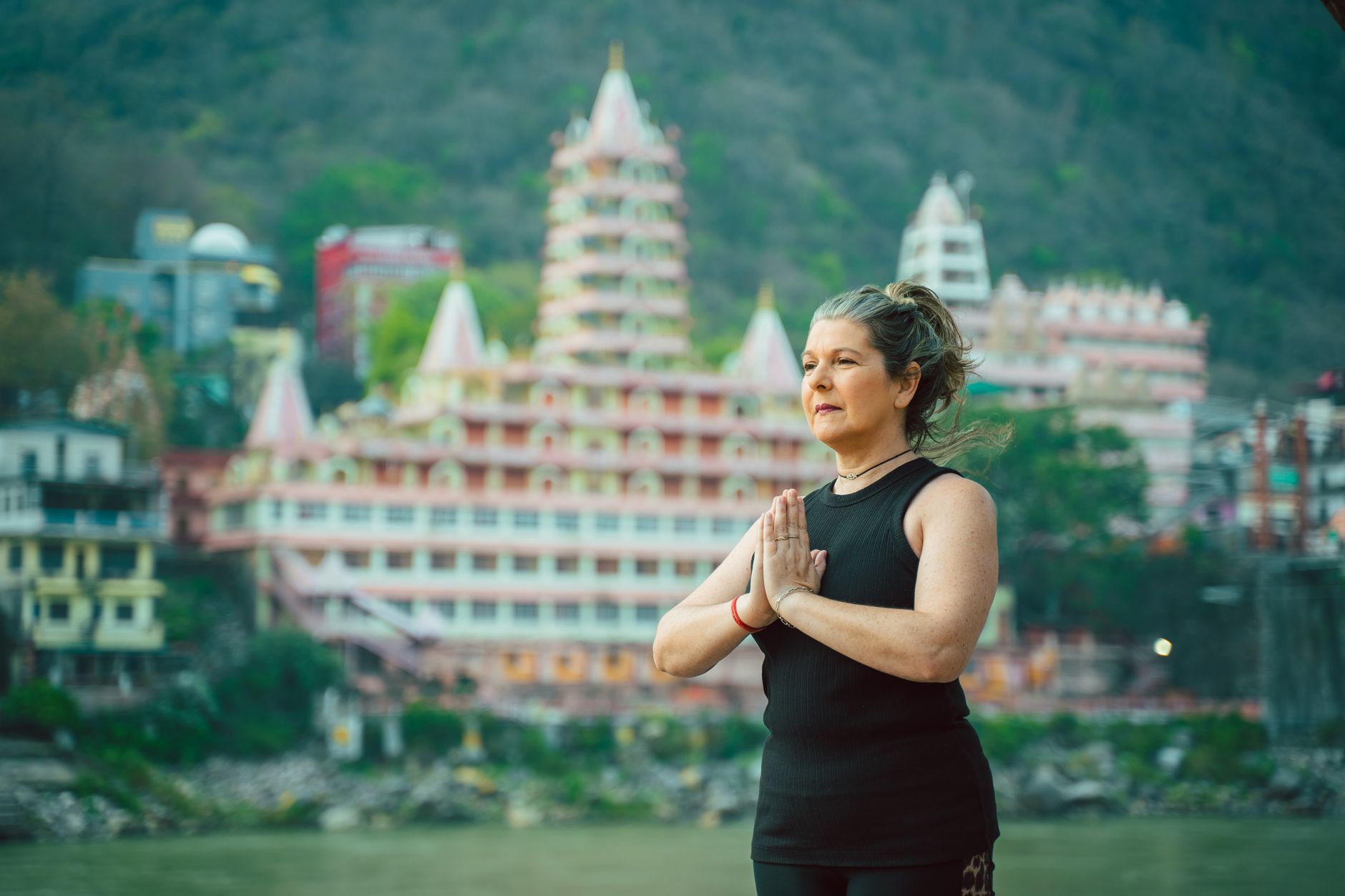
What strikes me is how unmonumental much of it feels. These are not ruins behind velvet ropes. They are working places of devotion, thick with marigolds and butter lamps and the ordinary business of faith. History here is not preserved. It is practiced.
The Experience
Walk the kora at Boudhanath in the late afternoon and you join a river. Hundreds move clockwise around the whitewashed dome, some spinning hand-held prayer wheels, some murmuring, some simply walking with the particular gait of people who have nowhere else to be. The smell is clarified butter and dust and, faintly, momo steaming from a rooftop restaurant. Prayer flags snap overhead in a wind that seems to come from the mountains themselves.
At Pashupatinath, the experience sharpens. Smoke from the cremation ghats rises continuously over the Bagmati, and the air holds a sweetness that is not unpleasant but is unmistakably final. Sadhus draped in saffron sit cross-legged on the terraces, ash on their foreheads, offering blessings for a small donation. I sat on the far bank for a long while, watching families release their dead into the river with a composure I found both humbling and instructive. Grief and devotion, here, are the same gesture.
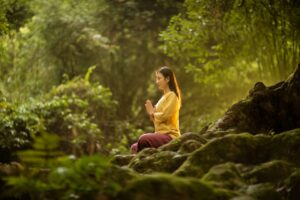
Then there is the quieter work — the kind that asks more of you. A ten-day silent meditation course at a Vipassana centre outside the city. A morning of yoga on a rooftop in Pokhara as the Annapurnas catch the first light, the peaks turning from grey to rose to blinding white in the space of twenty minutes. A teaching with a Rinpoche in a small monastery in the Kathmandu hills, where the translator arrives late and no one minds.
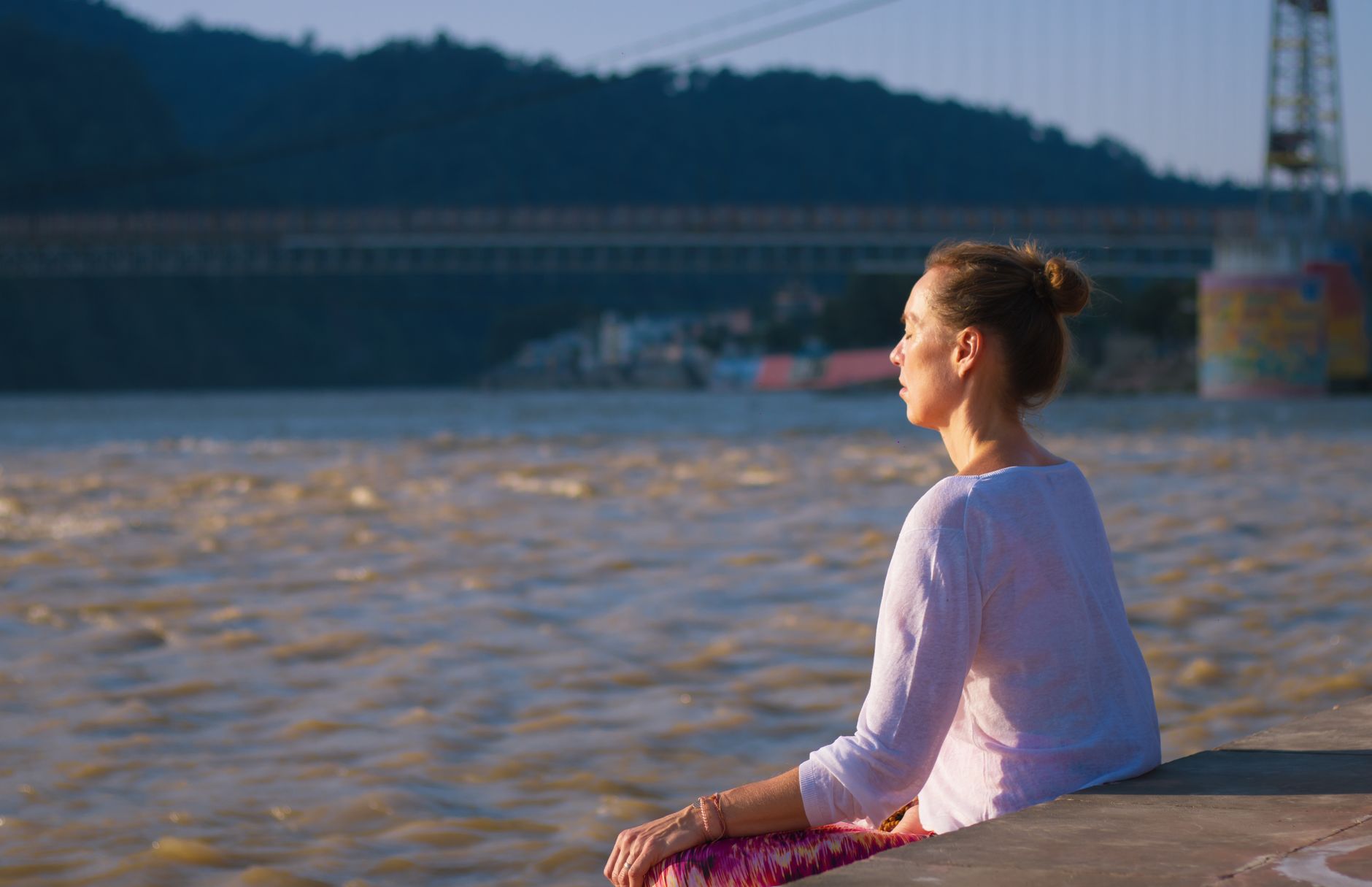
The body adjusts slowly. Altitude, dust, the unfamiliar rhythm of bells at four in the morning. By the third day something loosens. The mind stops narrating and starts noticing. I have watched seasoned travellers — people who have crossed continents without blinking — sit down on a stone step and simply weep. Nepal does that. It removes the padding between you and what is real.
Who It’s For
This journey serves the traveller who is willing to be uncomfortable in service of something larger. You do not need to be religious. You do not need to know the difference between a chaitya and a chorten. You need only a genuine curiosity and the patience to let a place reveal itself on its own schedule.
It suits people at thresholds — those between careers, between relationships, between versions of themselves. Nepal has a way of holding transition without rushing it. I have met architects and nurses and one retired submarine officer, all of them sitting in the same courtyard, all of them quietly rearranging their lives.
Come with these intentions:
- Walk the kora at Boudhanath at least once at dusk, without a camera.
- Take a guided heritage walk in Patan’s Durbar Square to learn the iconography before you photograph it.
- Sit a short meditation retreat — even three days will change the texture of the trip.
- Learn one phrase of Nepali and one gesture of respect, and use both.
- Leave one full day unplanned. The valley rewards the unhurried.
Who It’s NOT For
Let me be honest with you. This is not a trip for the traveller who needs comfort guaranteed, itineraries honoured to the minute, or silence that stays silent. Nepal’s roads flood. Flights to Lukla cancel for days. The power goes out mid-teaching and the teaching continues by candlelight, which is beautiful, but only if you are not counting on a schedule.
It is also not for the collector of spiritual experiences — the one who wants the photograph of the blessing, the certificate from the retreat, the story to tell at dinner. Nepal sees through that quickly, and it will give you exactly what you bring. If you arrive seeking a trophy, you will leave with a trinket. The country has no interest in your résumé of enlightenment.
And it is not for anyone who cannot sit with death. Pashupatinath is not a metaphor. The smoke is real. If that is more than you can hold, choose another path with a clear heart — there is no shame in knowing your own edges.
A Profound Insight
Here is the counter-intuitive thing I have come to believe: the sacred in Nepal is not found in the temples. It is found in the walk between them. The pilgrimage is not the destination but the repetition — the same circuit, the same steps, the same breath, until the mind finally tires of its own noise and settles.
The Nepali word for this is not dramatic. It is simply abhyasa — practice. The grandmother on the steps of Swayambhunath was not chasing transcendence. She was doing her rounds. That is the insight worth carrying home: the holy is not an event. It is a habit, tended daily, in ordinary shoes, on ordinary stone. You do not need the Himalayas. You need the willingness to return, again and again, to the same small circle of your own life.
Ask yourself this: what would change if you treated your morning walk as a pilgrimage rather than a commute? I suspect you already know the answer. I suspect that is why you are reading this.
Conclusion
Nepal will not hand you peace. It will hand you a stone step, a butter lamp, a river that carries everything, and the time to decide what you do with them. Go slowly. Sit longer than feels productive. Let the bells wake you at four and do not resent them. The valley has been holding this space for thousands of years, and it will hold you too — briefly, gently, and without any need for you to be anyone other than exactly who you arrived as.