Some places do not ask to be admired. They ask to be entered. A cave swallows you whole, and for thousands of years human beings have walked into that darkness on purpose — not to hide, but to listen. Long before temples had spires and cathedrals had domes, the first sanctuaries were already carved by water, patient and blind, deep inside the body of the earth. To travel to a sacred cave is to travel backward through time and inward through the self at once. The two journeys, it turns out, are the same one.
We did not build the first temples. We simply found them, and knelt.
Historical Context
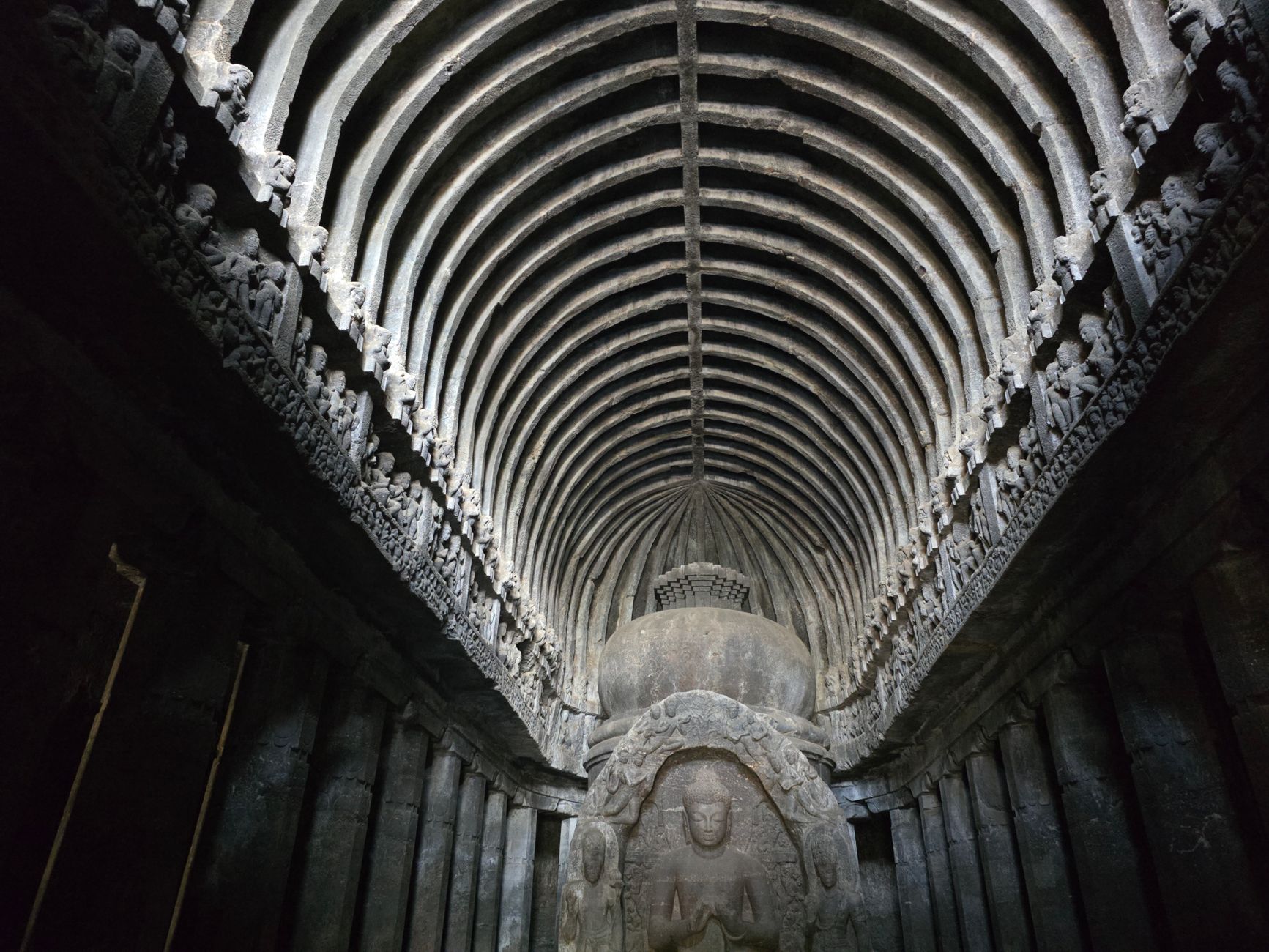
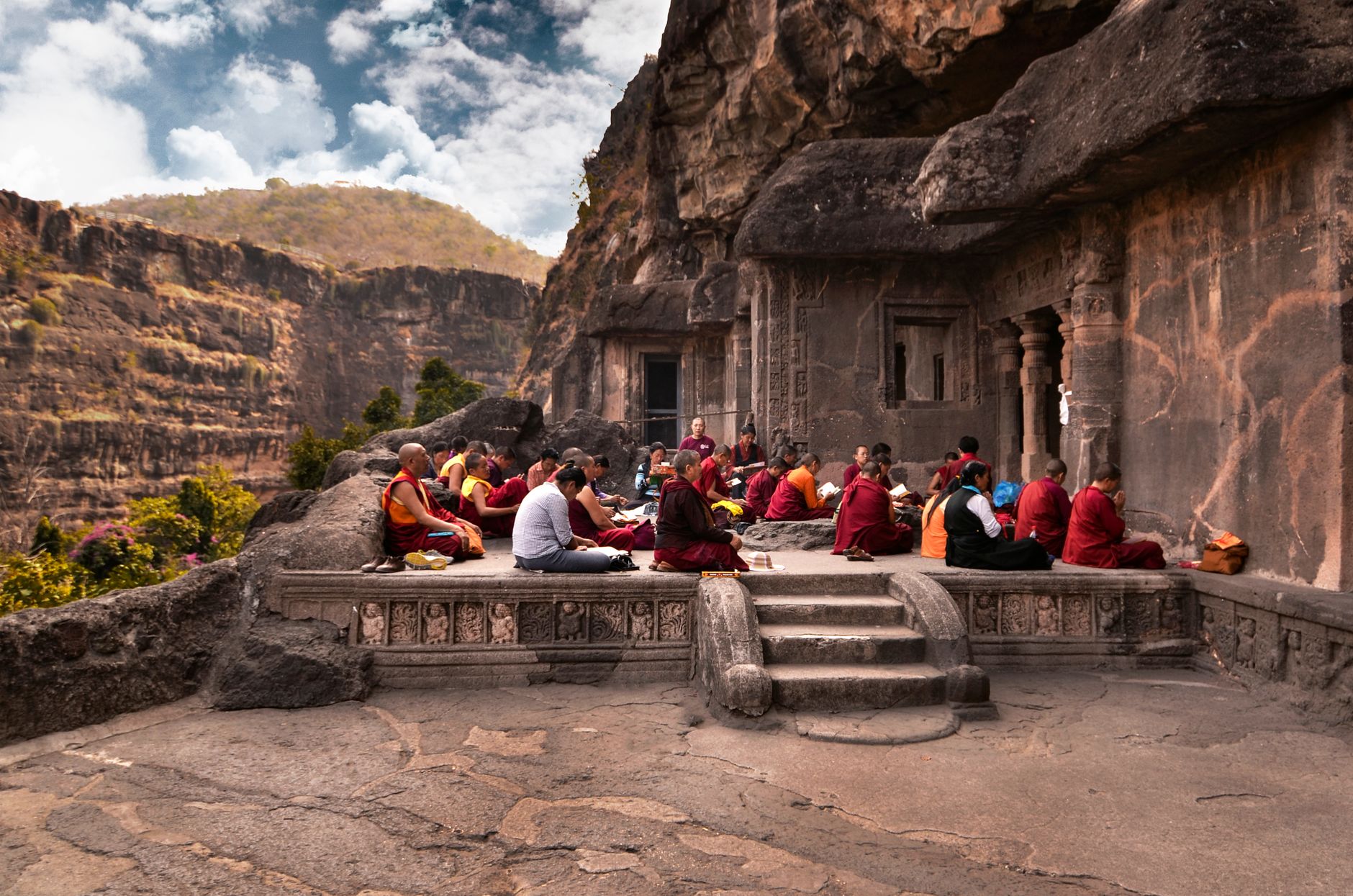
Sacred caves appear on every continent, and they appear early. In southern France, painters worked by flickering torchlight in Chauvet some thirty-six thousand years ago, tracing lions and rhinos across limestone with charcoal held in trembling fingers. In India, the Ajanta and Ellora caves were chiseled over centuries into prayer halls and monasteries, their walls crowded with Buddhas and bodhisattvas. In Mexico, the Maya regarded cenotes as doorways to the underworld. In Greece, pilgrims sought healing dreams in the cave sanctuaries of Asclepius. None of these people shared a language or a god. They shared a gesture: they went down into the dark to meet something larger than themselves.
What makes a cave sacred is rarely the cave alone. It is the accumulation of attention. Generations of feet polishing the same stone. Smoke from ten thousand fires staining the same ceiling. A spring that never stopped giving water, so someone decided it must be holy. The sanctity is layered, like sediment, and you feel the weight of it the moment your eyes adjust.
Here is a counter-intuitive thought: the most sacred caves are often the least decorated. We assume holiness requires ornament — gold leaf, fresco, marble. But many of the caves that move travelers most deeply are bare. The emptiness is the point. The cave does not perform for you. It waits.
The Experience
The first thing you notice is the temperature. Caves breathe a steady, cool exhale, usually somewhere near the average yearly temperature of the region, indifferent to summer or winter. Your skin registers it before your mind does. Then comes the smell — wet stone, mineral, faintly sweet, like the air just before rain. Some caves carry the ghost of incense from centuries of offerings. Others smell only of geology, ancient and clean.
Sound changes next. Your footsteps return to you a half-second late, softened, as if the walls are repeating you back to yourself. Drop a pebble and it falls longer than you expect. Sing one note and the cave holds it, folding it into something fuller. This is why monks chose these places. A single voice becomes a choir without any congregation at all.
Then the light. This is where the experience turns. Carry a candle or a small lantern and watch the walls rise out of darkness as you move. The paintings flicker. The carved figures seem to breathe. Modern floodlights, installed for safety, flatten everything into a museum. But a single flame restores the original drama — the cave as it was first seen, revealed one step at a time, never entirely known.
And then, if you are lucky and the group is small and the guide is quiet, comes the silence. Not the absence of sound. The presence of something else. You stand still. You breathe. The cave breathes with you. And for a few minutes you understand why every culture that ever found one of these places decided it belonged to the gods.

Who It’s For
This kind of travel is for the traveler who is willing to be uncomfortable in exchange for being changed. The path is often wet, uneven, and low. You will crouch. You will get muddy. You will not have a signal. If that sounds like a burden, reconsider. If it sounds like a relief, you are already halfway there.
It suits the contemplative traveler — the one who lingers, who reads the plaques twice, who would rather sit in one chamber for twenty minutes than photograph fifteen. It suits people drawn to history that predates written history, who feel a shiver at the thought of a human hand pressing pigment to stone before the invention of the wheel. It suits anyone in the middle of a transition — a loss, a beginning, a long quiet question — because caves are unusually good at holding those things without answering them.
And it suits the traveler who understands that some places are not destinations but thresholds. You do not visit a sacred cave. You pass through it, and something of it stays.
Who It’s NOT For
Let me be honest. Sacred caves are not for everyone, and pretending otherwise does a disservice to the places themselves.
They are not for travelers with claustrophobia, and no amount of breathwork will fix that in a tight passage. They are not for those who need accessibility at every step — many of the most powerful sites involve stairs, narrow entries, or uneven floors that no ramp can solve. They are not for travelers who measure a day by how many sites they saw. A cave rewards slowness and punishes hurry.
They are also not for people who need the sacred to be tidy. Caves are damp, bat-inhabited, sometimes teeming with insects. The air can be thin. The experience can be physically taxing in ways that no photograph prepares you for. If you need your spirituality climate-controlled, this is not your path. Choose a cathedral. They are beautiful too.
A Profound Insight
Here is the idea worth carrying home: the cave teaches that darkness is not the absence of the sacred — it is often its condition.
We are trained to seek light, clarity, certainty. We want the answer before we enter the room. But every tradition that built its holiest places underground understood something we have largely forgotten: that some truths only reveal themselves when everything else is taken away. No view. No horizon. No distraction. Just you, the stone, and whatever you brought with you.
The cave does not give you an answer. It gives you a container. And in that container, if you stay long enough, you may finally hear the question you have been avoiding. That is not a small gift. It is the gift most of us spend our whole lives running from.
Carry that with you. Not the cave itself, but the posture it taught you — the willingness to enter the dark without knowing what waits inside, and to trust that the dark has been waiting for you all along.
- Choose caves with small group sizes or guided access; large tour groups flatten the experience into spectacle.
- Bring a small lantern or candle where permitted — flame reveals sacred caves as they were first seen.
- Wear shoes with grip, dress in layers, and expect dampness; comfort is not the point, but safety is.
- Sit in silence for at least ten minutes in the main chamber before taking a single photograph.
- Research the site’s living tradition beforehand — many caves are still active places of worship, not museums.
We travel to sacred caves for many reasons — curiosity, history, beauty, a vague hunger we cannot quite name. But the caves themselves are indifferent to our reasons. They simply continue, as they have for millennia, holding space for whoever is willing to descend. If you go, go gently. Go slowly. Leave the stone as you found it. And when you climb back into the daylight, do not rush to speak. Let the silence travel home with you. It has a long way to go, and so do you.