Some journeys rearrange your luggage. Others rearrange your soul. The distinction rarely announces itself at the airport; it arrives quietly, often weeks after you return, when you notice you no longer flinch at the same things. Fourteen years of leading retreats have taught me that the most transformative places are seldom the most photographed. They are the ones that strip away your familiar reference points — your language, your routines, your sense of what a day should contain — and leave you standing in something older and stranger. This is not about escaping your life. It is about seeing it from a different shore.
“The real voyage of discovery consists not in seeking new landscapes, but in having new eyes.” — Marcel Proust
Historical Context
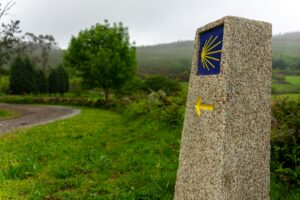
Pilgrimage is older than any religion we can name. Before temples had roofs, people walked toward mountains, springs, and caves because something in those places felt closer to the source. The Greeks consulted the oracle at Delphi, where a priestess sat above a chasm and spoke in riddles. In Japan, the Shugendō mountain ascetics climbed the Kumano range for over a thousand years, treating each ridge as a stage of dying and rebirth. The Islamic hajj, the Christian camino, the Hindu parikrama around sacred hills — these are not holidays. They are technologies of the self, refined across centuries, designed to loosen the grip of the everyday mind.
What unites them is not belief but method. You move your body through unfamiliar terrain. You surrender control of comfort. You repeat a simple action — step, breathe, bow — until the thinking mind grows quiet enough to hear something underneath it. The destination matters less than the rhythm. A counter-intuitive truth: the most profound perspectives often come not from arriving somewhere spectacular, but from walking the same ordinary path for days until it becomes unfamiliar. Repetition, not novelty, cracks the shell.
Modern travel has largely forgotten this. We collect sights the way children collect shells, then wonder why the bag feels empty. The places that change us are the ones that ask something of us — patience, silence, a willingness to be a beginner again.
The Experience
I am thinking of a specific morning on the Kii Peninsula, south of Osaka. The air was wet and green, the kind of damp that settles into your clothes and makes everything smell of cedar and moss. I had been walking the Kumano Kodo for three days, and my legs had passed beyond soreness into a strange, humming fatigue. The path was stone, worn smooth by a millennium of feet. Ferns pressed in from both sides. Somewhere below, water moved over rocks with a sound like distant conversation.
Then the forest opened. A small shrine, no bigger than a closet, its wooden roof furred with moss. No sign. No ticket booth. No one else. I stood there for a long time, not praying exactly, not thinking either. My breath came slow and full. The boundary between my skin and the damp air seemed to thin. I felt, absurdly, like a guest who had arrived at exactly the right moment.
That is the texture of these places. They do not overwhelm you with beauty the way a grand canyon does. They work on you slowly, through your feet and your lungs and the back of your neck. You notice that you have stopped checking your phone. You notice that hunger and tiredness feel different here — less like problems, more like weather. You notice, eventually, that you are not performing your life for anyone. There is no one to impress on a mossy stone path.
And then there are the small humiliations that become gifts. Getting lost because the trail markers are in a script you cannot read. Eating food you cannot name. Sleeping on a futon that leaves your hip aching. Each of these moments asks the same quiet question: can you be here without needing to control here? Most of us cannot, at first. That is the practice.
Who It’s For
This kind of travel serves the person who is tired of being a spectator. If you have ever returned from a trip with hundreds of photos and a vague sense of having missed something, this path is for you. It suits the traveller who is willing to trade efficiency for attention — who would rather spend four hours walking through a forest than four hours ticking off four attractions. It serves the seeker who suspects that the answers are not in a guidebook but in the quality of their own presence.
It also serves the person in transition. The one who has lost a job, ended a relationship, buried a parent, or simply woken up one morning and realized the life they built no longer fits. Pilgrimage is a container for grief and confusion. It does not solve anything. It holds you while you sort through the pieces. I have watched people weep on mountain steps and then laugh ten minutes later, and both reactions were correct.
- Walk at least three consecutive days — momentum matters more than mileage.
- Carry less than you think you need; weight becomes a teacher.
- Learn ten words in the local language, including “thank you” and “I am lost.”
- Leave one afternoon completely unplanned and follow whatever draws you.
- Keep a small notebook and write one sentence each evening, no more.
Who It’s NOT For
Honesty requires a boundary. This is not for the traveller who needs certainty, comfort, and a reliable Wi-Fi signal at every stop. If your idea of a good day involves a spa, a curated tasting menu, and a driver who speaks fluent English, the Kumano Kodo will feel like a punishment. That is not a moral failing. It is simply a different temperament, and there is no virtue in forcing yourself into a mold that does not fit.
It is also not for the person who wants a quick fix. A three-day walk will not resolve a lifelong pattern of anxiety. It may soften it. It may give you a glimpse of another way of being. But the work happens after you return, in the ordinary Tuesday mornings of your real life. If you are looking for a dramatic epiphany that rewrites everything overnight, you will likely be disappointed. The mountain does not do overnight. It does slow, seasonal, unglamorous change.
Finally, it is not for anyone who cannot physically manage uneven terrain, long hours on their feet, or basic accommodation. There are gentler versions of this practice — a walking meditation in a city park, a silent retreat closer to home — but the classic pilgrimage route demands a body that can carry itself.
A Profound Insight
Here is the idea I keep returning to: perspective is not something you find. It is something you lose. We spend years accumulating opinions, habits, identities, and defenses, and we call that growth. But the places that truly change us do not add anything. They subtract. They strip away the layers of who we thought we had to be until something simpler remains — a person walking, breathing, noticing.
On the third night of that Kumano walk, I sat in a small guesthouse and watched an old woman prepare dinner. She moved without hurry. She did not check her phone. She did not seem to be thinking about tomorrow. I realized I had spent most of my adult life trying to become someone, and she had spent hers simply being someone. That is not a lesson you can read in a book. It has to be absorbed through the soles of your feet.
You do not need to fly across the world to practice this. You need only to go somewhere that makes you slightly uncomfortable and pay attention. The perspective shift is not in the place. It is in the quality of your looking.
Conclusion
Travel that changes you is rarely comfortable, rarely efficient, and rarely Instagrammable. It is slow. It is often boring. It asks you to be a beginner in a world that rewards expertise. But if you are willing to walk without knowing exactly where you are going, to sit with your own restlessness, to let the forest do its quiet work — you may come home different. Not transformed in a dramatic way. Just softer, slower, a little less certain, and a little more alive. That is enough. That has always been enough.