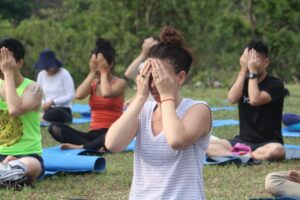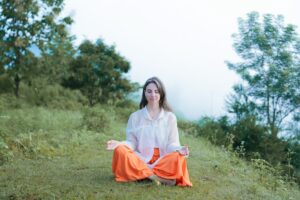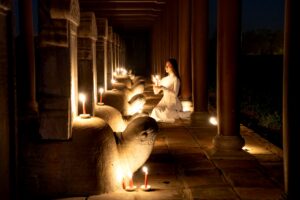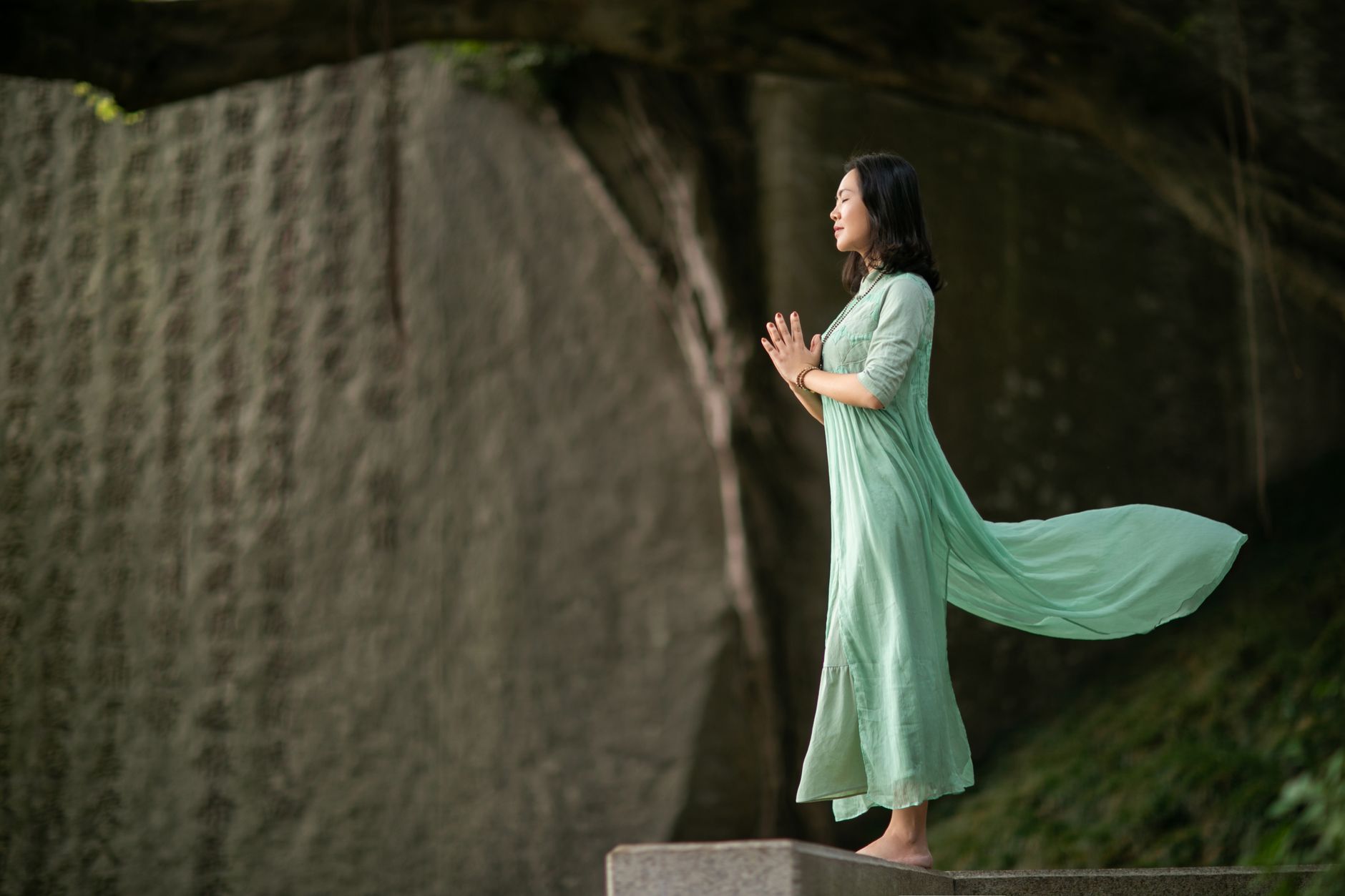
The floor is cold against my bare feet at 4:50 in the morning. Two rows behind me, someone coughs. A brass bell rings once. Then again. The woman beside me smells faintly of sandalwood and wet wool. This is not the serene, airbrushed silence I imagined when I booked a solo ticket to Rishikesh. It is a living, breathing quiet—made of other people’s breath, other people’s restlessness. That first hour of the day, before the sun touches the Ganges, taught me more about solitude than any mountaintop ever could. Solitude, I learned, is not the absence of others. It is the willingness to sit with them, and with yourself, without reaching for a screen.
“The cave you fear to enter holds the treasure you seek.” — Joseph Campbell
Historical Context
Pilgrimage is one of humanity’s oldest impulses. Long before budget airlines and travel blogs, people walked. They walked to rivers, to mountains, to shrines where the veil between worlds felt thin. In India, the tradition of yatra—the sacred journey—has shaped the subcontinent for thousands of years. The Char Dham circuit, the Kumbh Mela, the long climb to Kedarnath: these are not holidays. They are acts of devotion, performed barefoot, in hunger, in heat, in rain.
Rishikesh sits where the Ganges leaves the Himalayas and spills into the plains. For centuries, sages withdrew to its banks to sit in silence. The Beatles arrived in 1968 and the world followed. Yet beneath the ashrams and the cafés selling ayurvedic smoothies, the old rhythm persists. Bells at dawn. Fire ceremonies at dusk. A river that carries prayers and ashes and plastic bottles with equal indifference.

Solo pilgrimage is a newer expression of an ancient form. Medieval Europe had its lonely walkers on the Camino de Santiago. Japan has its henro—the eighty-eight temple circuit of Shikoku, walked by pilgrims in white robes since at least the twelfth century. What unites these traditions is a single conviction: that leaving home, deliberately and with intention, can crack something open in the traveller. The journey is not escape. It is confrontation dressed as geography.
Here is where I part ways with the wellness industry’s version of this. The modern “spiritual retreat” often promises transformation in seven days for the price of a used car. The old traditions promised nothing. They offered a container—ritual, community, hardship—and left the rest to grace. That distinction matters more than any itinerary.
The Experience
What does it actually feel like? Uncomfortable, mostly. That is the first honest answer.
My third morning in the ashram, I sat for a meditation that was scheduled to last forty minutes. At minute eleven, my back ached. At minute nineteen, I began composing a mental grocery list. At minute thirty, I felt a wave of grief so sudden and so large that I had to open my eyes. No one had told me that silence is not empty. Silence is a room you enter, and sometimes the room is full of things you have been avoiding.
The sensory world, meanwhile, refuses to cooperate with your inner journey. A dog barks. A motorbike sputters through the lane below. The teacher, a small woman from Kerala who speaks four words of English, adjusts my posture with a single finger and a look that says: stop performing. Somewhere a conch shell sounds for the morning puja, low and long, like a whale calling from another century.
By the second week, something shifts. You stop negotiating with the moment. You eat when food appears, sleep when the lights go out, walk where the path goes. The mind, which normally runs a constant commentary, grows quieter—not because you have conquered it, but because you have stopped arguing with it. On a solo journey, there is no one to perform for. No friend to impress with your insights. No partner to manage your mood. The masks come off one by one, and what is underneath is sometimes lovely and sometimes a mess.
I remember standing on the footbridge at sunset, watching the river run gold. A young man was playing a flute badly. Children were throwing marigolds into the water. And I thought, with a clarity that felt almost physical: I am not here to find myself. I am here to stop hiding from myself. Those are different journeys. The first is a treasure hunt. The second is a homecoming.
The evenings brought their own lesson. Alone at a long table in the dining hall, eating rice and dal with my hands, I felt the old urge to pull out my phone. Instead I watched. An elderly woman prayed over her food. Two young travellers argued softly about a bus route. A monk laughed at something no one else could hear. Slowly, I understood that solitude does not mean isolation. It means being present to the whole room without needing to be its centre.

Who It’s For
This journey serves the traveller who is tired of being a tourist in their own life.
If you have been in therapy for years and want to put your body where your insights are, a solo pilgrimage will meet you. If you are at a threshold—a divorce, a diagnosis, a career that has quietly died—the old paths offer a place to grieve and to rebuild. The container holds you. Ritual does the work you cannot do alone.
It is for the person who can sit with discomfort without needing to fix it. Who can eat unfamiliar food, sleep on a thin mattress, and miss a bus without spiralling. Who understands that a spiritual journey is not a spa package with better lighting. And it is for anyone willing to be a beginner in public—to chant badly, to bow awkwardly, to ask a question that reveals how little you know.
One more thing: it is for people who can be alone without being lonely. That is a skill, not a personality trait. You can learn it, but the learning happens in the doing.
Who It’s NOT For
Let me be honest about the boundaries, because the wellness industry rarely is.
This is not for you if you are in acute crisis. A solo pilgrimage is not a substitute for medical care, for a therapist, for a friend who can hold your hand at 2 a.m. If you are actively struggling with severe depression, an eating disorder, or a substance dependency, the intensity of a strange place and long silences can deepen the wound rather than heal it. Seek support first. The river will still be there.
It is not for the traveller who needs comfort and predictability. Ashrams have bedbugs and opinions. Trains are late. The food will make you sick at least once. If your nervous system requires a reliable shower and a firm plan, this is not the trip—and that is not a failing. It is a fact about what your body can bear right now.
And it is not for the person seeking a spiritual trophy. If you want photos of yourself in a white robe to post online, you will get them. You will also get the hollow feeling that follows. The old traditions are not impressed by your audience. They ask only for your attention.
A Profound Insight
Here is the idea I carried home, and it has not left me: the point of a solo pilgrimage is not to return changed. It is to return available.
We are sold transformation as a destination—a before and after, a caterpillar and a butterfly. But the traditions I encountered were less interested in my becoming someone new than in my becoming someone present. The sages on the riverbank did not glow. They sat. They swept the steps. They fed the monkeys. They were available to the moment, and the moment, in return, was available to them.
This is a counter-intuitive opinion, I know: the spiritual journey is not about you. It is about loosening the grip of the self long enough to notice what is actually here. The grief, the dog barking, the badly played flute, the stranger’s kindness, the cold floor. The journey does not make you special. It makes you porous. And porous, it turns out, is a far more useful way to move through the world than enlightened.
I think of the old pilgrims walking the Shikoku circuit in their white robes—robes that traditionally represented a burial shroud. They walked as if already dead, which is another way of saying: as if nothing left to lose. That is the freedom the path offers. Not bliss. Not certainty. Just the strange, steady relief of having stopped protecting a self that was never as solid as you thought.
Ask yourself, honestly: what would you do differently tomorrow if you believed the journey was not about you at all?
Conclusion
The bell rings at 4:50. The floor is still cold. The woman beside me still smells of sandalwood and wet wool. Nothing has changed, and everything has. That is the quiet joke of the pilgrim path—it delivers you back to the same ordinary morning, but you are no longer the same ordinary person standing in it.
If you feel the pull to go, go. Not to find yourself. To stop hiding. Walk slowly. Eat with your hands. Miss the bus. Sit with the grief when it arrives, because it will arrive, and it will be the most honest company you keep. The river does not care whether you are enlightened. It only asks that you show up, barefoot, and let it carry you.
- Choose a container, not a resort. Look for ashrams, monasteries, or pilgrimage routes with a daily rhythm—morning practice, shared meals, evening ritual—rather than a package that curates your comfort.
- Go for at least ten days. The first three days are decompression. The real work begins only after the mind stops checking its phone and starts checking itself.
- Leave the itinerary loose. Book your arrival and your departure. Let the middle stay open. The unplanned hours are where the journey actually happens.
- Prepare your body, not just your soul. Train your back for sitting, your gut for unfamiliar food, and your sleep for thin mattresses. The body is the vehicle. Maintain it.
- Bring a journal and no audience. Write for yourself alone. The insights that matter rarely survive being performed, and they need a place to land.
Travel well. Travel empty. Let the road do its quiet work.