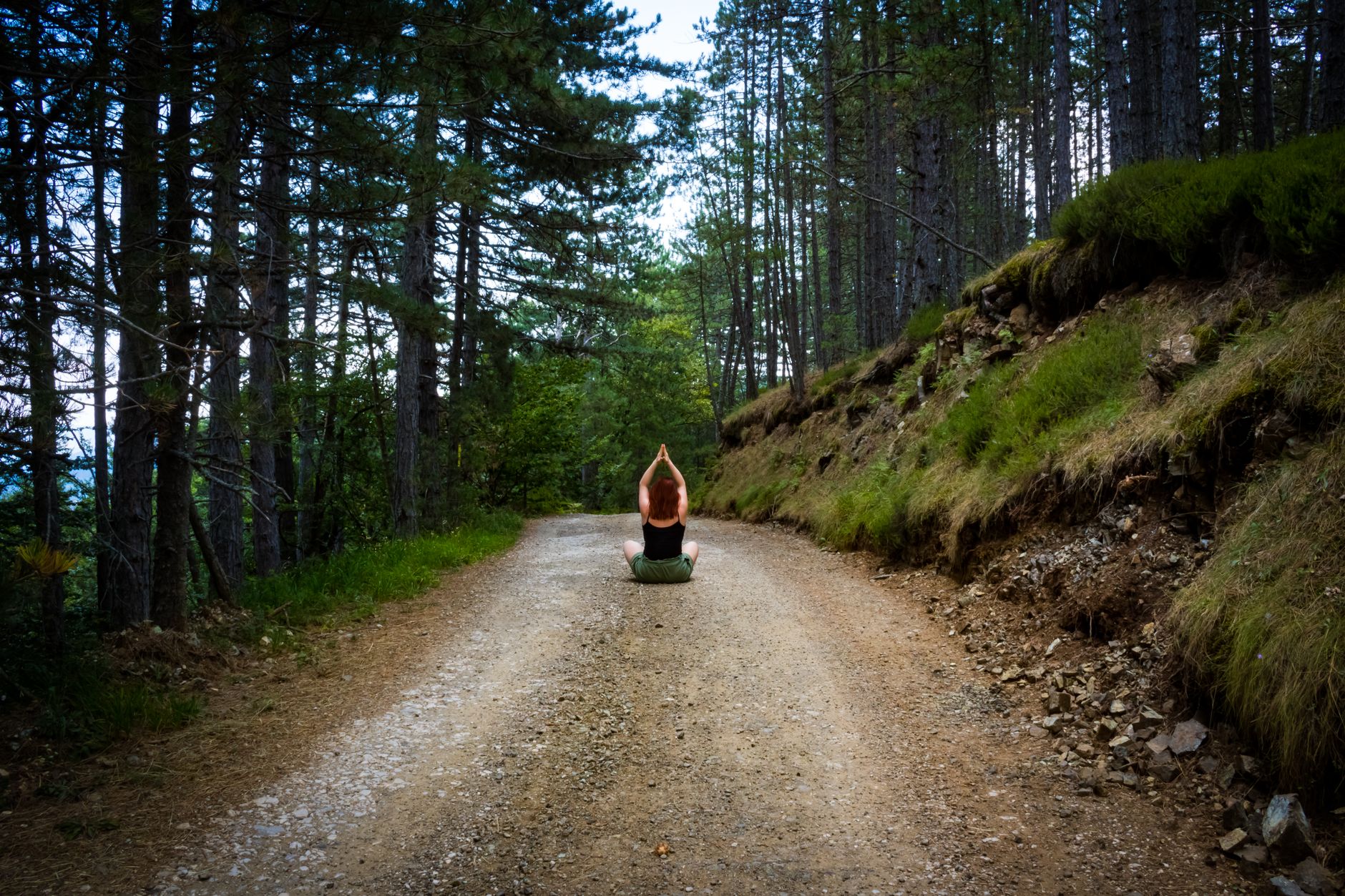
The cedar underfoot gives way like a sponge, soft and damp from last night’s rain. Two hours into the forest, my heartbeat has slowed to match the hush around me. I notice the resinous scent of hinoki rising as my boots press the earth, a smell somewhere between lemon peel and old libraries. No soundtrack here. No guided narration, no destination. Just this path, this breath, this slow unwinding of the mind’s tight knots. I have walked forests all my life, but only after learning to walk them without purpose did I understand what they were offering all along.
“The forest does not hurry, yet everything within it is accomplished.”
Historical Context
Shinrin-yoku — forest bathing — was named in Japan in 1982, though the practice is far older than its label. The Japanese Ministry of Agriculture, Forestry and Fisheries coined the term as part of a national health initiative, recognizing what rural communities had known for generations: time among trees restores something essential in the human body. The word itself is instructive. Shinrin means forest. Yoku means bathing. Not hiking, not trekking, not conquering. Bathing — immersed, receptive, unhurried.
The roots reach deeper than the 1980s. Japan’s Shinto tradition holds that forests are inhabited by kami, spirits dwelling in ancient trees and sacred groves. Many shrines are still flanked by towering cedars, and pilgrims have walked these paths for centuries seeking clarity, healing, and communion. The practice of misogi — ritual purification — often took place in forest streams. What the ministry formalized in 1982 was a modern name for an ancient conversation between humans and trees.
Since then, research has caught up with intuition. Studies from Chiba University and Nippon Medical School documented measurable drops in cortisol, blood pressure, and heart rate after time in forests. Scientists isolated phytoncides — airborne compounds released by trees — and found they may boost natural killer cell activity, part of the immune system’s defense. The Japanese government has invested in over sixty designated forest therapy trails, staffed by certified guides who lead slow, silent walks. The practice has since spread to Korea, Finland, and beyond, each culture folding it into its own landscape and language.
The Experience
Forest bathing is not a workout. This is the first thing to unlearn. I tell my students to leave their step counters at home and their podcasts paused. The pace is glacial by modern standards — perhaps half a kilometer in an hour, sometimes less. You are not covering ground. You are letting ground cover you.
The senses wake in a particular order, I have found. First the ears, because the forest is never silent. Wind moves through the canopy in long exhales. A woodpecker’s rhythm breaks the quiet, then stops, then resumes. Water somewhere out of sight. After the ears come the skin — the cool breath of shade on your forearms, the prickle of a spider’s silk across your cheek. Then the nose, drawing in that wet-earth smell, the sharp green of crushed leaves, the sweetness of something blooming you cannot name.
What surprises most first-timers is how quickly the mind quiets. Not because you force it, but because there is so much to notice. The thinking mind has nowhere to go when the senses are this full. A friend described it as “being pulled out of my head and into my feet.” That is close. The body becomes the center of attention again, not the commentary about the body.
I often guide people to place one hand on a tree trunk and simply stand. Not to draw energy, not to perform anything spiritual — just to feel the bark’s temperature, its ridges, the faint pulse of insects beneath. It sounds absurd until you do it. Then it feels like the most natural gesture in the world.
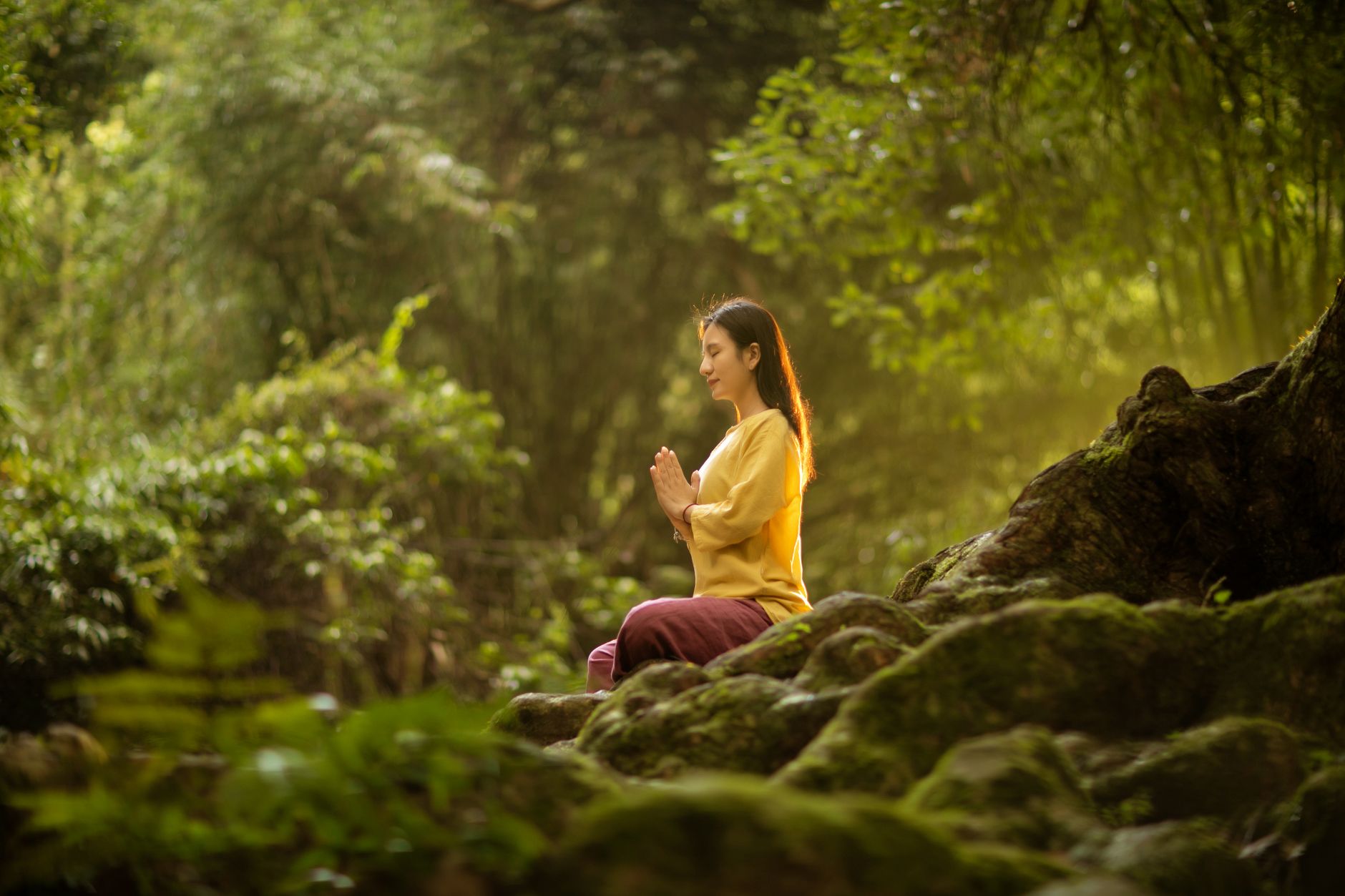
On a longer sit, something shifts. The boundary between self and surroundings grows porous. You stop watching the forest and start belonging to it. I cannot explain this in physiological terms, and I suspect the researchers cannot either. But it is the heart of the practice. The forest does not need you to be productive. It asks only that you be present.

Who It’s For
The exhausted. The overstimulated. The traveller who has seen ten cities in twelve days and cannot remember a single one. Forest bathing serves anyone whose nervous system has been running hot — and in our age, that is most of us.
It suits the solo traveller seeking quiet without loneliness. The forest is company of a particular kind: attentive, undemanding. It suits couples who want to reconnect without the pressure of conversation — walking in silence together is its own intimacy. It suits families with children willing to trade screens for sticks and mud, though you may need to frame the walk as an adventure rather than a meditation.
I have guided people through grief in these woods. I have guided people through burnout so deep they had forgotten what calm felt like. I have guided people who simply wanted a slower afternoon. All of them found something, though rarely what they expected. The forest gives what you need, not what you ask for.
Who It’s NOT For
Honesty is a form of care. Forest bathing is not for those who need constant stimulation to feel alive. If silence makes you restless, if a slow hour without a screen sounds like a punishment, this practice will frustrate more than it restores. That is not a failing — it is simply a mismatch, and there is no shame in it.
It is also not for anyone with serious mobility limitations on rugged trails, though adapted forest walks do exist and are worth seeking. It is not a substitute for medical treatment of anxiety or depression, and any guide who suggests otherwise should be avoided. And it is not for the traveller who wants to tick a wellness box and post about it. The forest can tell the difference. It tends to respond accordingly.
One more boundary: this is not a performance. If you arrive trying to achieve the perfect meditative state, you have already missed the point. The forest does not grade your stillness.
A Profound Insight
Here is the idea I carry home from every forest walk, and it is this: attention is the rarest gift we can offer, and the forest is one of the few places that returns it without asking for more. We spend our days half-attending — to conversations, to meals, to the people we claim to love. The forest asks for nothing but our full presence, and in giving it, we discover we have been starving for the same thing ourselves.
Counter-intuitively, the practice is most powerful when you stop trying to benefit from it. The moment you chase calm, calm retreats. The forest rewards those who arrive without agenda. This runs against everything our productivity-obsessed culture teaches. We are trained to optimize, to extract value, to make every hour count. Forest bathing asks you to make no hour count, and in that refusal, something deeper gets counted anyway.
I have come to believe that the forest is not a destination but a mirror. What you see there — your restlessness, your grief, your patience, your wonder — is what you have carried inside all along. The trees simply hold the space long enough for you to notice.
Practical Guidance
If you feel called to try forest bathing, begin simply. No gear required beyond comfortable shoes and a willingness to slow down.
- Choose a forest with a marked, gentle trail — you should be able to walk without navigation anxiety.
- Set aside at least two hours. Ninety minutes is a minimum; longer is better.
- Leave your phone in your bag, silenced. Resist the urge to photograph everything. You are not collecting, you are receiving.
- Walk at half your normal pace. Stop often. Sit on a log for ten minutes and do nothing.
- Engage your senses deliberately: listen, smell, touch. Place a hand on a tree. Notice what shifts in your body.
- If you can, go with a certified forest therapy guide — especially your first time. Their presence helps you trust the slowness.
Travel to Japan if the practice calls you deeply — the forests of Nagano, Akasawa, and Yakushima hold centuries of intention. But do not wait for a plane ticket. The nearest woodland, however modest, will do. The forest has never required grandeur. Only your attention.
I returned from that rainy walk with muddy boots and a quieter mind. No revelation, no dramatic healing — just a little more room inside myself. That is what the forest offers, again and again. Not transformation, but respiration. The chance to breathe as slowly as the trees, and to remember that we, too, are living things rooted in the same earth. Step outside. The path is waiting, and it has been waiting a long time.