There is a moment on every long journey when the itinerary dissolves. The train is late. The map misleads you. The monastery you crossed a country to see has closed for a private ceremony. What remains is you, standing in unfamiliar air, with nothing to do but breathe. Most travellers treat this moment as a failure of planning. I have come to treat it as the whole point. Travel, approached with intention, is not an escape from practice — it is practice, stripped of the cushions and bells and incense that make contemplation comfortable at home. The road offers no such comforts. It offers only what is real.
“The pilgrimage is not a journey to a place. It is a journey to a self you have not yet met.”
Historical Context
Long before tourism, there was pilgrimage. The impulse to move toward something sacred is older than any single faith. Hindus walked to the Ganges at Varanasi to wash away lifetimes of karma. Muslims traced the path of the Hajj to Mecca, circling the Kaaba in a rhythm that predates written history. Medieval Christians crossed Europe on foot to Santiago de Compostela. Japanese pilgrims still walk the 1,200-kilometre Shikoku circuit, visiting eighty-eight temples tied to the monk Kūkai.
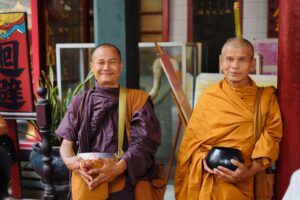
What unites these traditions is not destination but method. The pilgrim moves slowly. The pilgrim accepts hardship. The pilgrim leaves behind the identity that home assigns — the job, the family role, the reputation — and travels as a stranger, which is to say as someone who does not yet know who they are. The Buddha himself left his palace not to find a place but to lose one. And the wandering sadhus of India, who own nothing but a staff and a begging bowl, have understood for millennia what the modern wellness industry keeps rediscovering: that shedding is a form of arrival.

We have largely forgotten this inheritance. We replaced the pilgrim with the tourist, the sacred with the scenic, the slow walk with the flight. But the old roads remain. And so does the hunger that once drew people onto them.
The Experience
Picture a stone path in the hills above a small Andalusian village, early light, the air still cool. You have been walking for four hours and your mind has run out of things to say. At first it chattered — worries about the flight home, a conversation you wish had gone differently, a mental list of tasks. Then, somewhere around the third hour, the chatter thinned. Now there is only the sound of your own footsteps and the smell of rosemary crushed underfoot and the slow, mechanical pleasure of the body doing one simple thing.
This is the moment travellers rarely mention, because it cannot be photographed. Something loosens. The boundary between you and the landscape gets soft at the edges. You are not observing the hills; you are inside them, briefly, the way you are inside your own breath. A farmer passes and nods and neither of you speaks, and the silence feels like company rather than absence.
Later there will be a meal of bread and olives and cold water that tastes like the best thing you have ever eaten, though you would not be able to explain why. There will be a church with no one in it, and you will sit on a cold bench and cry for reasons that surprise you. There will be an evening when you cannot find your guesthouse and the panic gives way, after twenty minutes, to something almost like delight. None of it will look like spiritual practice on a schedule. All of it is.
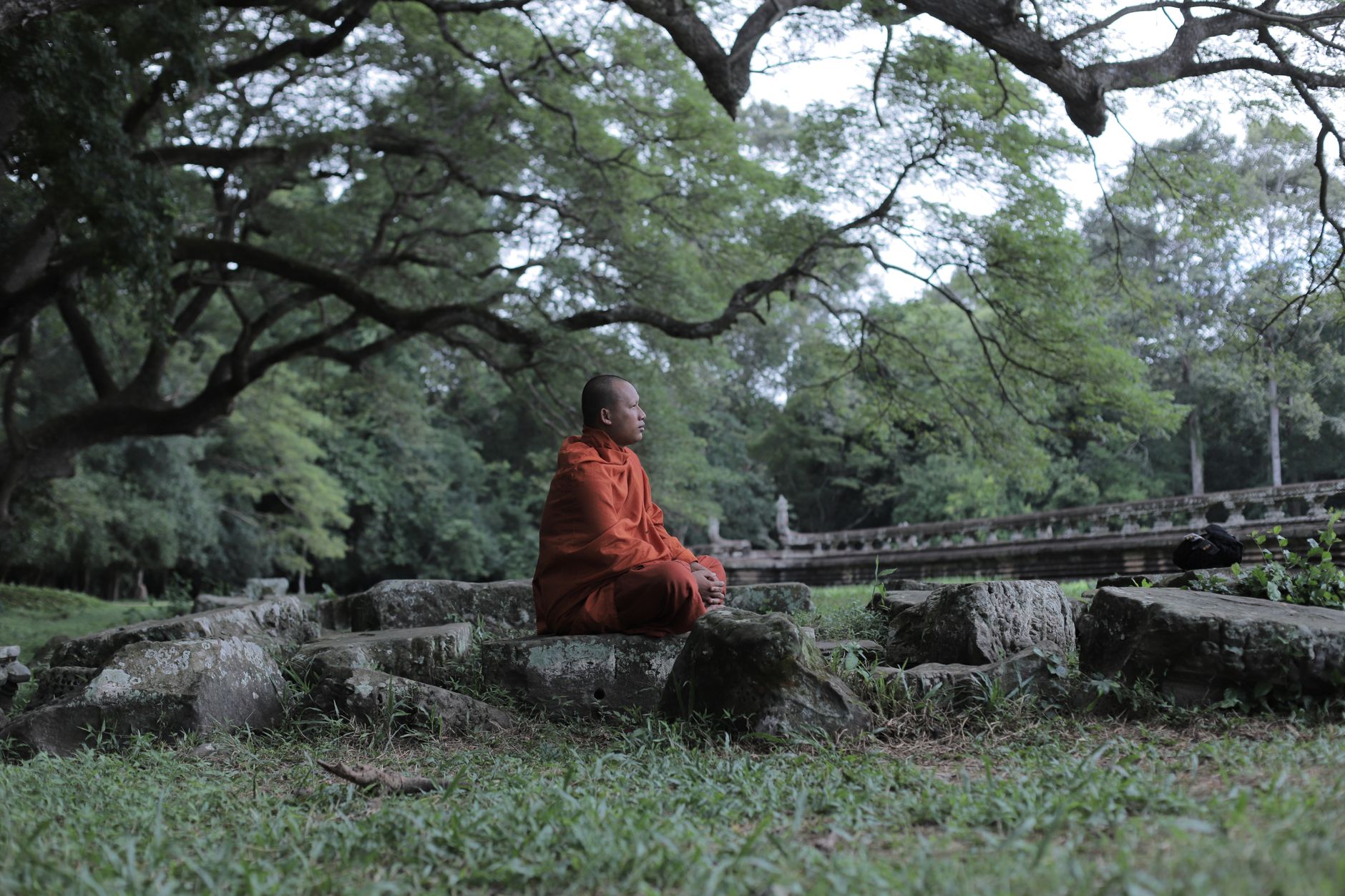
Who It’s For
This way of travelling serves the person who has grown tired of collecting destinations. You have seen the photos, checked the boxes, returned home with a full camera roll and an empty feeling. You suspect that the problem is not the places but the pace. You are willing to walk. You are willing to be uncomfortable, or bored, or uncertain. You can tolerate a day with no plan and no signal.
It also serves the seeker who already has a practice at home and wants to test it on unfamiliar ground. Meditation is easy in a quiet room. It is a different discipline on a crowded bus in a country whose language you do not speak. If you have ever wondered whether your equanimity is real or merely environmental, the road will tell you. Usually quickly.
And it serves anyone in transition — after a loss, a divorce, a diagnosis, a career that ended before you were ready. Pilgrimage has always been a ritual for thresholds. When the old life has ended and the new one has not yet begun, walking puts the body through what the heart is already doing. It moves grief from the head into the legs, where it can finally be carried.
Who It’s NOT For
Honesty requires a boundary here. This is not for the traveller whose joy depends on comfort, and I do not say that as a criticism. Some people travel to rest, to celebrate, to be pampered, and a beach resort with excellent service is a legitimate and lovely thing. The pilgrim path will not give you that. It will give you a hard bed, a cold shower, and a knee that aches by afternoon.
It is also not for the person who needs to see everything. If your itinerary is a checklist and your satisfaction comes from completion, slow travel will feel like failure. You will miss things. That is the practice. But you have to want the missing.
And it is not for anyone using “spiritual travel” as a costume. The road has a way of exposing performance. If you are walking to be seen walking — posting the sunrise, narrating the epiphany — the journey will quietly refuse to give you what you came for. The deepest moments on pilgrimage are almost never the ones worth sharing. They are the ones too plain to describe.
A Profound Insight
Here is the counter-intuitive truth I have carried home from every long walk: the destination is a distraction, and it is also necessary. We need the cathedral at the end of the road, the summit, the shrine, the sea. Not because arriving matters, but because the destination gives the walking a shape. Without a goal, we wander and call it freedom. With a goal, we walk with purpose and discover that purpose is not the point.
The insight, then, is this — the sacred is not waiting for you at the end. It is distributed along the way, in the blistered feet and the stranger’s kindness and the third hour when the mind finally quiets. The destination is simply the excuse that gets you onto the path. Once you understand that, you understand something larger: that every ordinary day is a pilgrimage you are already on, whether or not you have noticed. The question is only whether you are walking it awake.
This is why I no longer ask travellers what they saw. I ask them what they noticed. The two answers are rarely the same.
Conclusion
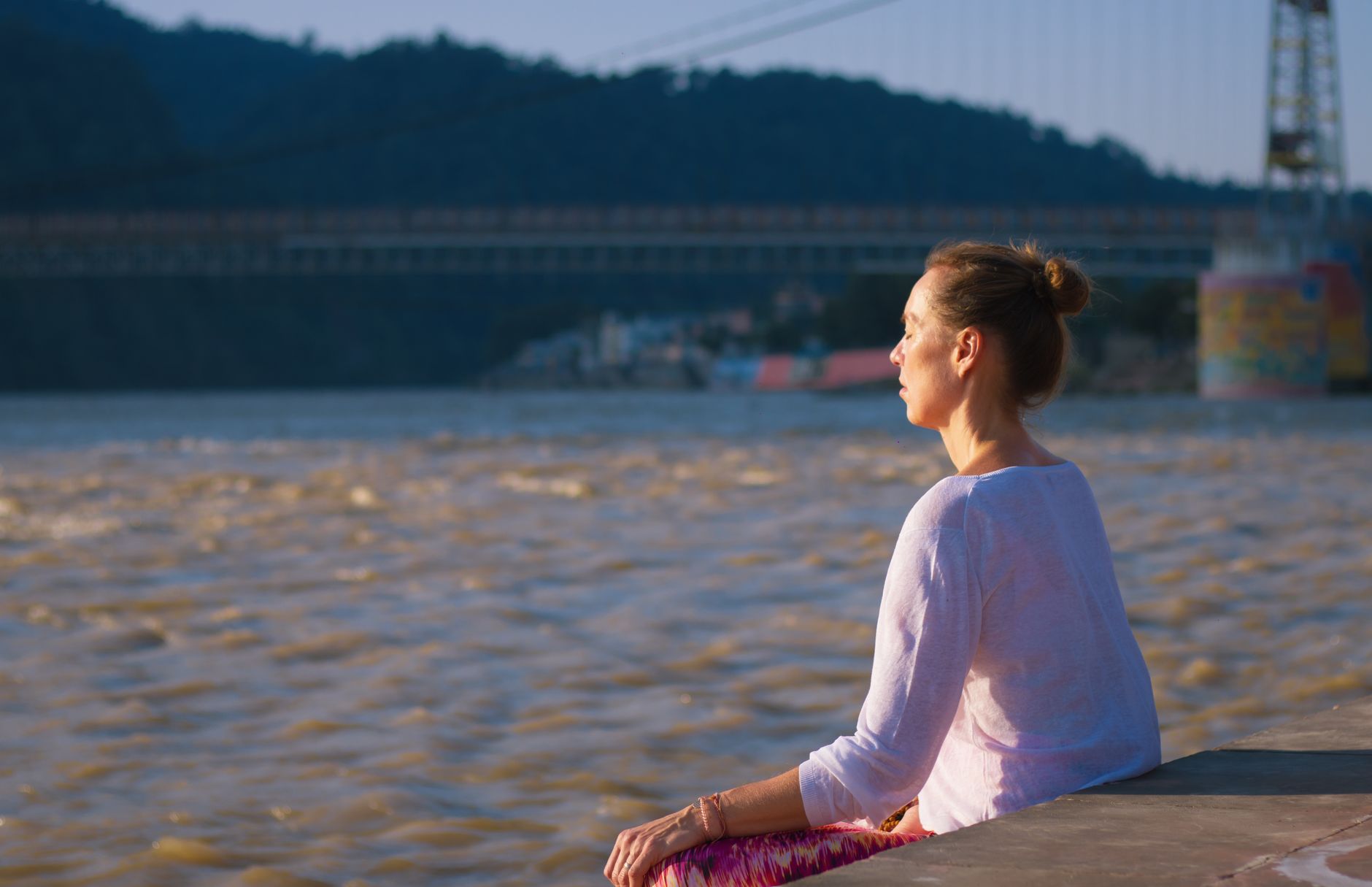
You do not need a passport to begin this practice, though it helps. You need only willingness — to move slowly, to be uncomfortable, to let the plan fall apart and the silence arrive. The old pilgrimage routes are still there, and so are a thousand unnamed paths that will do just as well. A riverbank at dawn. A hill behind your own town. A long walk to a place you have been a hundred times, taken this time with attention.
Travel as spiritual practice asks nothing exotic of you. It asks you to put one foot in front of the other and to stay present for what happens next. That is the whole instruction, and it has been the whole instruction for thousands of years. The rest is commentary. The rest is scenery. The rest is the story you will tell when you get home, which is never quite the story of what actually happened.
So walk. Not to arrive. To become, slowly and on foot, the person who was always waiting at the end of the road.
- Choose one route and one destination, then surrender the schedule — the gaps are where the practice lives.
- Walk at least three hours a day; the mind needs roughly that long to exhaust its chatter.
- Carry less than you think you need; every unnecessary item is weight you must also carry inwardly.
- Keep a small notebook and write at night, not for an audience, only for yourself.
- Eat simply, sleep early, and let the body set the pace rather than the itinerary.
- Resist photographing the moments that move you; let some experiences remain unrecorded and therefore yours.