The last morning of a journey has its own weather. Suitcases gape like open mouths. The room that held your sleep for a week suddenly belongs to no one. Most of us rush this threshold — we scroll for the airport transfer, we tally receipts, we rehearse the return to ordinary life. And in the rush, something quiet gets left behind on the nightstand: the chance to say thank you.
I have ended pilgrimages in Varanasi with Ganga water still drying on my wrists. I have ended long retreats in silence, walking out through a gate that felt heavier than any temple door. The endings that stayed with me were never the efficient ones. They were the ones where I stopped, deliberately, and let gratitude do its slow work.
“The journey is not complete until the heart has said its farewell.”
Historical Context
Gratitude at the close of travel is not a modern wellness invention. It is ancient, and it is nearly universal. In India, the tradition of darshan — the auspicious sight of the divine — is followed by prasad, a small offering received and then shared. You do not simply take from a sacred place. You receive, you thank, and you pass something on. The ritual closes the circuit.

Walk the Camino de Santiago and you will meet pilgrims who carry a stone from home to leave at the Cruz de Ferro, and who end in the cathedral square with a different kind of weight. The medieval pilgrimage was never finished at the destination. It was finished in the homecoming — a Mass, a meal, a telling of the road to those who waited.
In Japan, the custom of omiyage asks the traveller to bring small gifts back to colleagues and family. It looks like commerce. It is really an act of acknowledgment: I went, you stayed, here is a thread between the two. Even the secular world keeps a version of this rite. Sailors once thanked the sea. Guests in many cultures thank the host with a gift at departure. Something in us knows that leaving well requires a gesture.
What these traditions share is a refusal to let travel be mere consumption. You arrive, you receive, you give thanks. The order matters.
The Experience
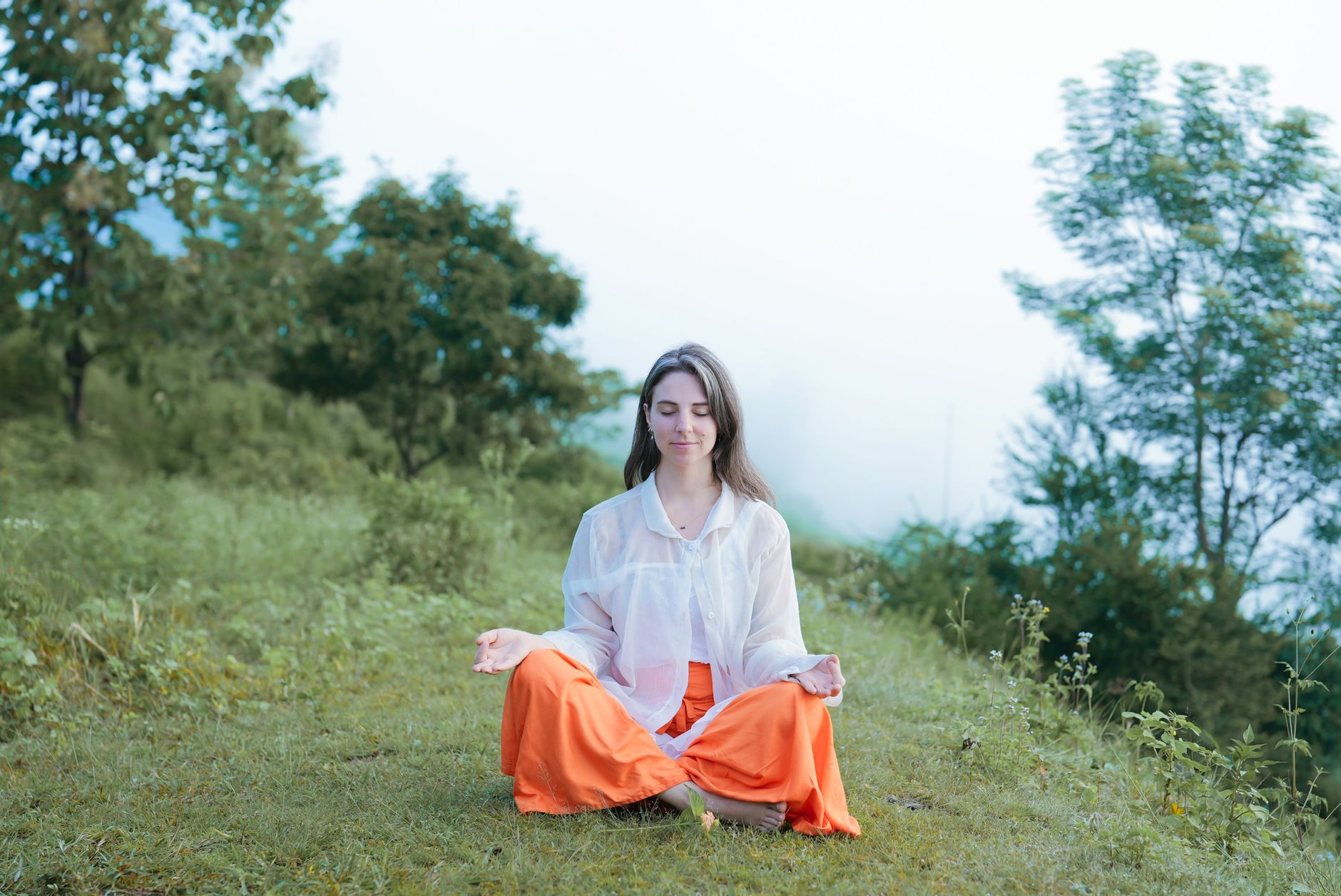
Try this before you pack. Sit on the edge of the bed — the made one or the unmade one, it does not matter — and close your eyes for three minutes. Let the room come to you through the senses rather than the mind.
Feel the particular temperature of this place on your skin. Notice a sound you will not hear at home: the call to prayer, the fruit seller’s cart, the specific pitch of a distant tram. Smell the air. Every city has a scent it does not know it has, and you will only recognize it years later, in a memory that arrives without warning.
Then let the faces come. The woman who pointed you toward the right street when you were lost and late. The waiter who remembered how you take your tea. The stranger on the train who shared a window and a silence. Gratitude, in its physical form, is simply this: letting the faces arrive and staying with them a moment longer than is comfortable.
Some travellers write a short list. Others speak a quiet thank-you out loud, which feels foolish for about four seconds and then does not. I have known people to leave a small note for the person who cleaned their room, a coin under a pillow, a pressed flower on a windowsill. The gesture is not for the recipient, exactly. It is a way of marking the end, the way a bell marks the end of a meditation session.
You will notice something in these minutes. The trip rearranges itself. What felt like a list of places becomes a sequence of gifts. The delayed flight, the wrong turn, the rain that ruined the hike — even these soften at the edges. Gratitude does not lie about difficulty. It simply refuses to let difficulty have the last word.

Who It’s For
This practice serves the traveller who suspects the end of a journey deserves as much attention as the beginning. If you have ever come home from a beautiful trip and felt oddly hollow for a day or two — restless, unable to explain where you have been — this is for you. The hollow is often an unclosed circle.
It is for the person who keeps a journal and finds the last page always blank. For the one who notices the small kindnesses and wants a way to honor them. For anyone who has ever stood in an airport departure lounge and felt the strange grief of leaving a place that will go on existing without them.
And it is for the traveller who is not especially spiritual. You do not need a practice or a tradition. You need three minutes and a willingness to feel a little foolish. That is the whole entry fee.
Who It’s NOT For
Here is the honest boundary. This is not for the traveller in a genuine rush. If your flight leaves in forty minutes and the taxi is idling, do not force a gratitude ritual. Anxiety is not a doorway to presence. The practice will keep. You can close the circle at home, days later, with a cup of tea and the photographs open on the table.
Nor is it for someone in the middle of grief or crisis, where the instruction to feel thankful can land as a demand, even a cruelty. Gratitude offered under pressure curdles. If you are raw, let the ending be simply an ending. The heart keeps its own calendar, and forcing the season does not make it arrive.
And it is not for the collector of experiences, the one who wants a technique to optimize the last hour of a trip the way they optimized the itinerary. Gratitude is not a productivity tool. It is slower and stranger than that, and it will not be managed.
A Profound Insight
Here is the idea I would carry home in my pocket, if I could carry only one.
Gratitude at the end of a journey is not really about the journey at all. It is a rehearsal for the largest ending we all face — the closing of a life. Every departure we mark well teaches the heart a little about how to hold loss without gripping it. The trip ends, the place continues, and we practice the art of loving something we cannot keep.
This is the counter-intuitive part, and I will say it plainly: the goal of a gratitude practice is not to feel good about your trip. It is to become more willing to let things go. The warm feeling is a side effect. The real work is the loosening. A traveller who can end a journey with thanks is practicing, in miniature, for every farewell that will follow. The skill transfers. It always does.
So the last morning is not a chore to be managed. It is a small, safe rehearsal. Do it badly. Do it in three minutes. Do it with your coat already on. The point is not the ritual’s beauty. The point is that you turned toward the ending instead of away from it.
- Sit for three minutes before packing and let the room arrive through sound, scent, and temperature.
- Name the faces — the small kindnesses are the true itinerary of any trip.
- Make one gesture of thanks: a note, a word, a coin left behind.
- If you are rushed or grieving, let the ending be simple. Close the circle later, at home.
- Remember the deeper purpose: you are practicing how to let go with an open hand.
Years from now, you will not remember the receipts. You will remember the light on the wall of a room you left, and the quiet minute you gave it before you walked out the door. Endings ask so little of us and give back so much. The journey deserves a farewell with weight to it. And so, in the end, do you. What would it change, to thank this place before you go — not for what it gave you, but simply for existing at all?