The rain had stopped an hour before. Limestone at Carrowmore held the light the way a cupped palm holds water. I stood between two portal tombs that have faced each other for five thousand years — close enough to touch both with outstretched arms — and felt something I can only call recognition. Not memory, exactly. More like the body remembering a posture it has never practiced. Ireland does this to pilgrims who arrive with open attention. The island’s Celtic sites — passage graves, stone circles, holy wells, monastic ruins — are not monuments in the way we usually mean that word. They are invitations. They ask you to slow down until the land can speak.
“The stones do not remember us. They wait for us to remember ourselves.”
Historical Context
Celtic Ireland began arriving around 500 BCE, carried by Iron Age peoples with a language, a cosmology, and a genius for working stone and water. The story, though, is older than the Celts. The great passage tombs at Newgrange, Knowth, and Dowth in the Boyne Valley were built around 3200 BCE — centuries before the pyramids at Giza, before Stonehenge reached its final form. The people who raised them left no written record. What they left instead was geometry aligned to the solstices, spirals carved into kerbstones, and chambers that hold the dead with unmistakable tenderness.
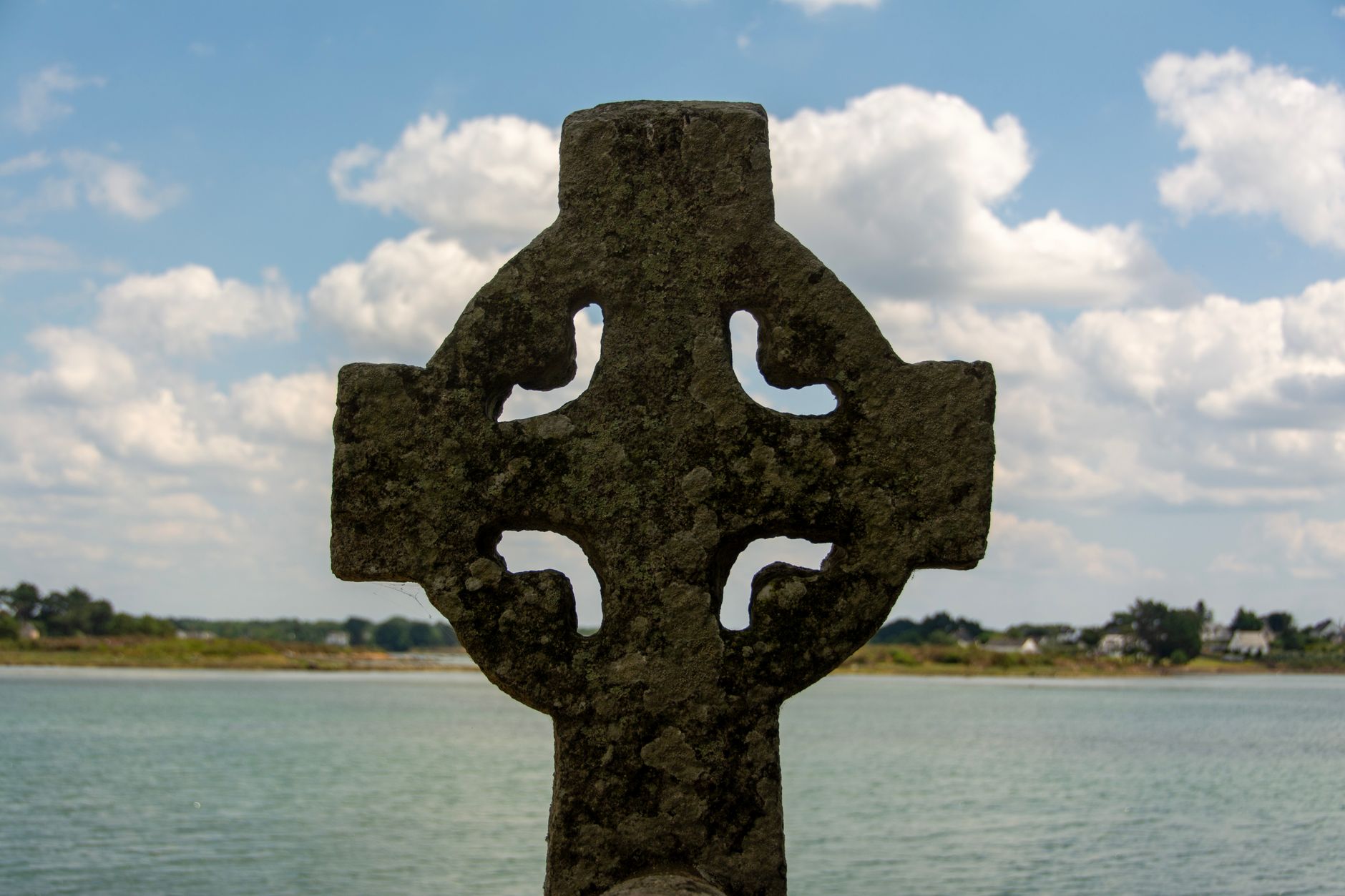
The Celts who came later did not erase these places. They absorbed them. When Christianity arrived in the fifth century, it did not demolish the sacred wells and hilltops either. It baptized them. Brigid’s flame at Kildare became a convent fire. Lughnasadh gatherings on mountain summits became pattern days and pilgrimages. This layering is the essential texture of Irish spirituality: nothing is replaced, only deepened. The result is a landscape where a Bronze Age alignment, an early Christian oratory, and a modern meditation circle might share the same hillside, each holding its own silence.
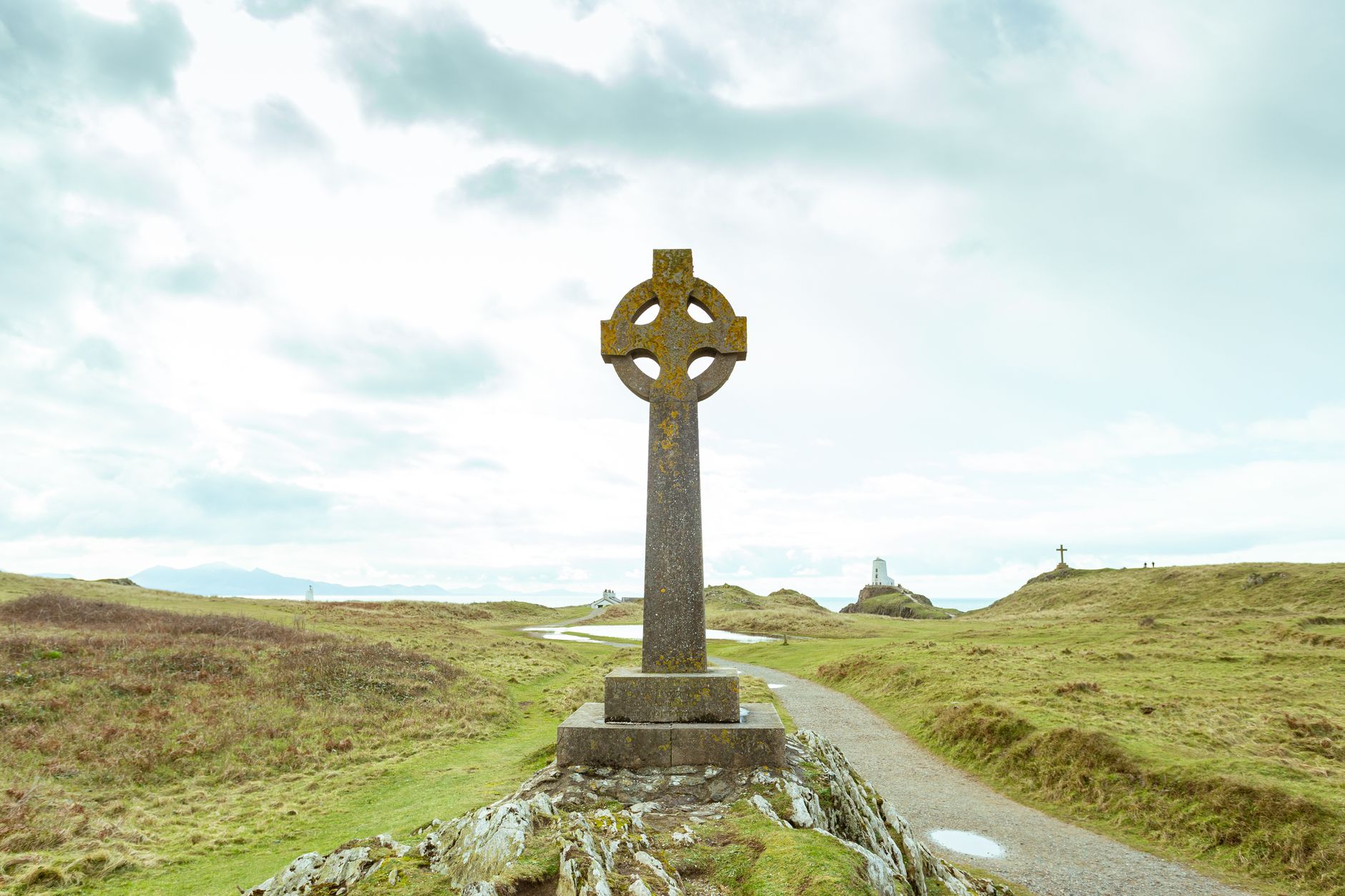
Here is a counter-intuitive truth: the “Celtic” label so beloved by seekers is largely a nineteenth-century romantic invention. The druids left no texts. Much of what we think we know about their rituals was reconstructed by Victorian antiquarians with more enthusiasm than evidence. This does not diminish the sites. It clarifies them. What remains is not a doctrine to be learned but a relationship to be entered — with stone, weather, water, and time.
The Experience
Arrive at Loughcrew Cairns on a wet morning and you will climb a hill through sheep pasture, mud pulling at your boots, wind pressing your jacket against your ribs. No visitor center waits at the summit. No audio guide. Just a cairn with a passage aligned to the equinox sunrise, and a view that opens across half of Ireland. When you duck inside — and you must duck, the entrance is low — the temperature drops. The air tastes of mineral and old darkness. If you are lucky enough to be there when the sun breaks through the light box above the door, a thin blade of gold moves across the carved stone at the back of the chamber. You understand, then, that you are standing inside a clock built by people who measured time with their bodies.
At a holy well, the experience is softer. Moss on granite. A cup left for visitors. Rag ties on branches — clooties — faded by seasons of rain. The water is always cold, always moving. You do not need to be Catholic to feel the devotion that has worn these stones smooth. You only need to be quiet.
And at dusk on the Burren, where limestone pavement stretches to the sea and wildflowers grow in cracks that hold no soil, the sensory overwhelm becomes almost unbearable in its beauty. Wind. Salt. The low call of a stonechat. The sound of your own footsteps on rock that was once seabed. You are walking on the compressed remains of a tropical ocean, and the Atlantic is roaring at your back. Ireland does not let you forget that you are small and temporary and part of something vast.
Who It’s For
This journey serves the traveler willing to trade comfort for contact. You do not need to be spiritual in any formal sense. You do not need to meditate, chant, or know the difference between a dolmen and a passage tomb. But you do need patience. Irish roads are narrow. Weather changes every twenty minutes. Sites are often unmarked, reached by footpaths through fields where you may need to close a gate behind you. If you find this romantic rather than annoying, you are the right person.
It is also for the traveler who understands that a place can be sacred without being explained. The best moments on these journeys are unscripted. A sudden clearing of cloud. A stranger at a well who offers you a sip from her cup. A sheep that decides to block your path and will not move until you have acknowledged it properly.
Who It’s NOT For
This is not for the traveler who needs a narrative arc delivered with efficiency. There are no grand reveals here. No docent will tell you what the spirals mean, because no one knows. If ambiguity frustrates you, the Celtic sites will feel like unfinished homework.
Nor is it for anyone seeking a “vortex” experience in the New Age sense — energy fields, past-life regressions, guaranteed transformation. The stones are not here to perform. They are here to persist. Anyone who promises you otherwise is selling something. And finally, this is not for the traveler who cannot tolerate being wet, cold, and slightly lost for hours at a time. That is simply the price of admission.
A Profound Insight
The deepest teaching of these sites is not about the Celts at all. It is about continuity. The people who built Newgrange knew they would never see the winter solstice light enter their chamber — the alignment works on a cycle longer than a human life. They built for descendants they would never meet. They built for us. Every generation since has added its layer: a cross carved into a standing stone, a Mass said at a well, a traveler leaving a small stone on a cairn in gratitude. You are not visiting the past. You are joining a conversation that has been going on for five thousand years and will continue after you leave. What will you add? What will you carry home not as a souvenir but as a shift in how you move through the ordinary world?
Here are the practices I recommend for anyone making this pilgrimage:
- Sit with one site for at least an hour rather than visiting five in a day. Depth over coverage.
- Bring a small offering — a flower, a stone, a whispered intention — and leave it without photographing the act.
- Visit at dawn or dusk when the tour buses have gone and the light is doing its real work.
- Learn three words of Irish and use them. The language is part of the landscape, not a decoration.
- Keep a handwritten journal. Your phone will not remember what your hand will.
I left Ireland with mud in my boots and a question I still cannot answer: what does it mean to belong to a place for millennia when most of us move every few years? The stones do not judge this. They simply continue. And in their continuing, they offer something the modern world rarely provides — permission to be slow, to be uncertain, to be part of something older and larger than any single life. Go. Bring good rain gear. Leave your expectations at the ferry. The land will do the rest.